The Cost of This Job
We won't quote you a number here because a torsion spring job on a single 8-foot door isn't the same call as a double door with a dead opener and a bent track, and pretending otherwise is how homeowners get surprised on the invoice. What actually moves the price on an emergency call is straightforward: how many springs (one broken often means the second is close behind on a door that age), whether the opener motor or circuit board is also shot, whether cables or rollers came off with the spring, and whether it's an after-hours call versus a daytime one.
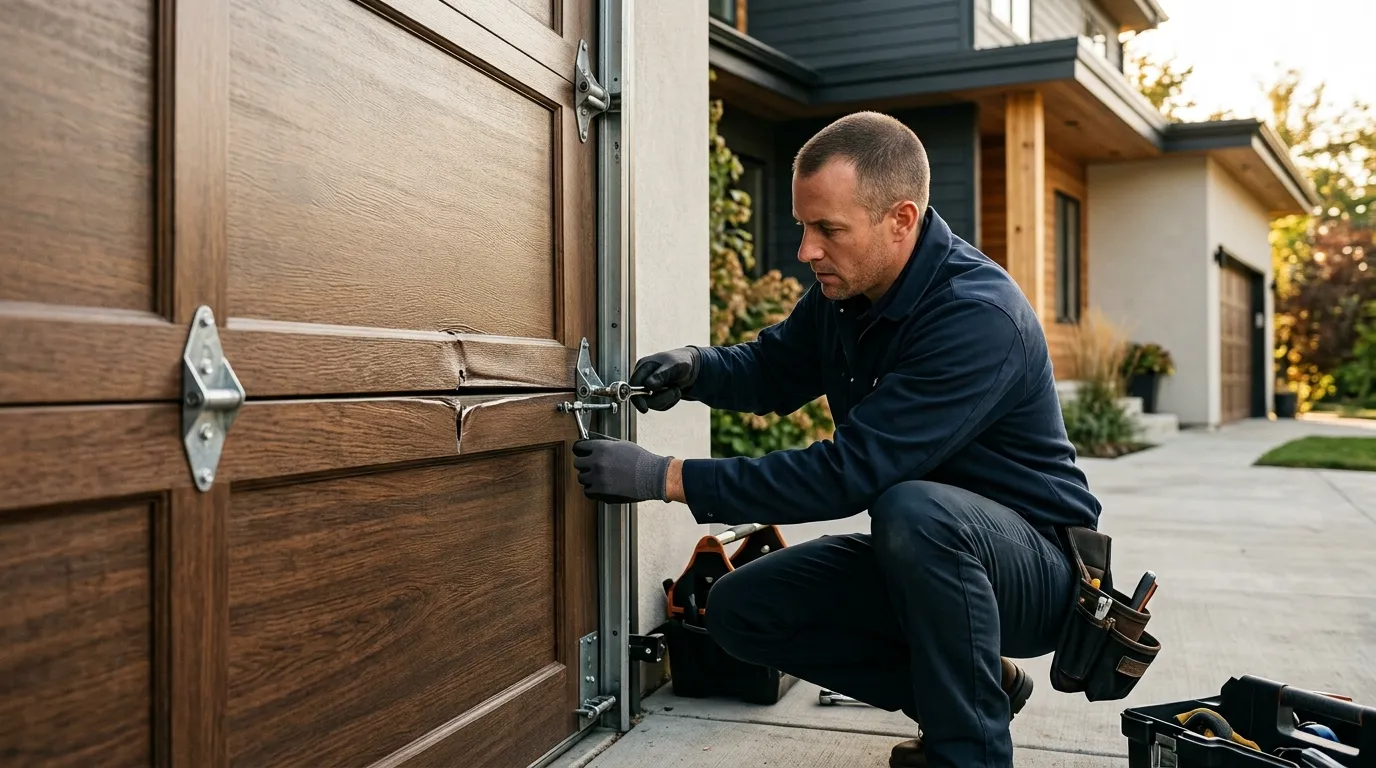
One honest limit: if a panel is bent or rusted through and needs a special-order match for an odd-width door, we can get the door running that night on temporary hardware, but the exact-match panel isn't a same-day part. We'll tell you that up front instead of stringing out an appointment.
Across this service area - Prosper and the towns around it - most of what we get called out for at night is spring and cable failure, not full door replacement, so most emergency jobs are faster and cheaper than owners expect once they're on the phone with us.
What You Are Seeing
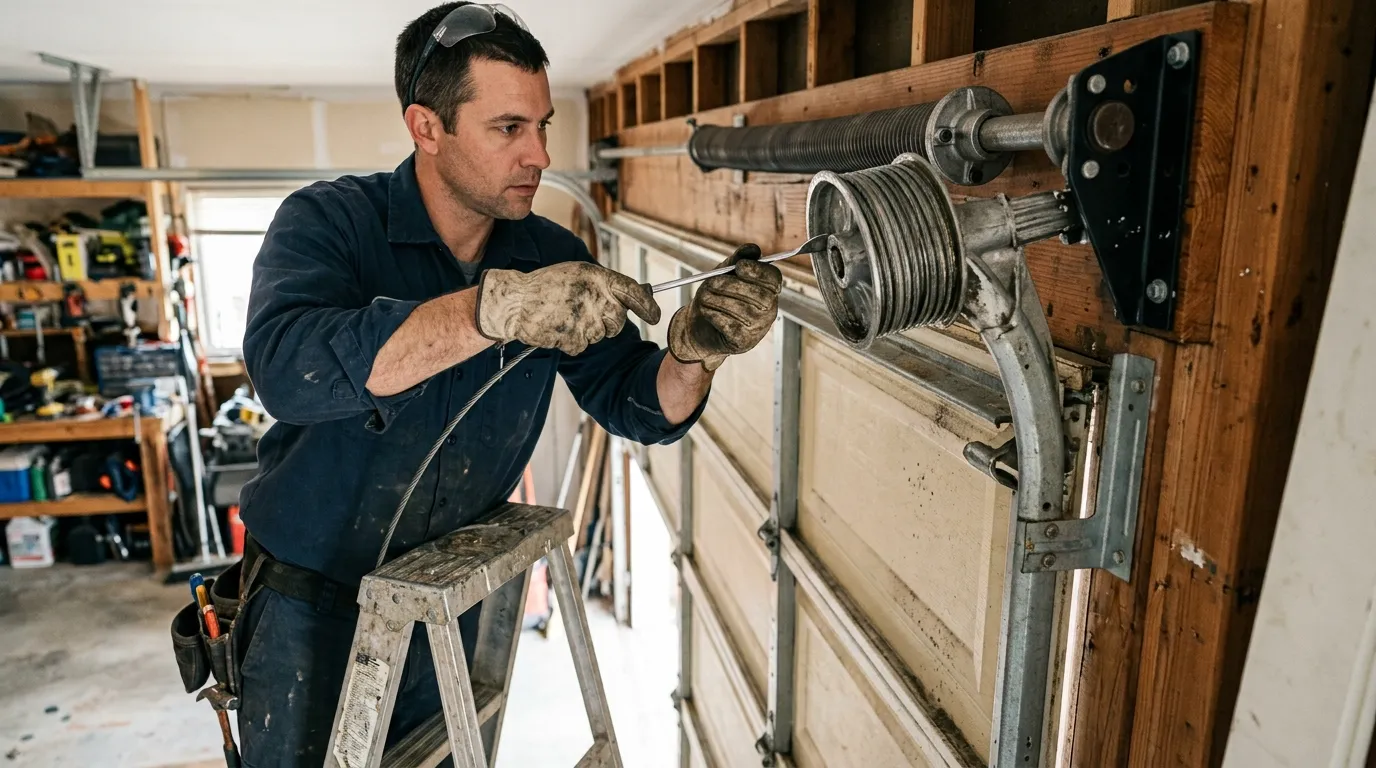
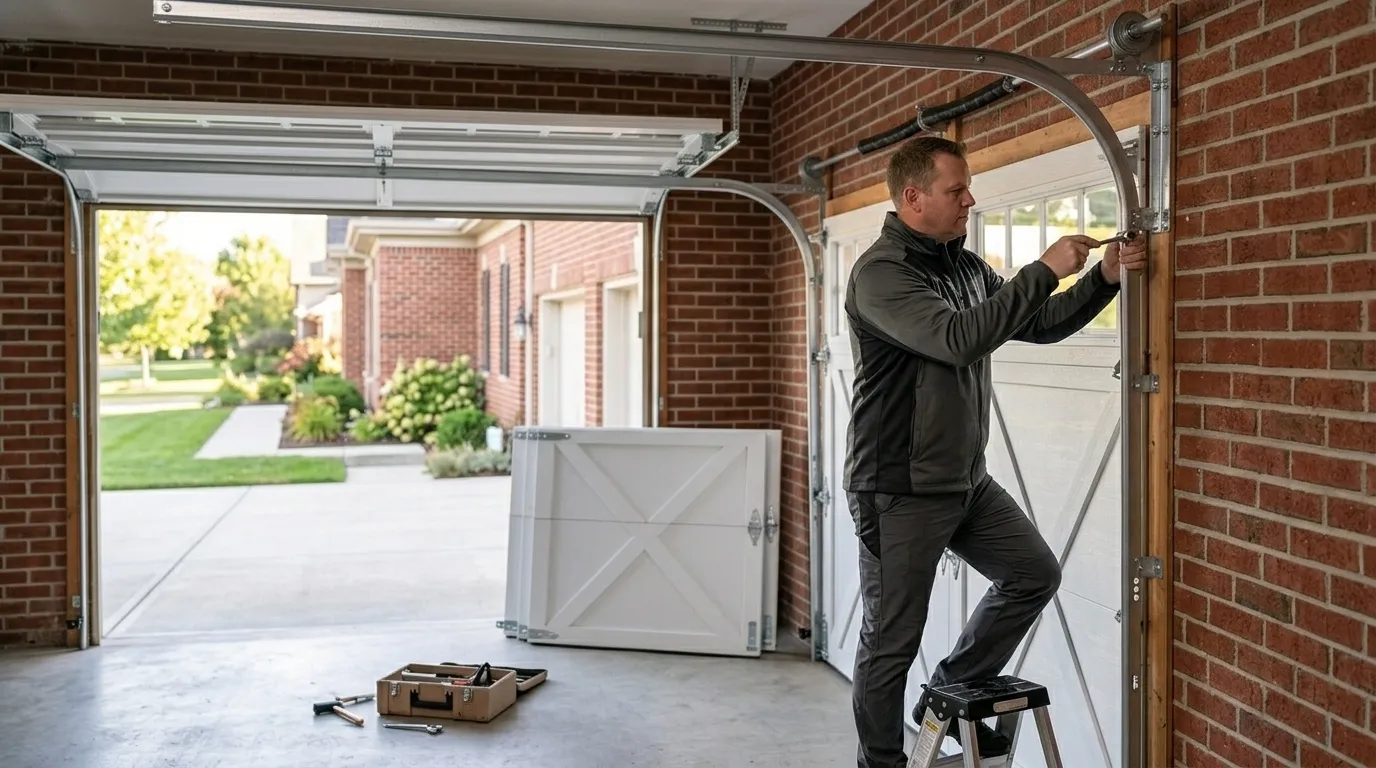
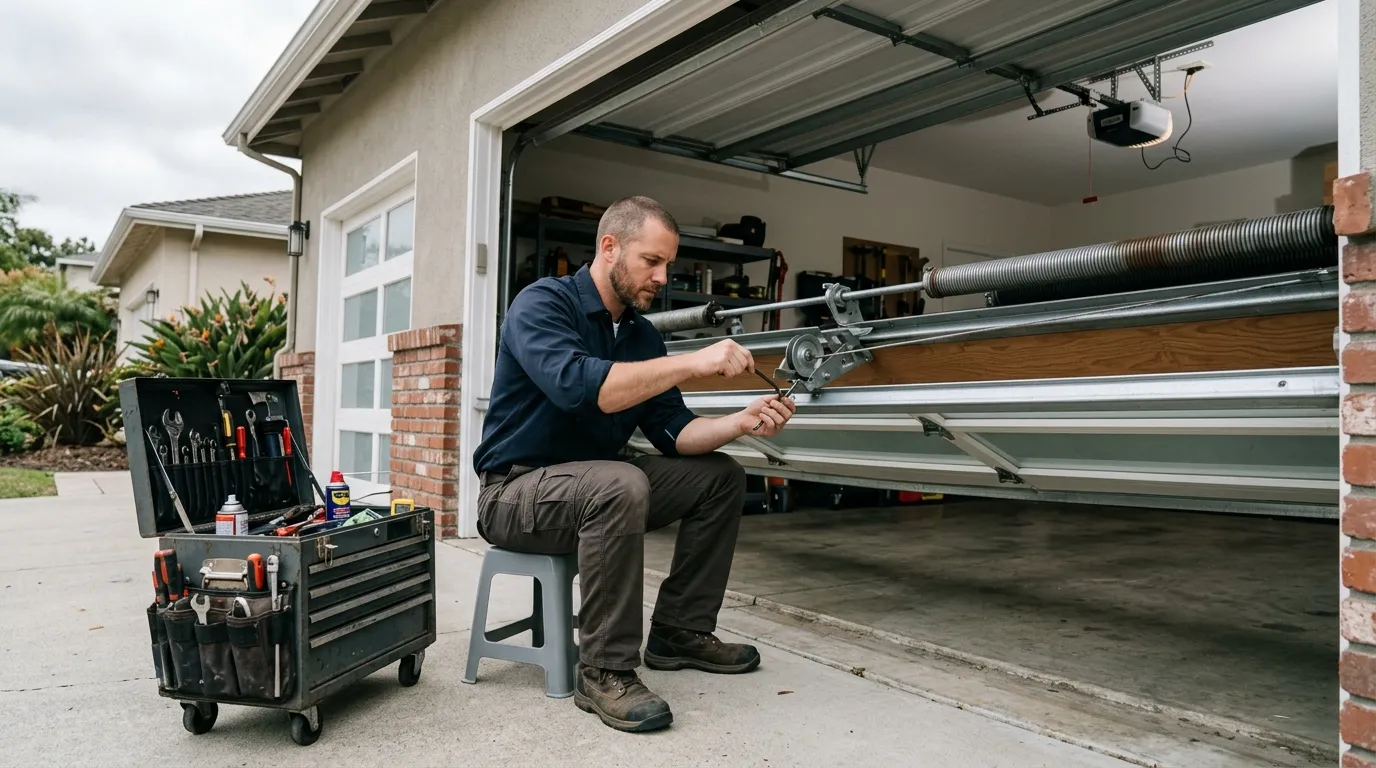
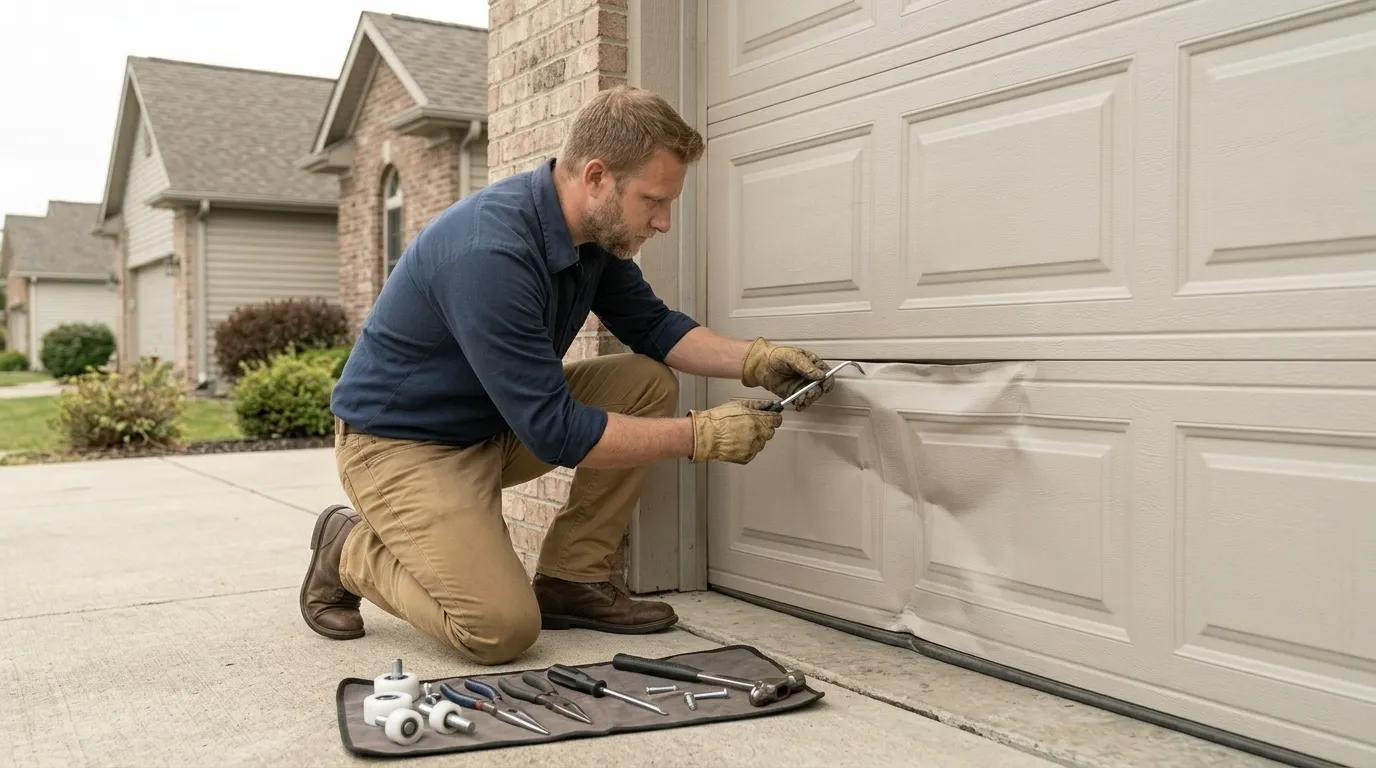
The most common emergency call is a loud bang from the garage followed by a door that won't budge - that's a torsion spring letting go, usually while the door is closed and under full tension. Close behind it: the door opens partway then stops, or the opener strains and hums but the door doesn't move, which points to a spring that's weakened rather than fully broken, still carrying part of the load.
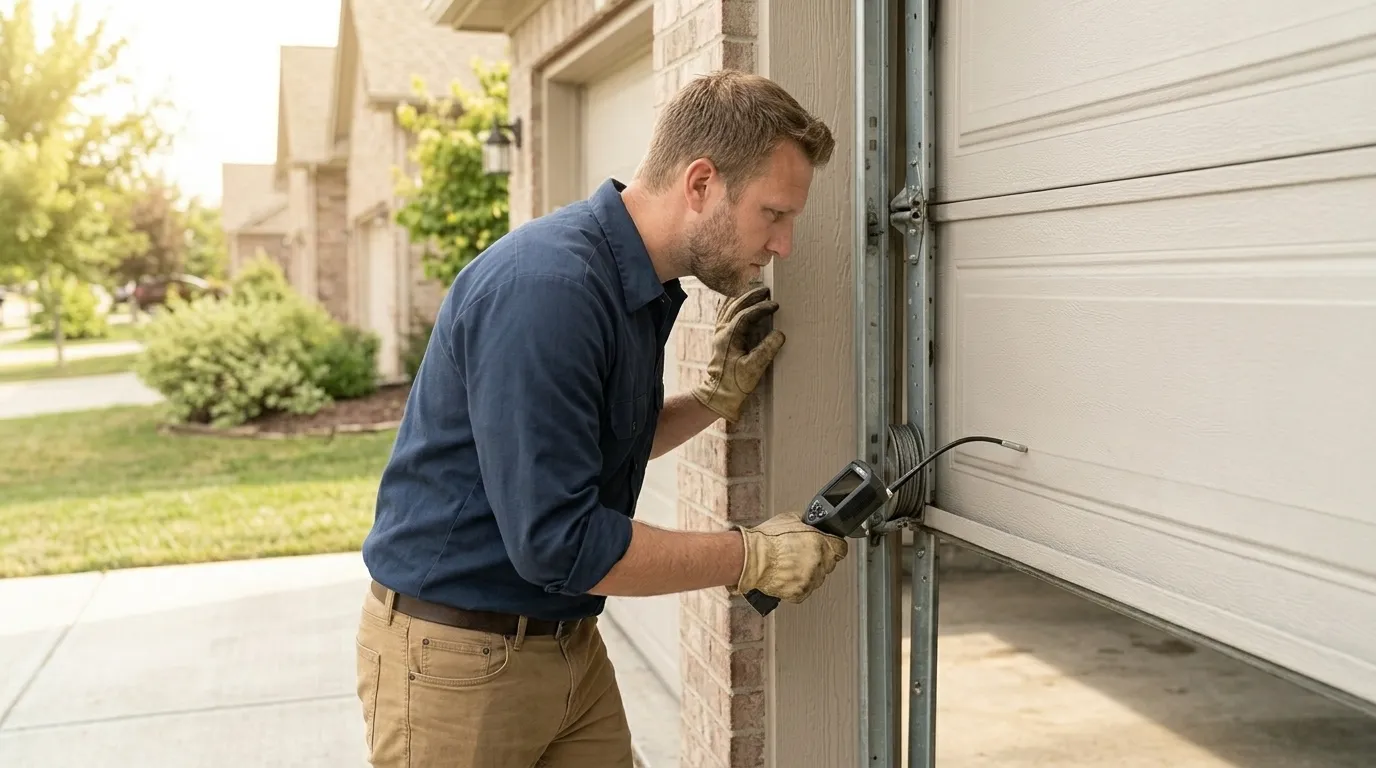
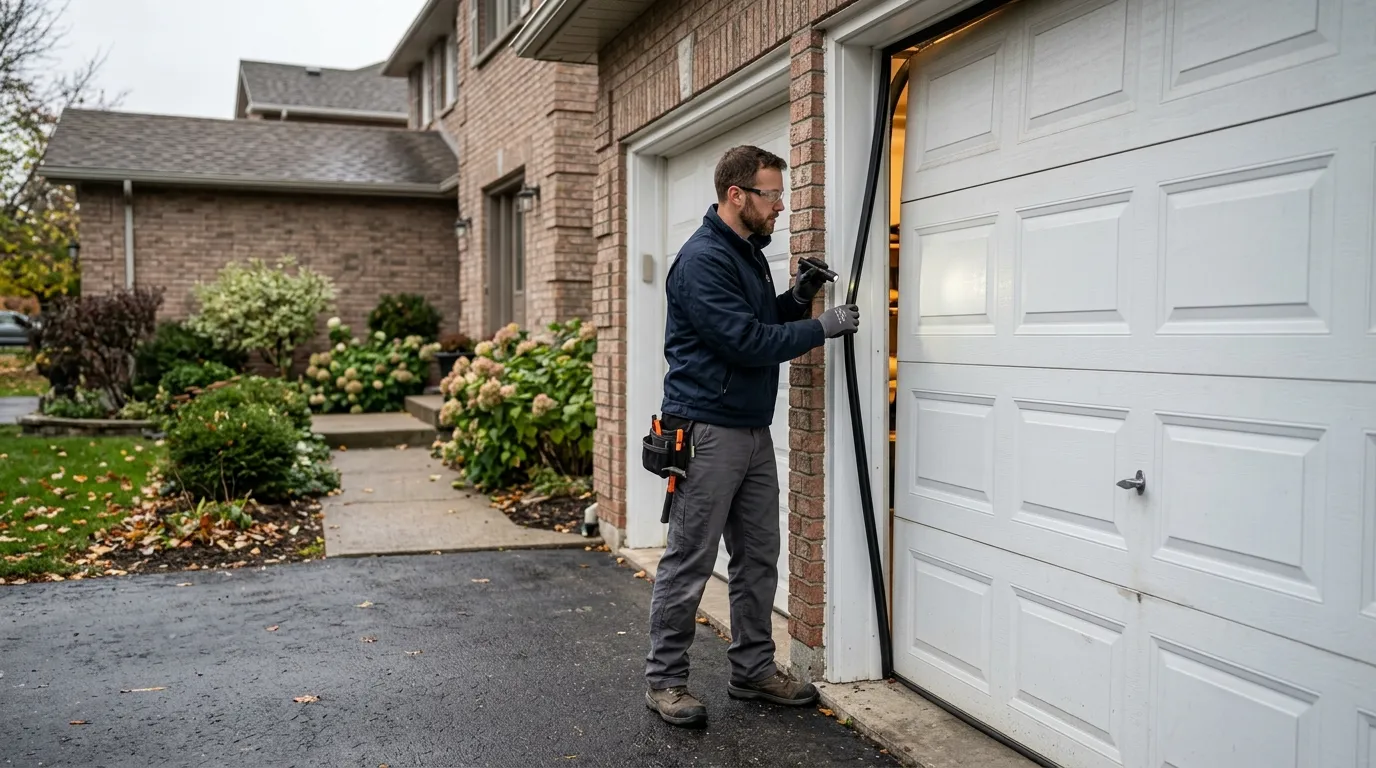
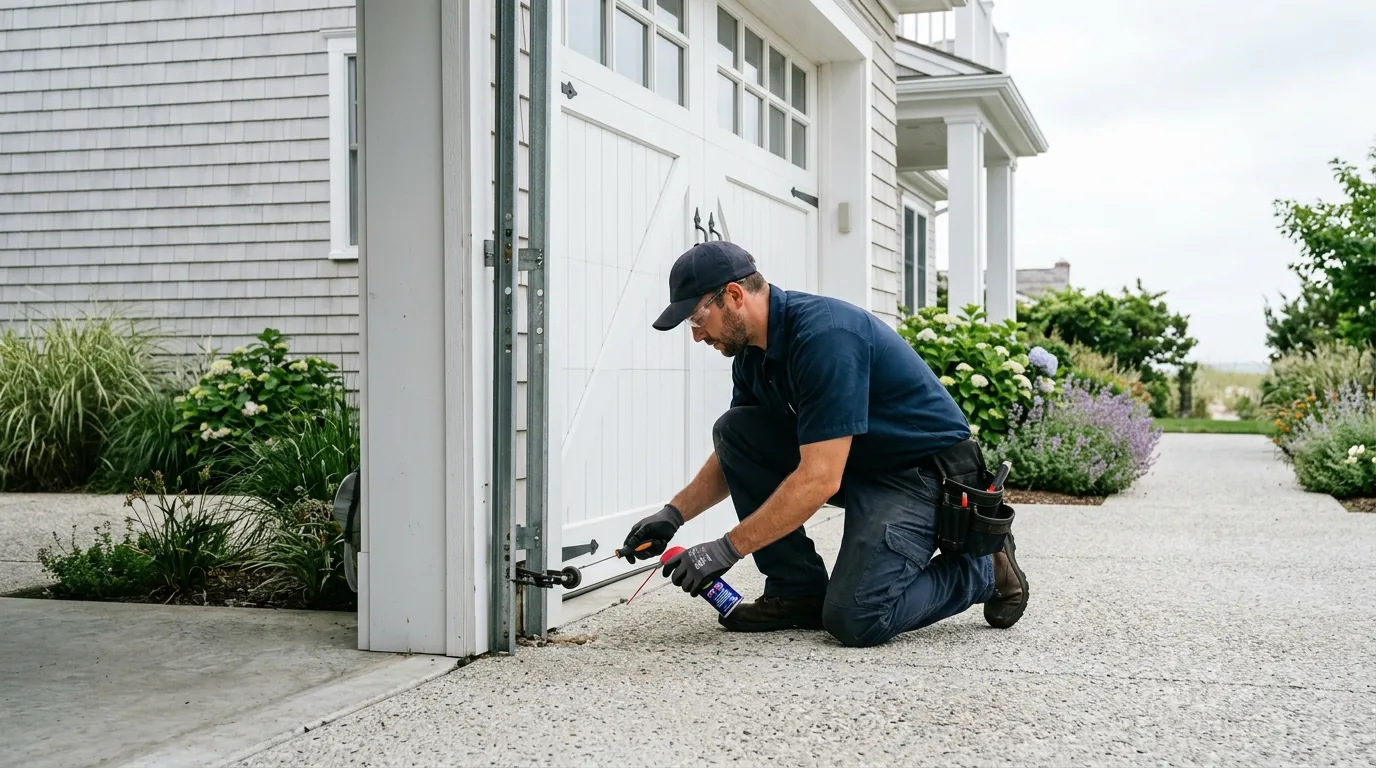
A frayed or visibly unwound cable at the bottom corner of the door, a door that's suddenly heavy to lift by hand, or a door that slams down faster than it used to are all spring-related and none of them are cosmetic - they're the door telling you the hardware is past its rated life.
Separately, an opener that runs the motor but the door doesn't lift, or that reverses immediately on closing, is more often an opener or sensor issue than a spring issue, and it's a different fix with different parts. Knowing which one you have before you call helps us bring the right springs on the truck the first time.
Why It Happens Here
Housing across this service area - Prosper and the 21 named communities we cover, from out to Highland Village and Murphy - was built almost entirely between 1985 and 2015, with the median build year around 2004. That matters for one specific reason: torsion springs are rated for a fixed number of open-close cycles, and a door installed in the early 2000s is now old enough that its original springs are aging out at close to the same time across whole subdivisions. We see clusters of spring failures by build era, not by random chance.
The area's climate is cold-moderate, meaning steel hardware goes through real temperature swings between summer heat and winter cold snaps rather than staying in a narrow band year-round. Steel contracts and gets more brittle in a cold snap, and a spring that's already near the end of its rated cycle count is far more likely to snap on the first hard cold morning of the season than on a mild one. That's why emergency calls cluster in cold weather here - it's not bad luck, it's aging hardware meeting a temperature drop it wasn't tested against when new.