The Cost of This Job
We won't quote a number here without seeing the door, because panel replacement in Prosper swings on things we can't guess from a search bar: whether your door is a builder-grade steel line from the mid-2000s construction boom or a newer insulated model, whether the section is still made, and whether the damage is cosmetic or has bent the track alignment too. Most homes in this service area were built between 1985 and 2015, with the bulk going up in the 2000s, so a lot of doors out there share the same handful of production runs - good news when we can source a matching panel, bad news when that run has been discontinued and the whole door needs to come off.
What we can tell you: a single-panel swap on a run-of-the-mill steel door costs less than replacing the full door, and it costs a lot less than replacing the door plus new opener hardware because someone forced a bent section for six months. If the damage is on a bottom panel near the photo-eye brackets, factor in extra labor for realignment. We'll give you a real number after we look at the door and the make.
What You Are Seeing
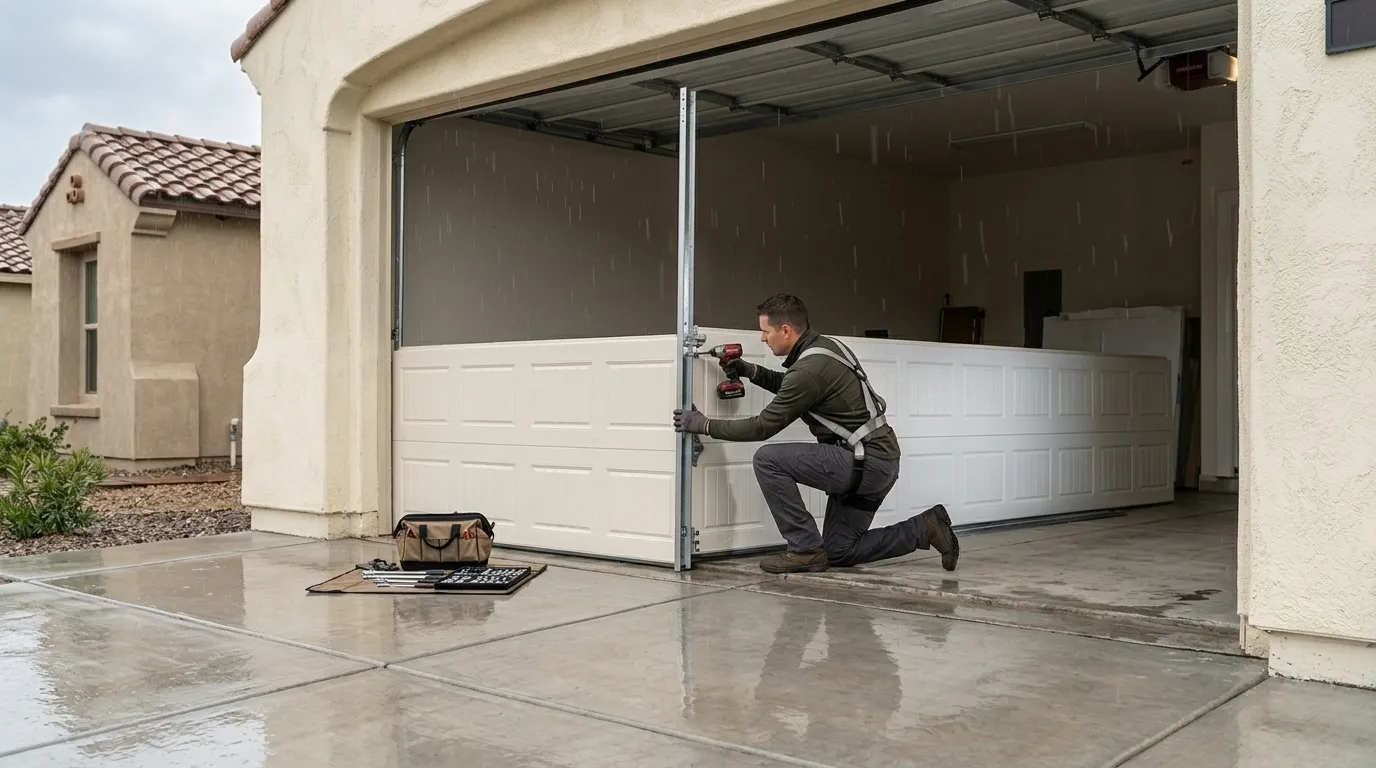
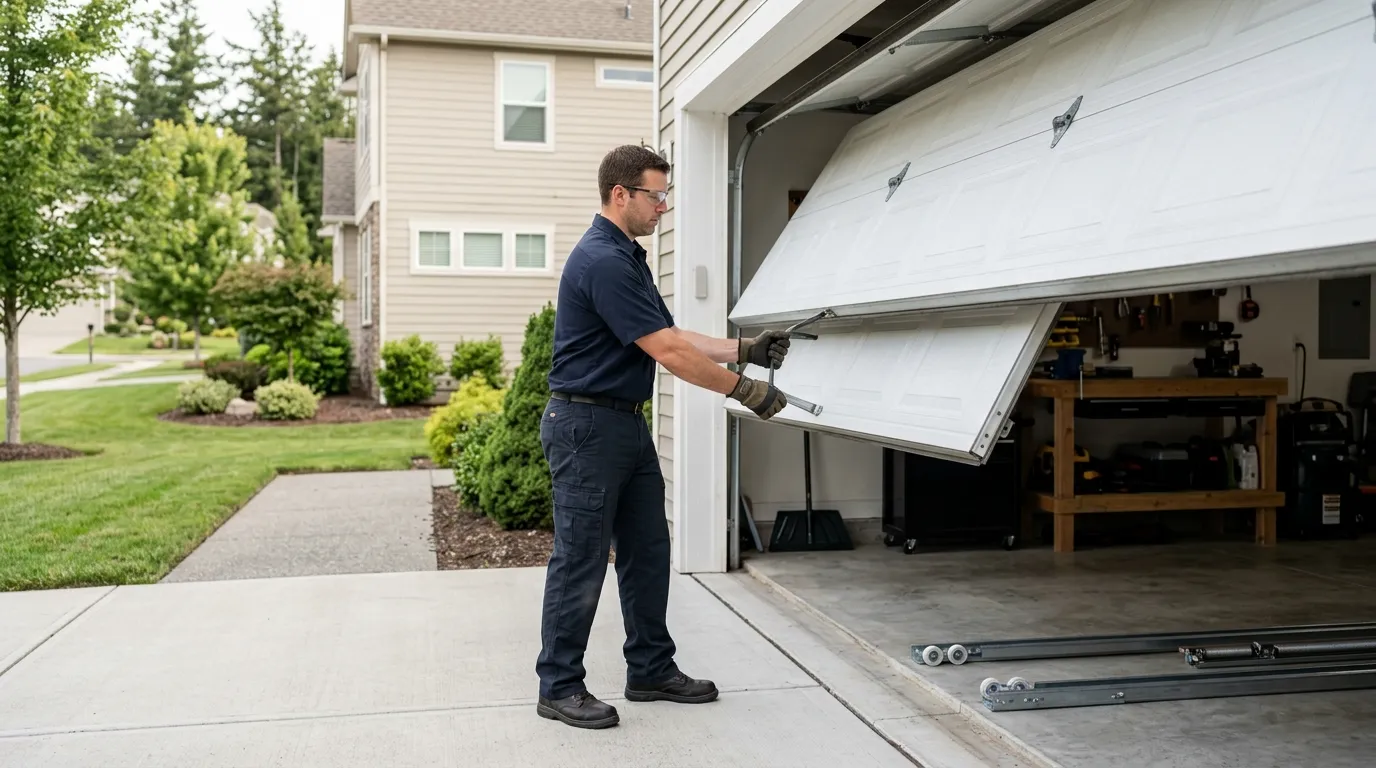
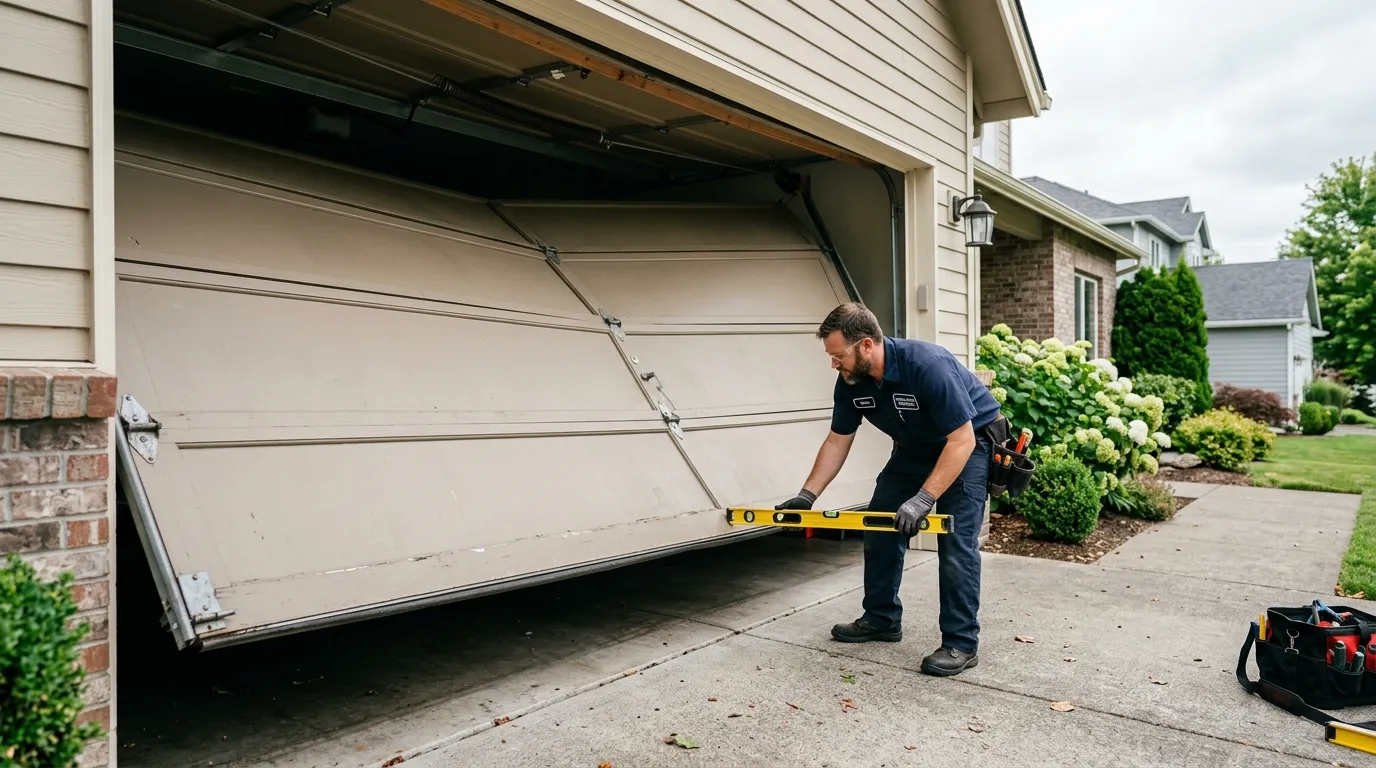
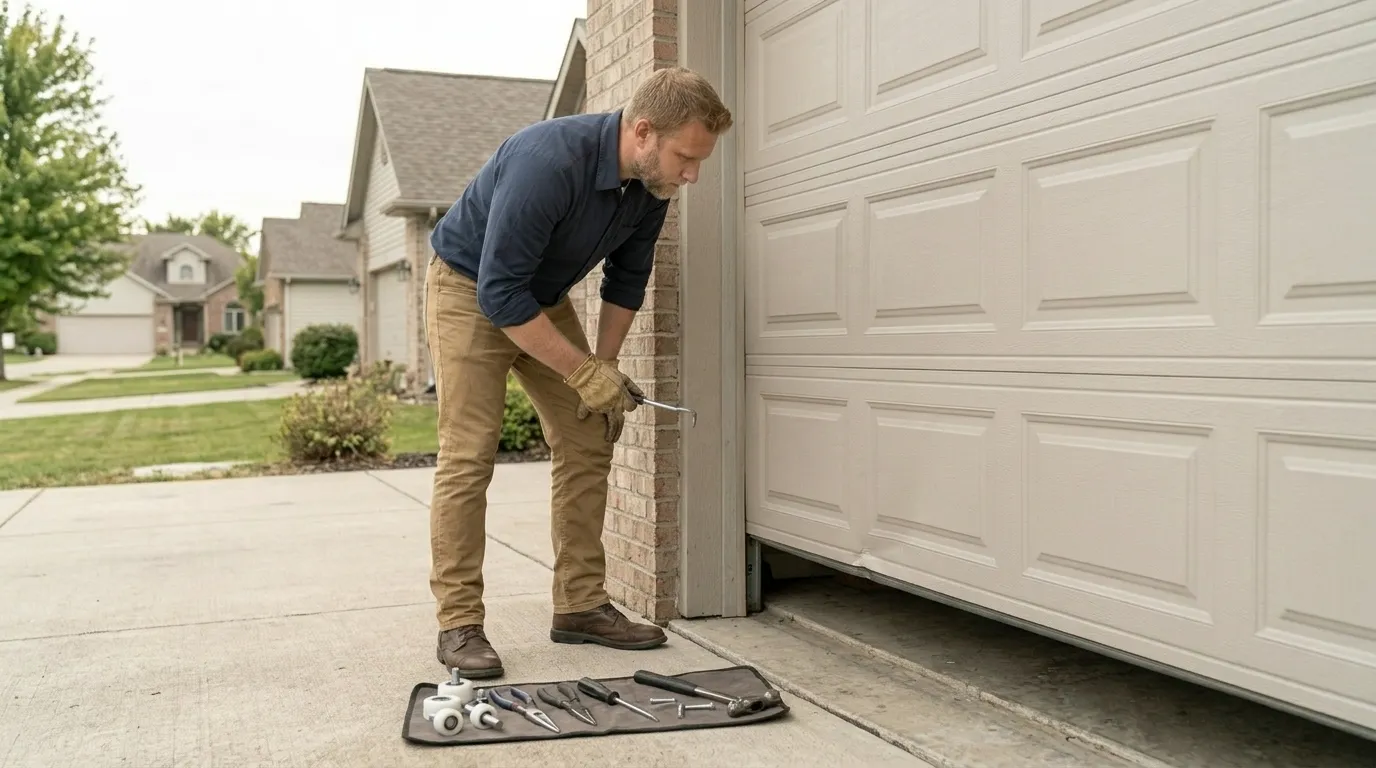
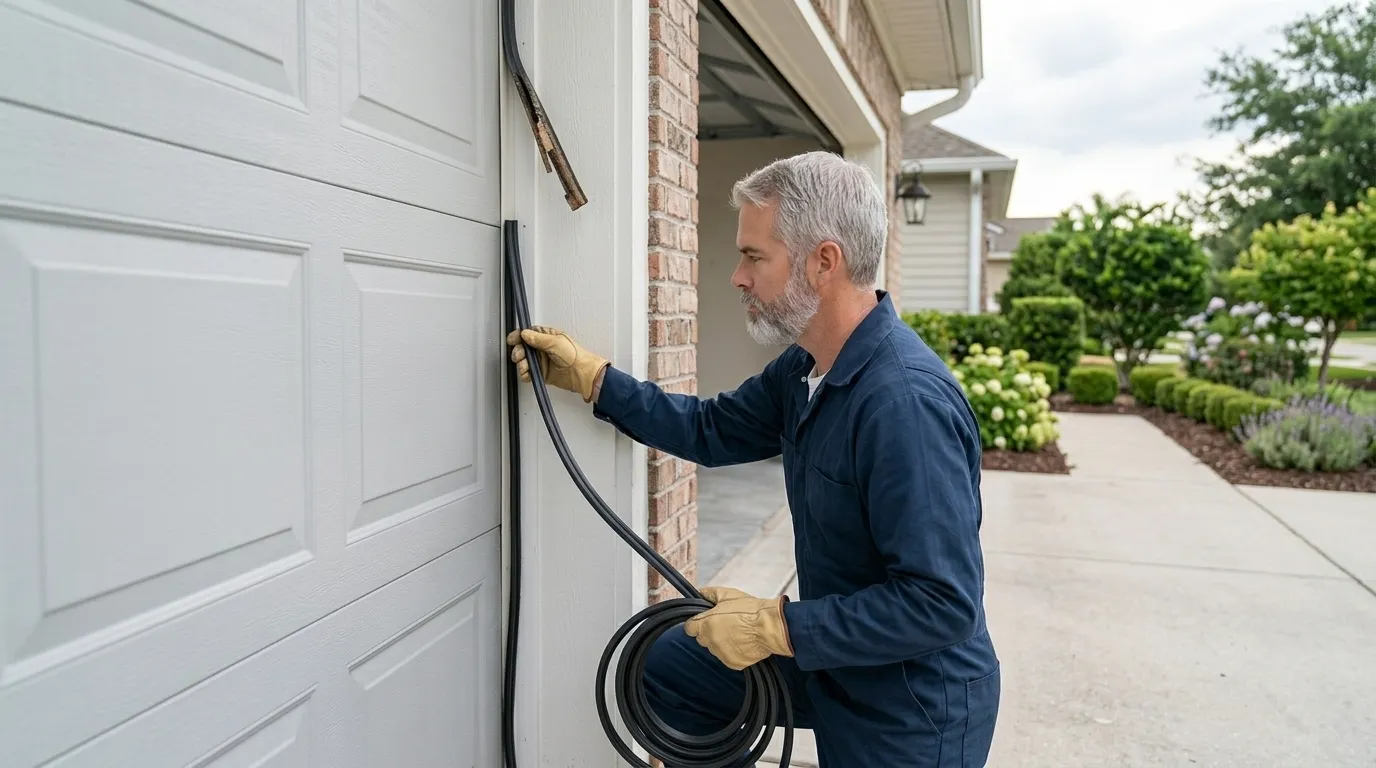
The panel that fails first is almost always the bottom section - the one closest to the driveway, closest to a stray basketball, closest to a trailer hitch backing in wrong. On steel doors from the housing stock common here, that panel dents inward rather than cracking, and once it's dented, the roller track on that side stops running true, so the door starts binding a few inches before it seats.
The second pattern is a panel that's warped rather than dented - a slight bow along the horizontal seam, usually on the section that gets the most direct exposure. It doesn't look dramatic from the driveway, but it throws off the seal at the bottom and top of that section, and once one panel bows, the door doesn't sit flush across the rest of the run either. Either way, the fix is a section swap, not a full door, as long as the model is still available.
Why It Happens Here
This area sits in a moderate-cold climate band, which means real temperature swings between summer and winter rather than the mild year-round range some parts of the state get. Steel garage door panels expand and contract with that swing, and on doors without foam-core insulation - common in the 2000s-era builder-grade doors that make up a lot of this housing stock - that flex is enough over years of cycles to loosen panel seams and crack old caulking at the joints.
Because most homes in the service area were built in a fairly tight window, from the mid-1980s through 2015 with median construction around 2004, a large share of doors are the same age and the same non-insulated steel construction, hitting the same wear pattern at roughly the same time. That's part of why panel replacement calls cluster the way they do - it's not one bad batch of doors, it's a lot of doors built to the same spec running out their seams at once.