Where This Job Goes Sideways
Melissa's median household income sits at $137,875, which puts a lot of these houses in the range where a $300-$400 repair makes sense and a full door swap doesn't. We see that math a lot here: a torsion spring goes on a door that's otherwise fine, and the homeowner is deciding whether to fix it or replace the whole unit. At this income level and with a house built around 2015, replacement rarely pencils out unless the panels themselves are damaged or the track is bent beyond adjustment.
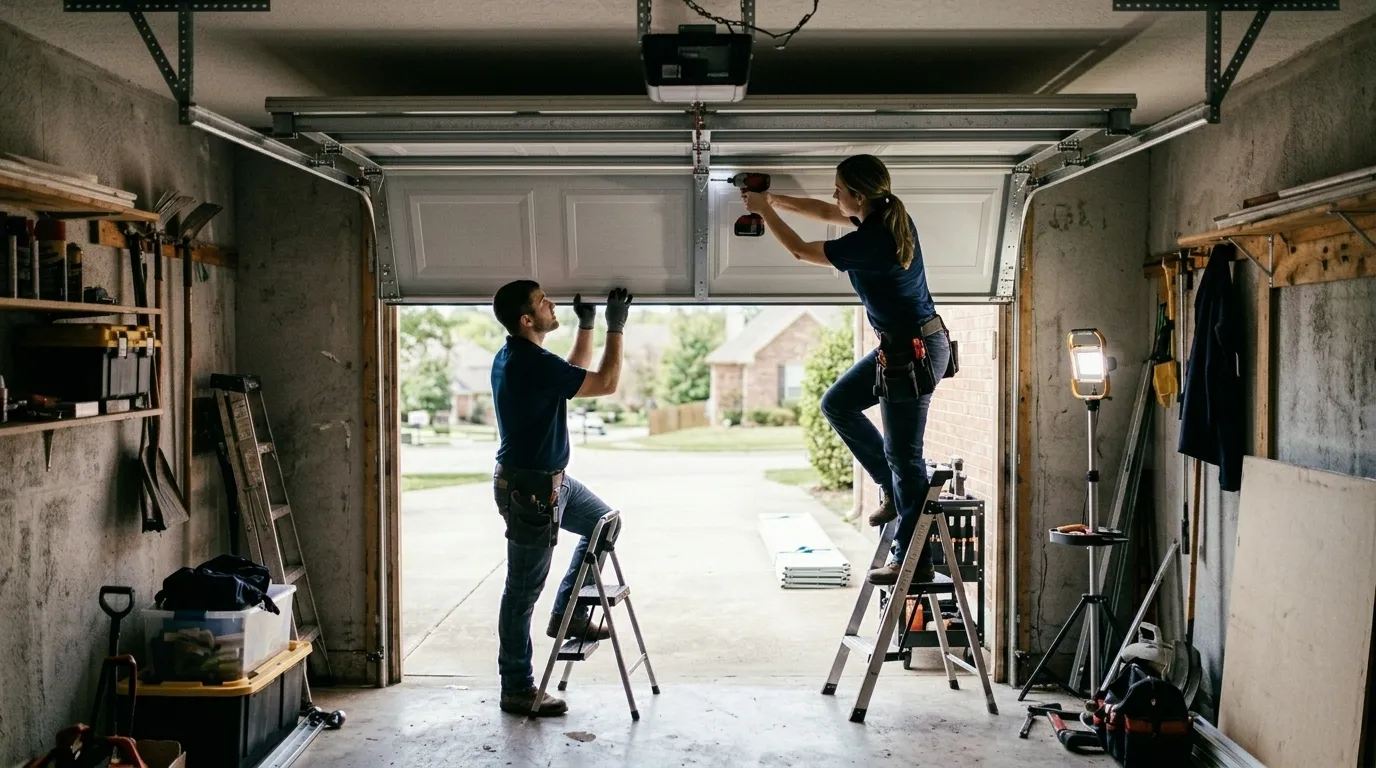
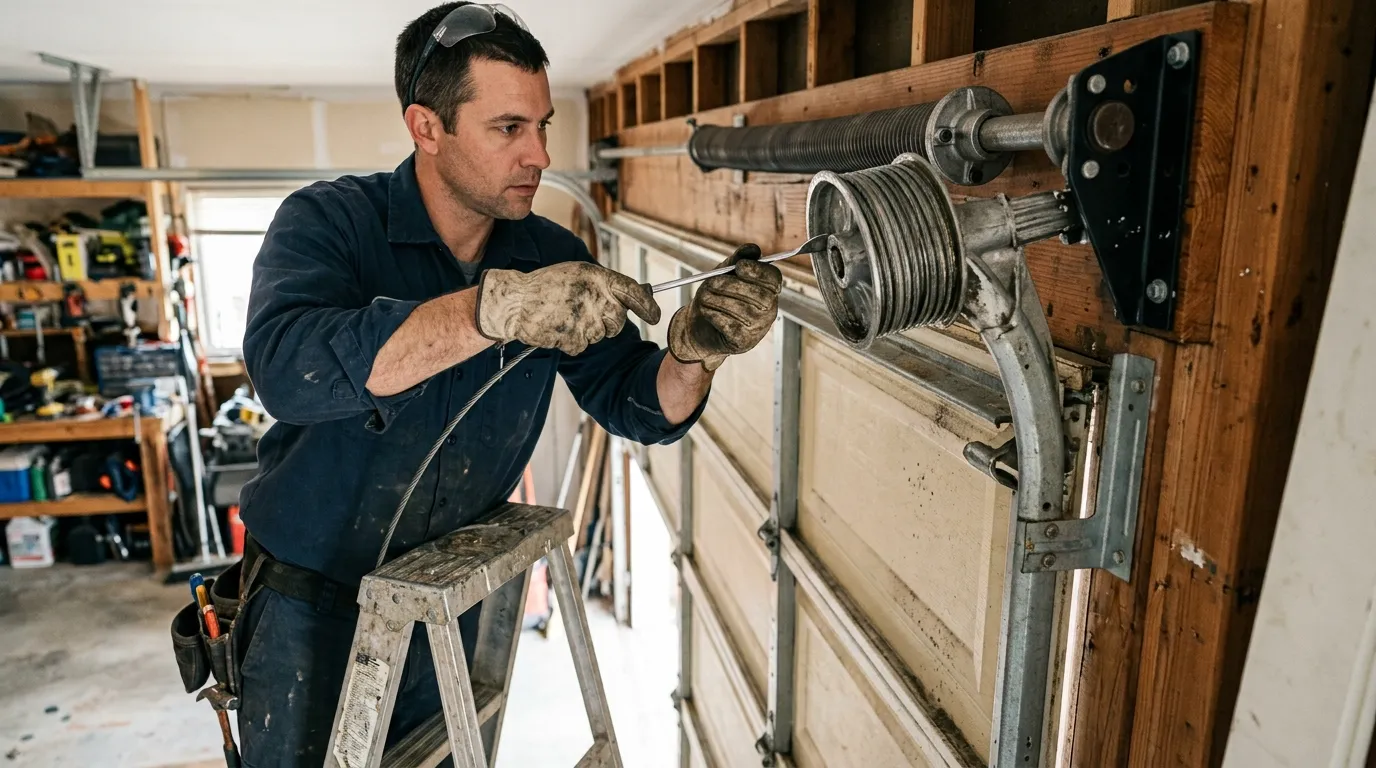
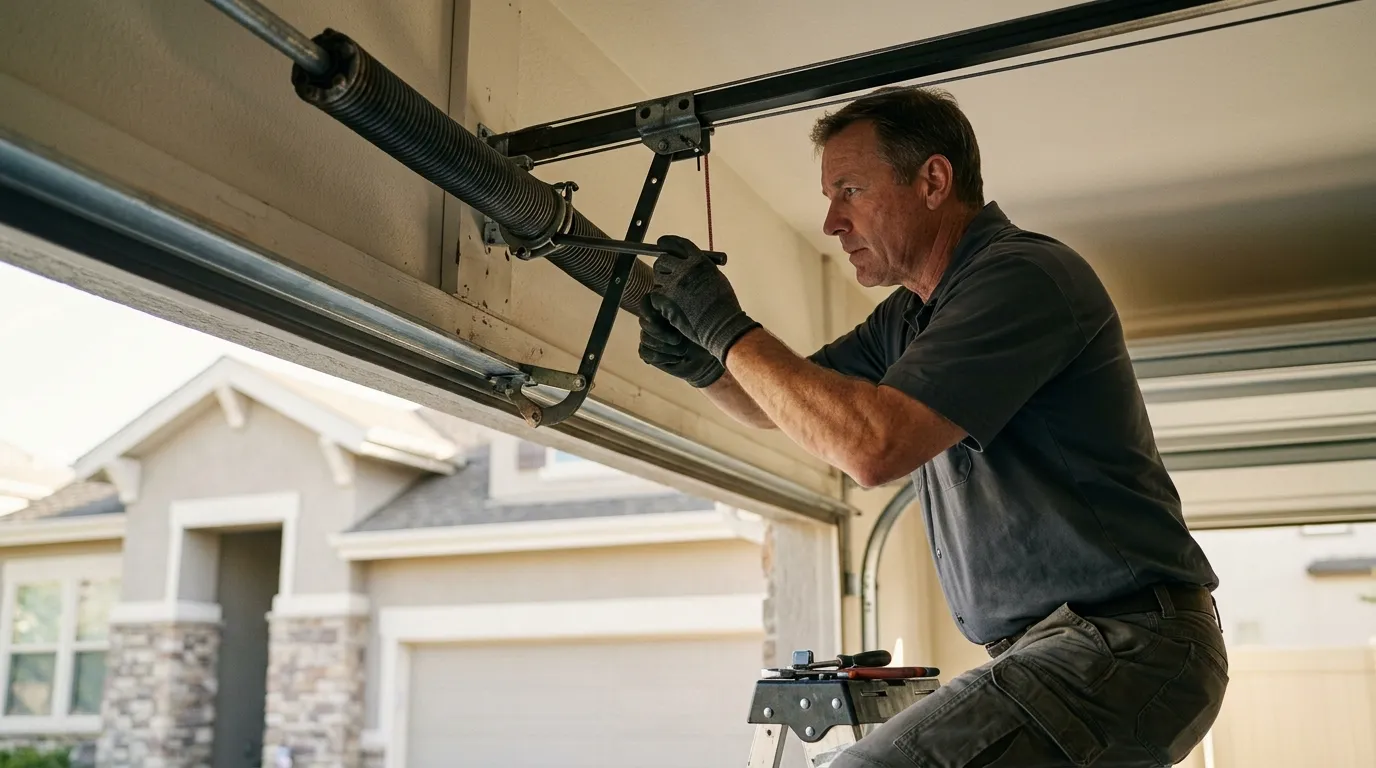
The median year built here is 2015, which is newer than a lot of what we cover out of Prosper. That means most Melissa garage doors are still on their original builder-installed torsion springs and openers, and those springs are rated for a set number of cycles - typically 10,000. A door opened twice a day for ten years is closing in on that number, which is exactly the age band Melissa is entering now. Builder-grade openers in this era also came with plastic drive gears that wear out around the same time, so a dead opener and a dying spring often show up close together in these houses.
How We Fix It
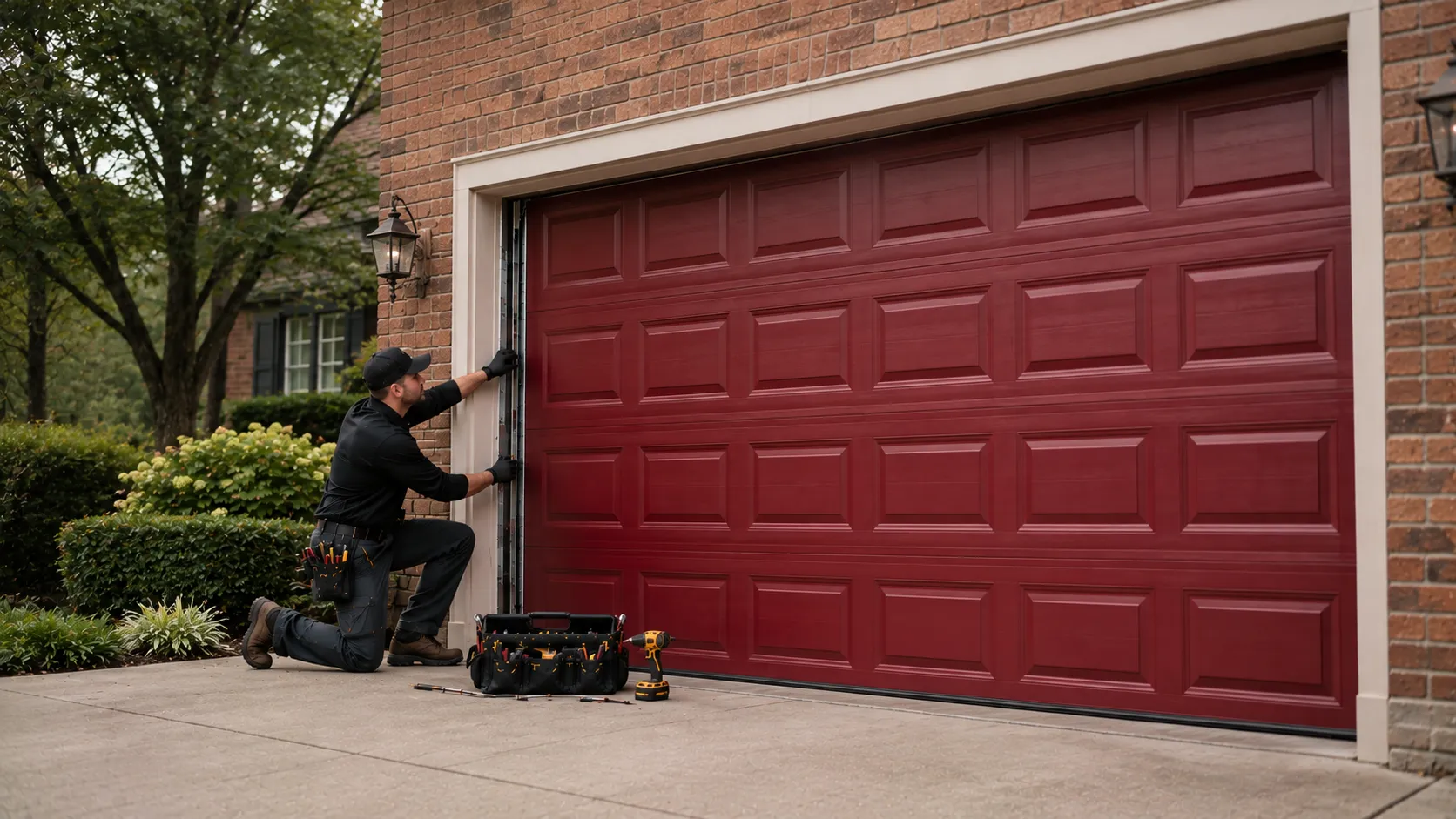
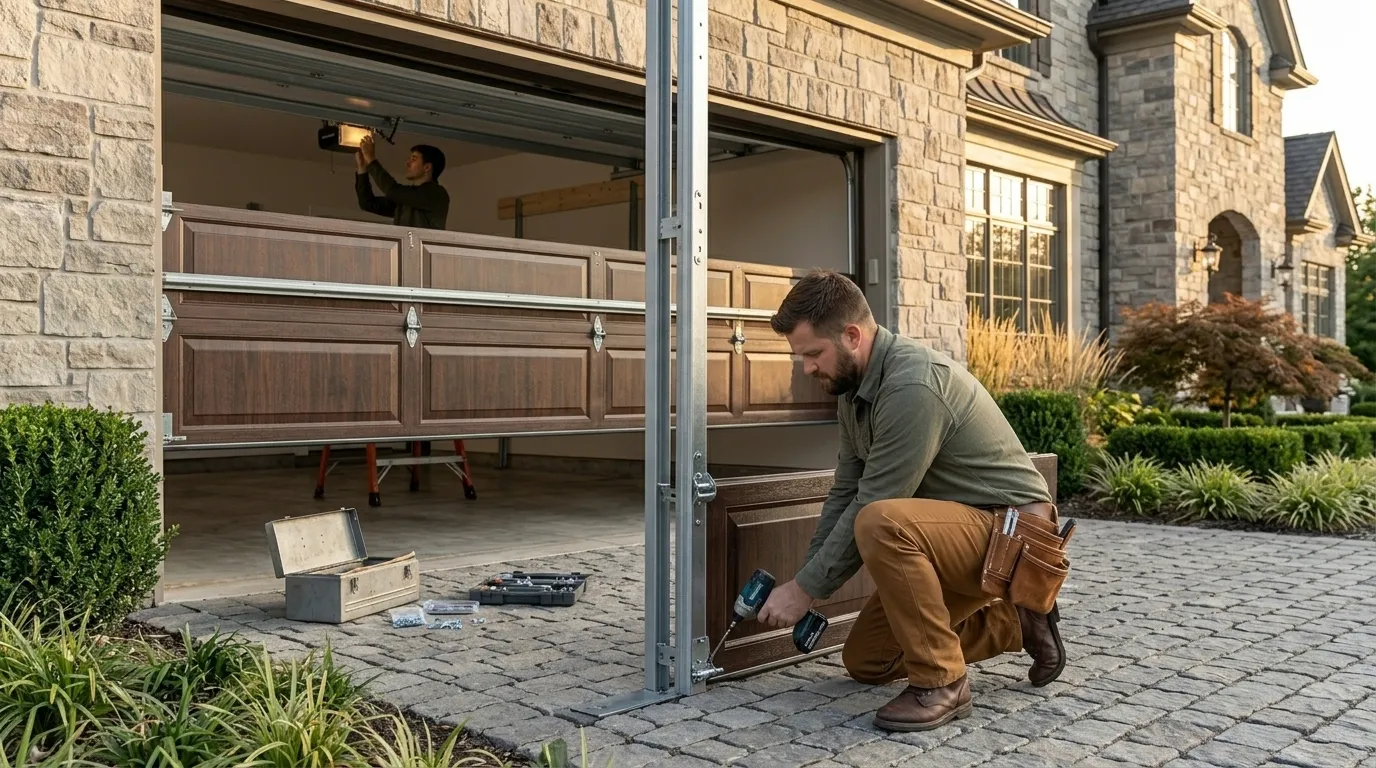
We come out from Prosper, about 15 miles, so we schedule the visit rather than promise a same-hour arrival. On site, the first check is the spring - is it broken, or just under-tensioned from age. On a house this age, a broken spring is the most common call, followed by a worn cable that's frayed at the drum from the same cycle count.
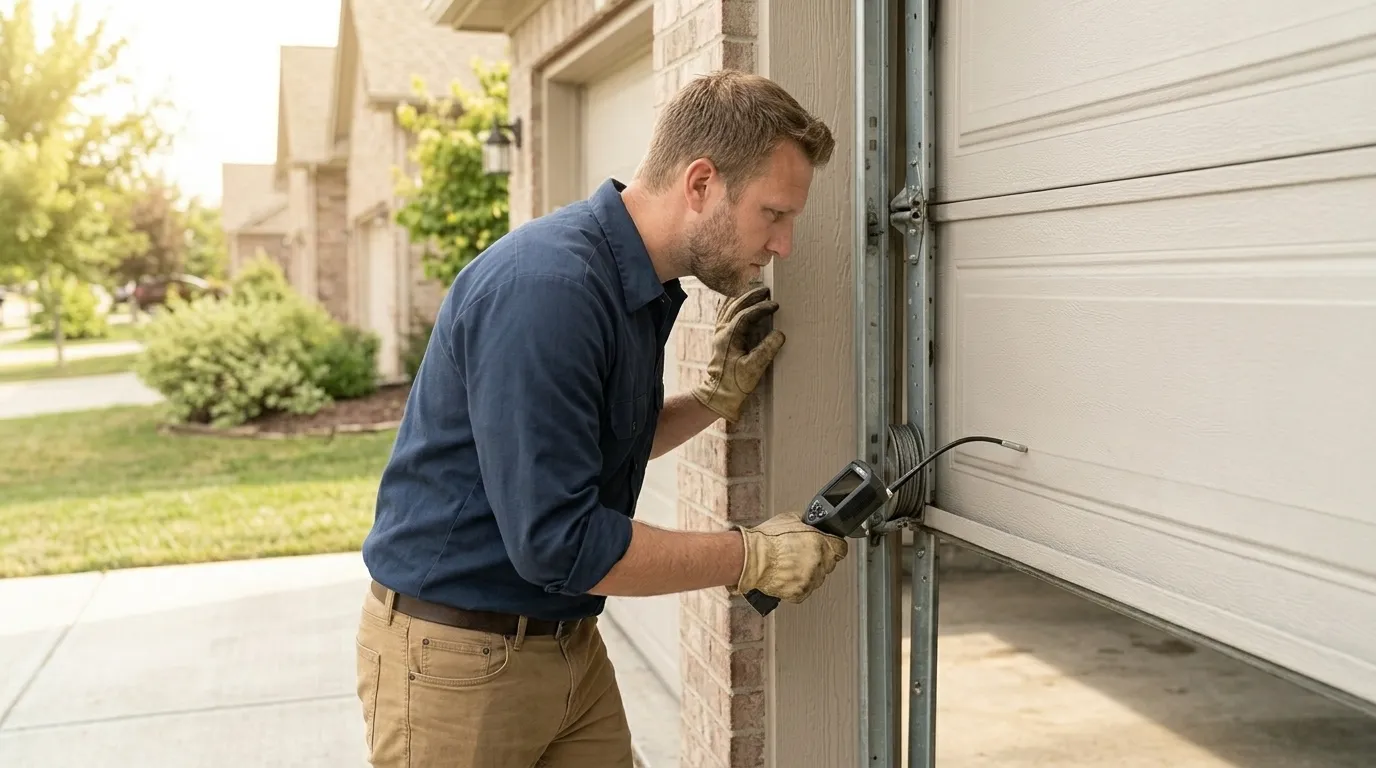
If the spring's intact but the door won't open, we check the opener's travel limits and force settings before touching anything mechanical - a lot of builder-installed openers were never dialed in correctly at construction, and ten years of temperature swings can push those settings further off. Cold-moderate winters here mean steel components contract enough in a hard freeze to bind an already-tight track, so we check squareness and track alignment as part of any spring job, not as a separate charge.
What You Are Seeing
A door that won't budge and a garage light that just clicks - that's almost always a broken torsion spring on a house from this era, not a dead opener. If the door lifts a few inches then reverses, that's the opener's force or limit setting, common on builder-installed units that were never adjusted after the first year.
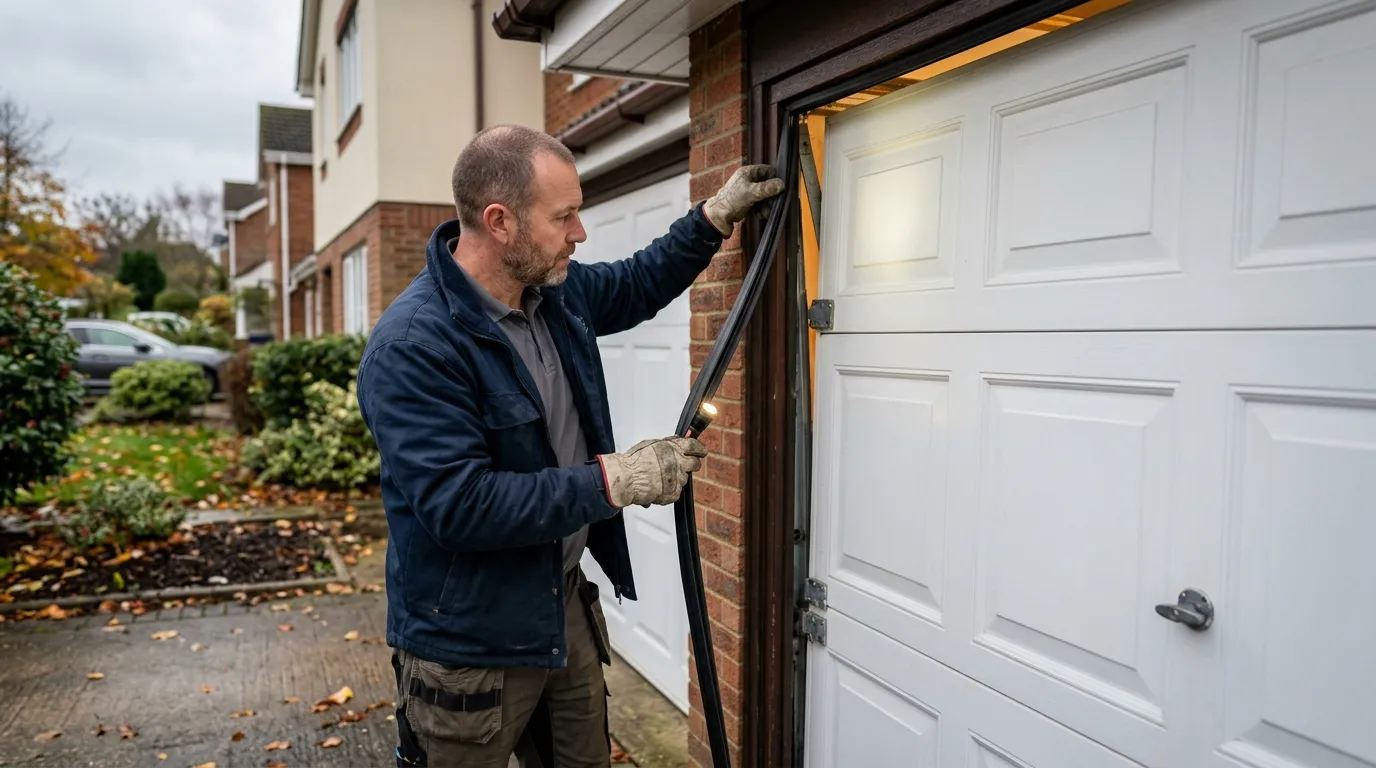
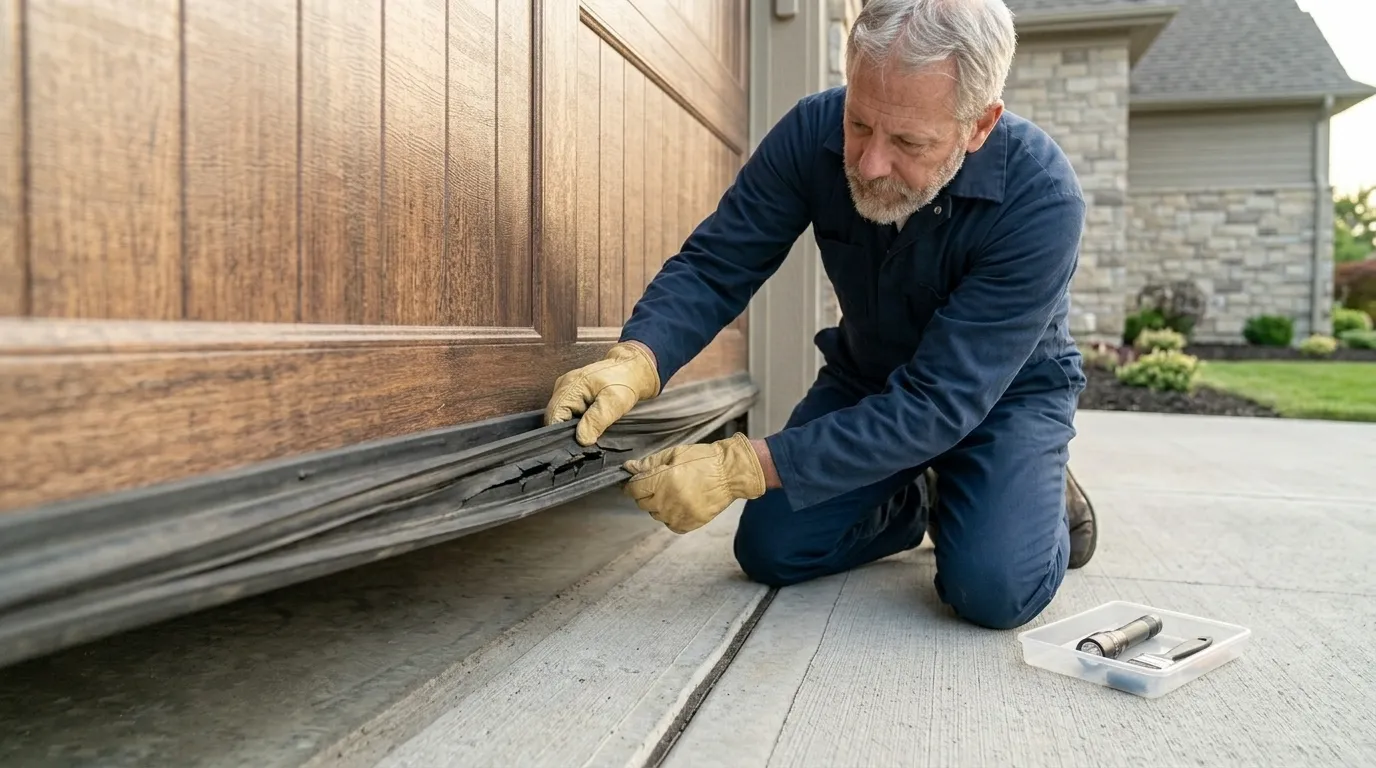
A door that's noisy but still moving usually means the rollers are worn, which shows up around year eight to ten on original hardware - right where most Melissa houses sit now. If the door is crooked in the frame or one side lifts faster than the other, that's a cable or a spring going out unevenly, and it's worth a call before it fully lets go, since a door that drops on one side can jump the track.