Where This Job Goes Sideways
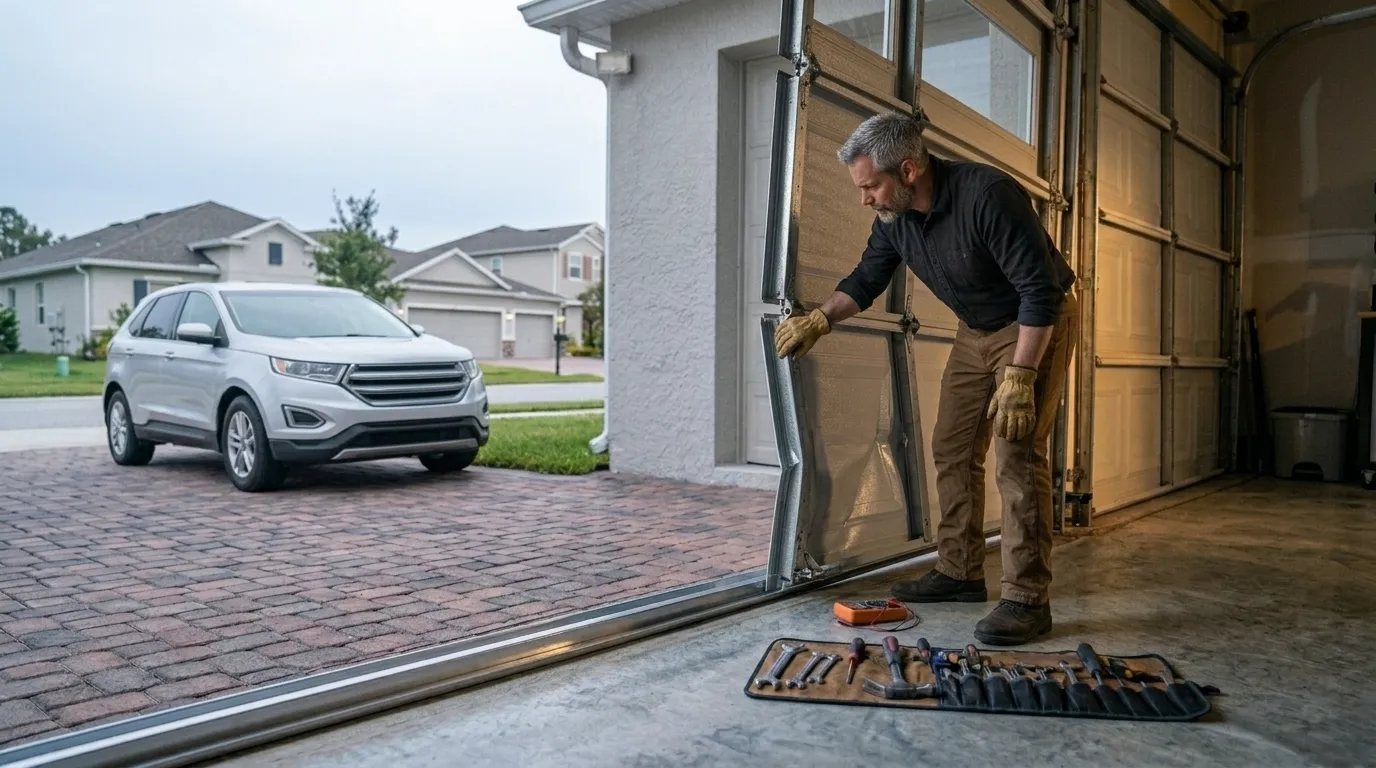
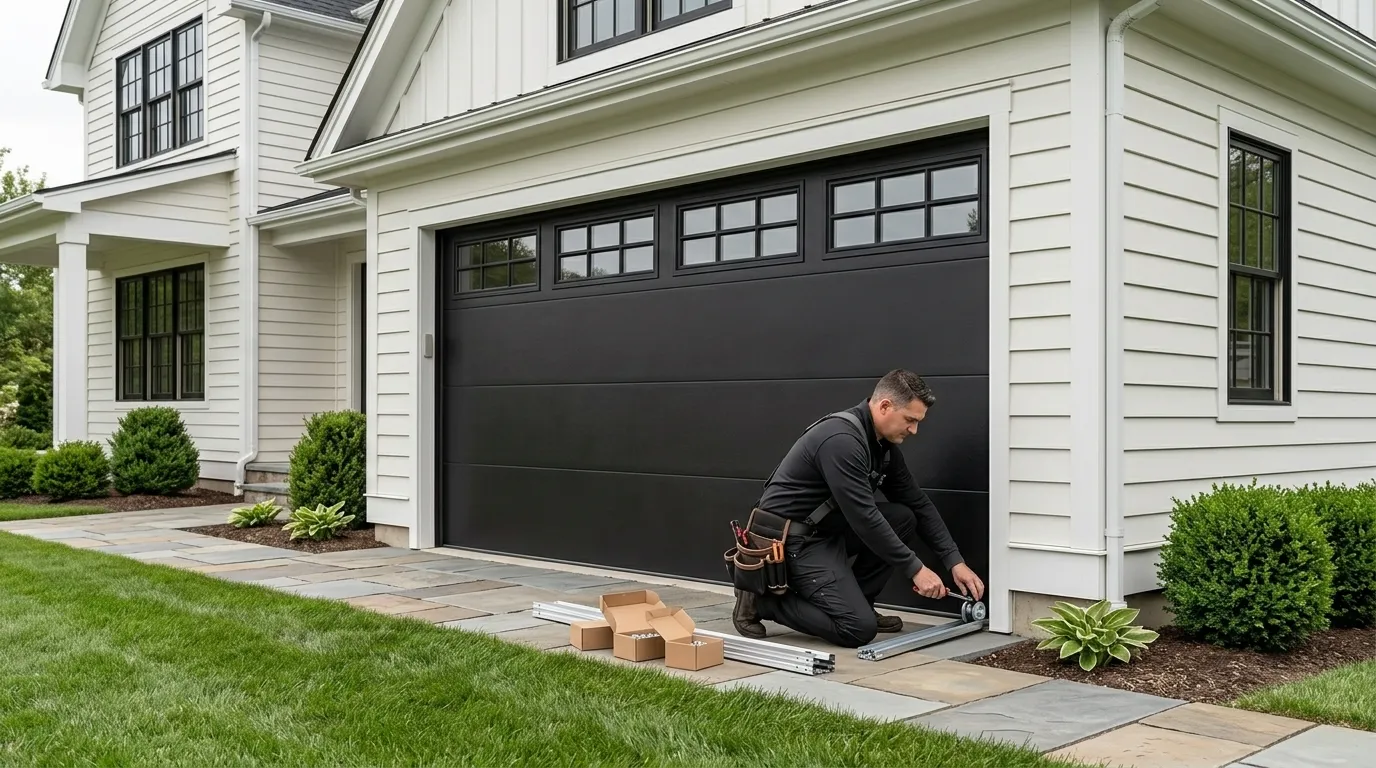
Melissa's housing stock is young. The median home here was built around 2015, which is a full decade newer than the typical house across the wider Prosper service area, where the median build year sits closer to 2004. That gap matters for panel work. A 2015-era door is almost always a factory-insulated steel or composite unit, often in a short-panel or carriage-house profile, with a specific paint code and window insert pattern tied to that builder run. The failure point isn't rust-through or warped wood like you'd see on an older door - it's a dented or cracked panel from a bumper tap, a basketball, or a trailer hitch, on a door that's otherwise sound. The trouble starts when a homeowner assumes any panel from a big-box shelf will match. It won't. Builder-grade doors from that period were sold in runs, and the exact panel profile can be hard to source once the original run is gone. We've had jobs where the door itself is fine - opener, springs, track, all good - and the only problem is one dented section, but finding the matching panel takes more legwork than the install itself. That's the sideways part: a five-minute problem with a two-week parts wait.
How We Fix It
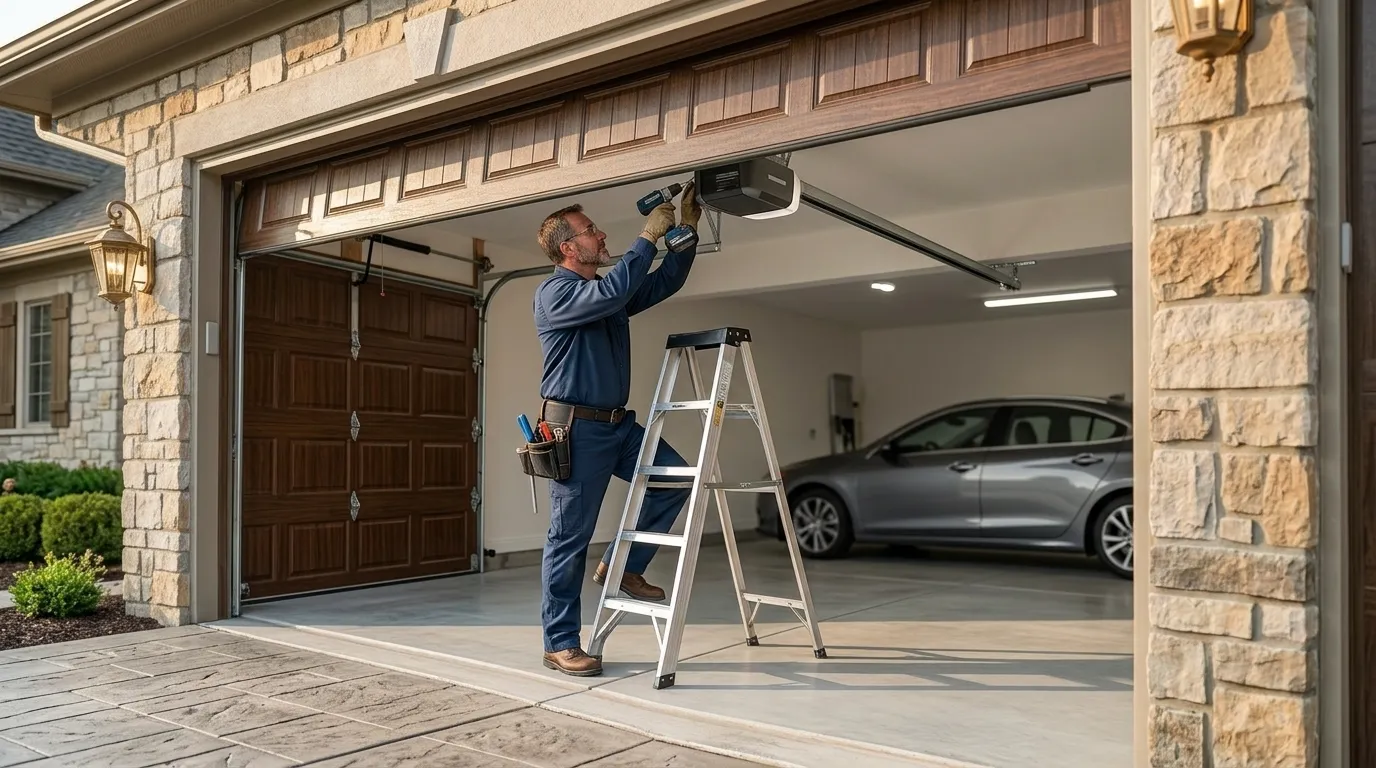
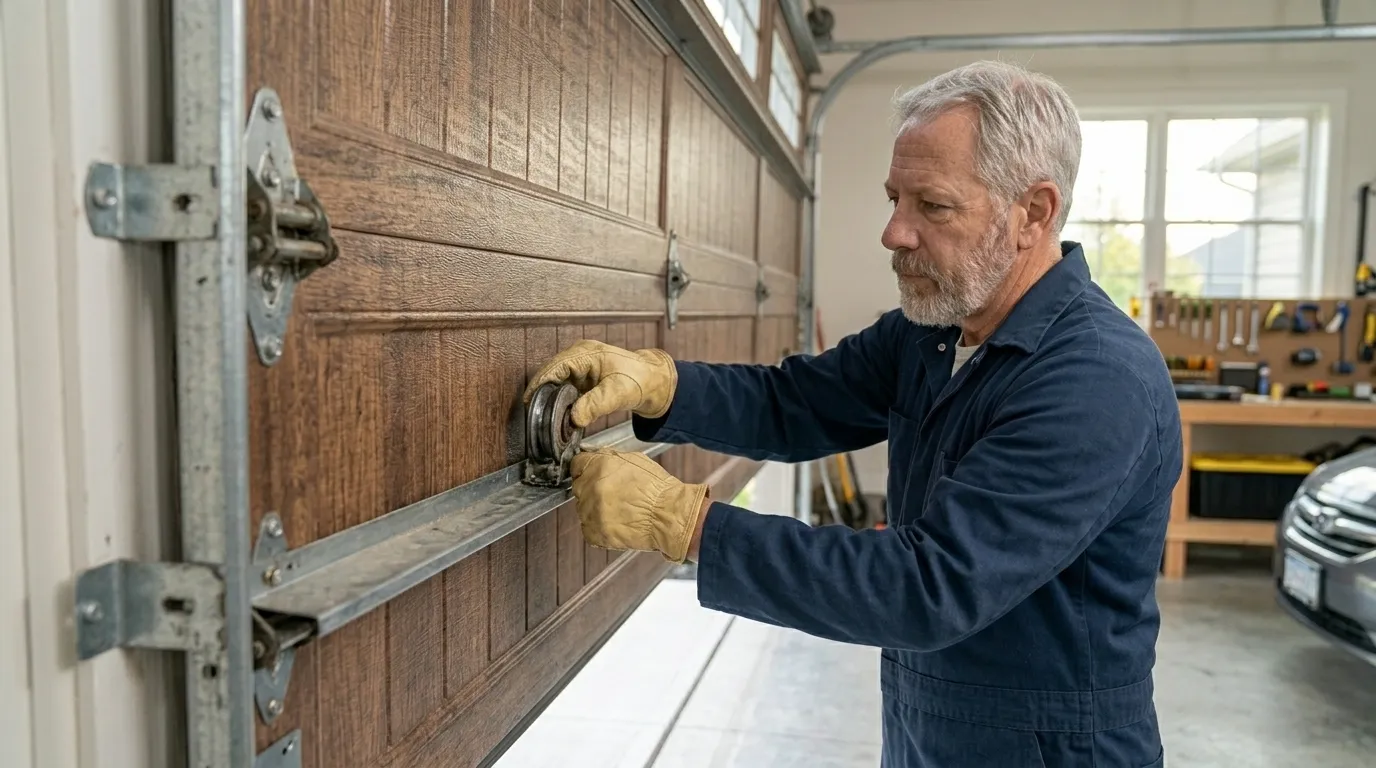
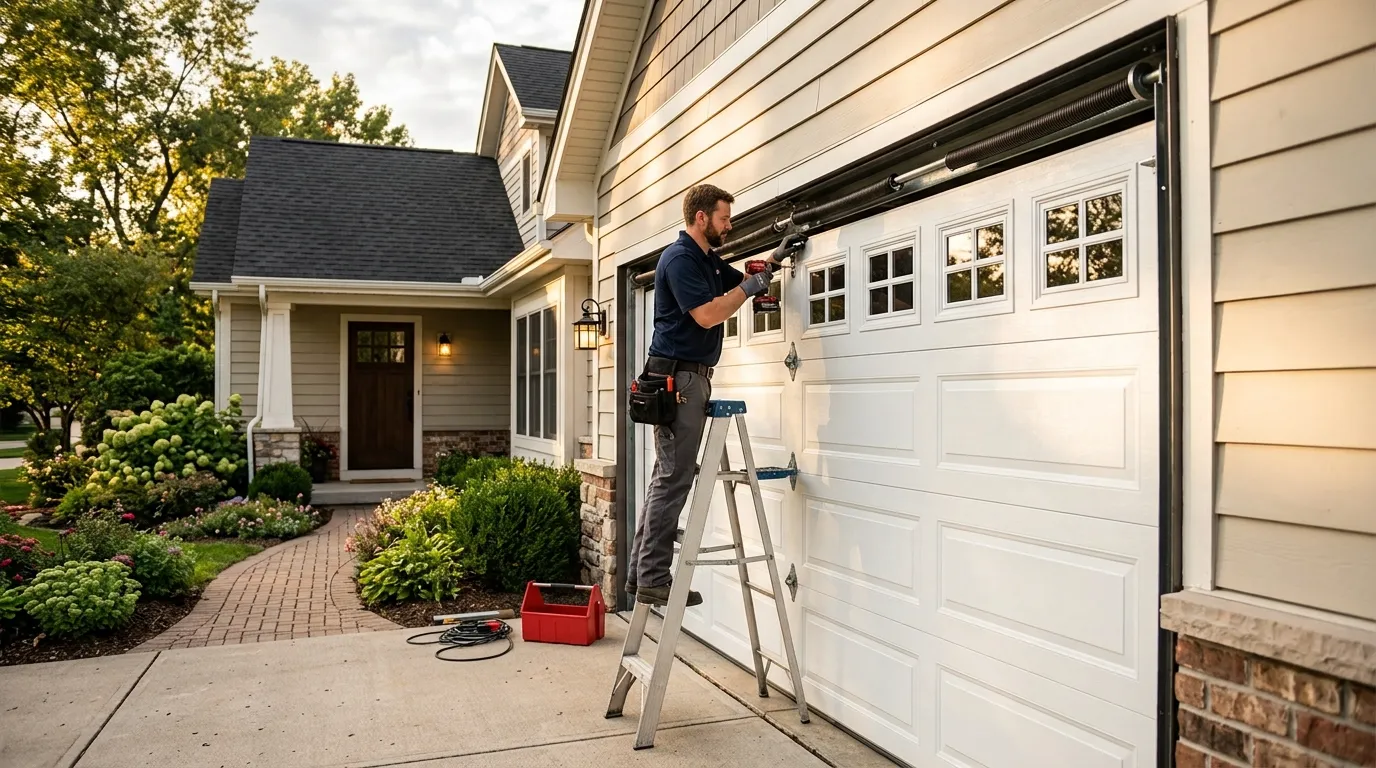
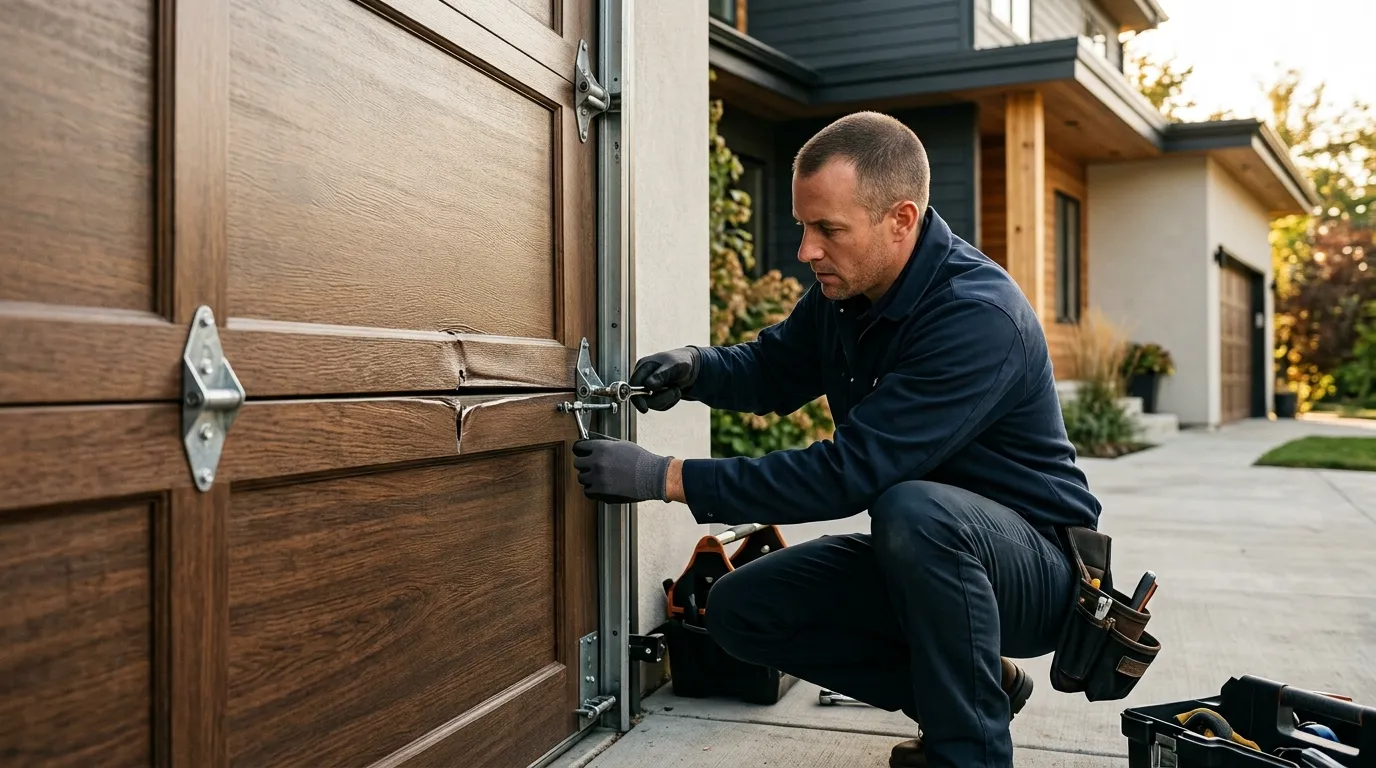
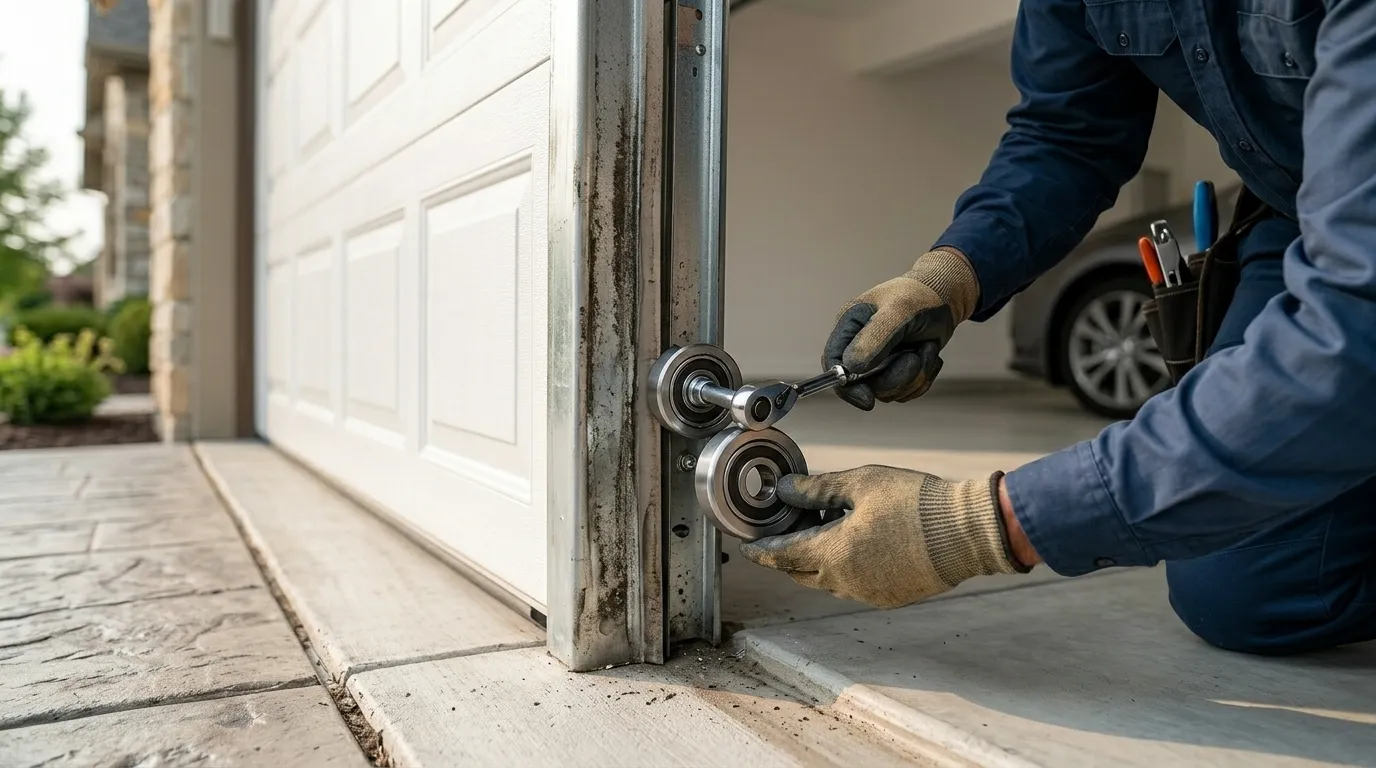
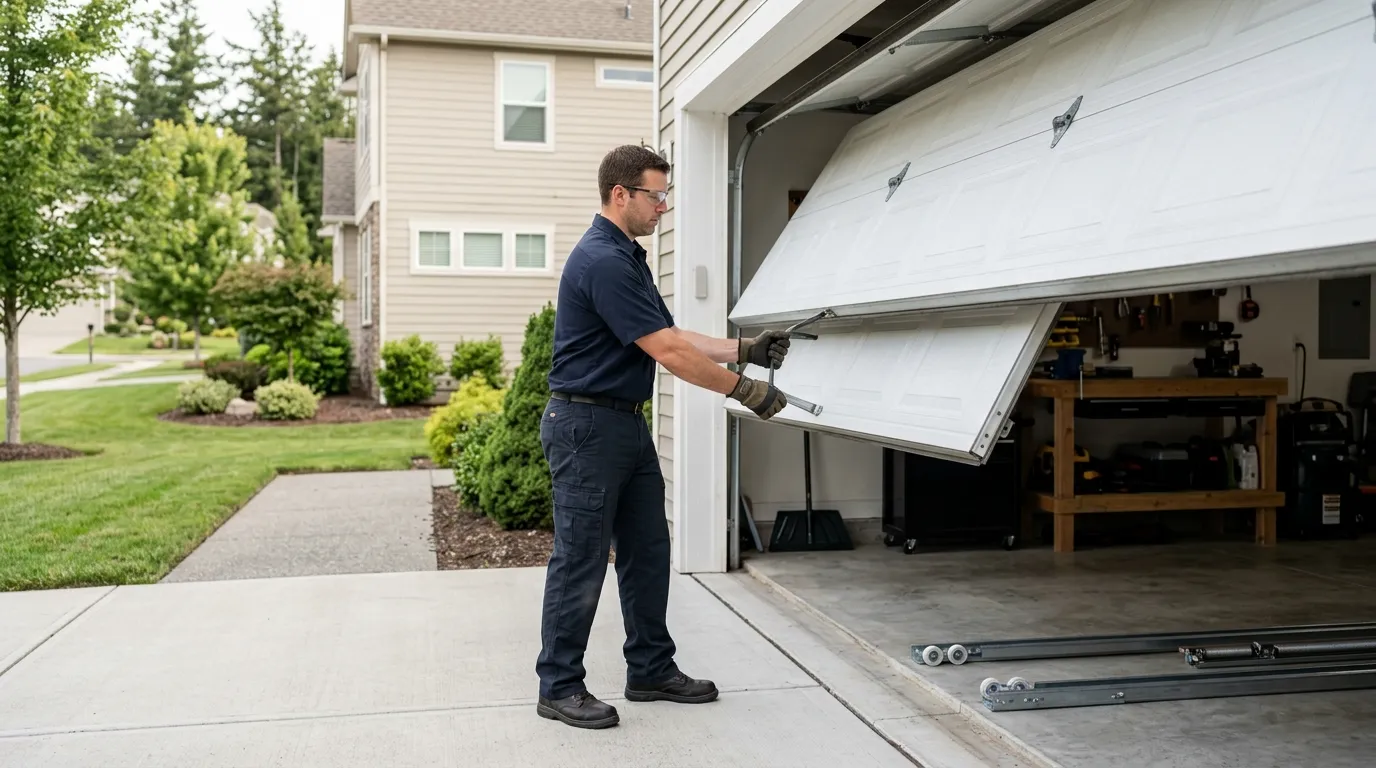
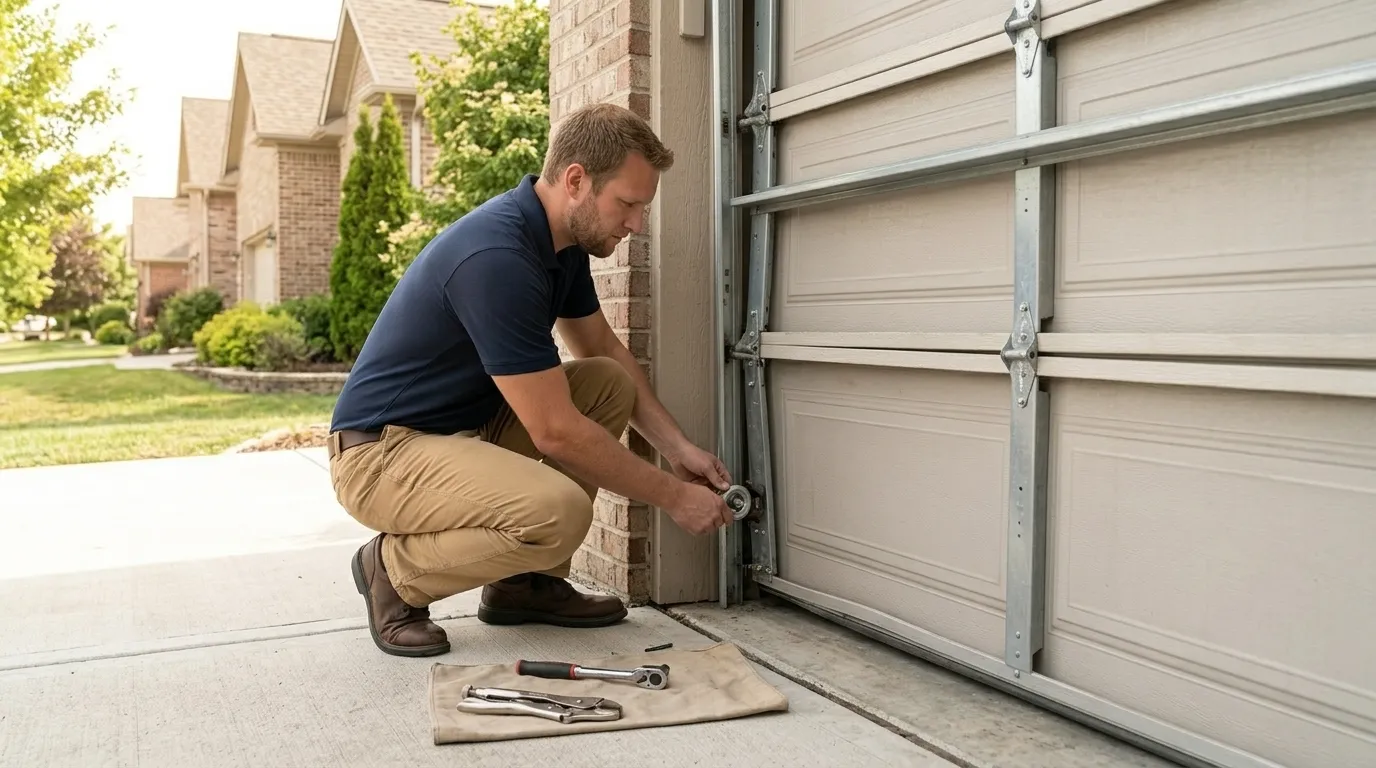
First we identify the door - manufacturer, model, and panel profile - because on a 2015-era insulated door, the panel isn't a flat sheet, it's a sandwich with foam core and a steel or composite skin on both sides, and swapping it means matching gauge and R-value, not just color. We pull the damaged section, check the hinges and rollers riveted to it for stress cracks from the impact, and confirm the track alignment hasn't shifted, which it can on a lighter composite door if the hit was hard enough. If the replacement panel is in stock, it goes in the same visit with new hardware at the attachment points. If it's a special-order color or embossing, we'll order it and come back rather than install a mismatched piece that'll bother you every time you pull in. We also check the opposite panel and the ones above and below for hairline cracks that haven't opened yet - insulated composite doors can crack quietly near the hinge cutouts before they fail visibly.
What You Are Seeing
A door that still opens and closes fine but shows a crease, a puncture, or a spiderweb crack across one section, usually near a bottom corner or a hinge point. Sometimes it's a hairline split in a composite skin that widens with temperature swings - our winters get cold enough that a small crack in a foam-core panel can open further overnight before you notice it in daylight. If the door binds, drags, or the opener strains, that's not a panel problem anymore; that points to track or spring trouble, which is a different repair. On the newer builder-grade doors common in Melissa, a single damaged panel rarely means the whole door needs replacing - the frame and remaining sections are usually good for another decade or two.