What Is Going On
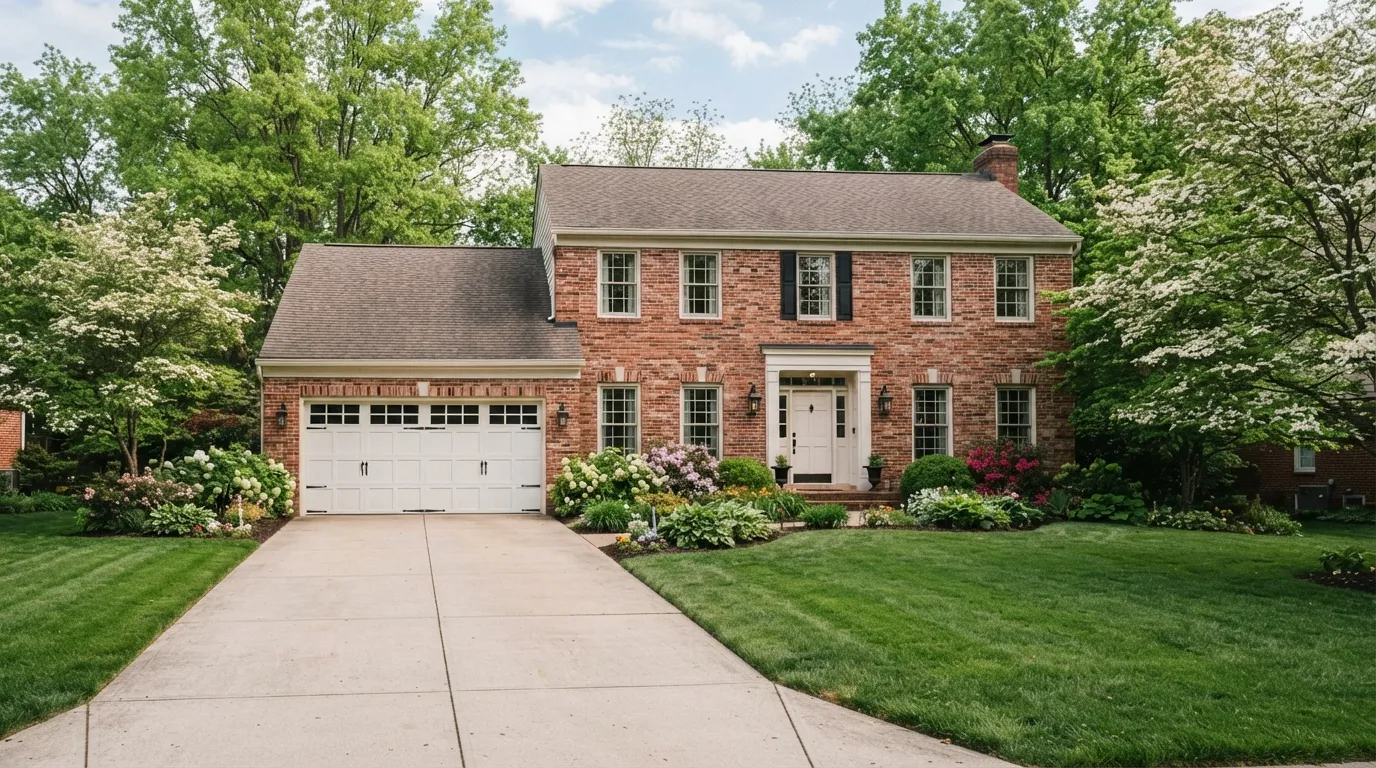
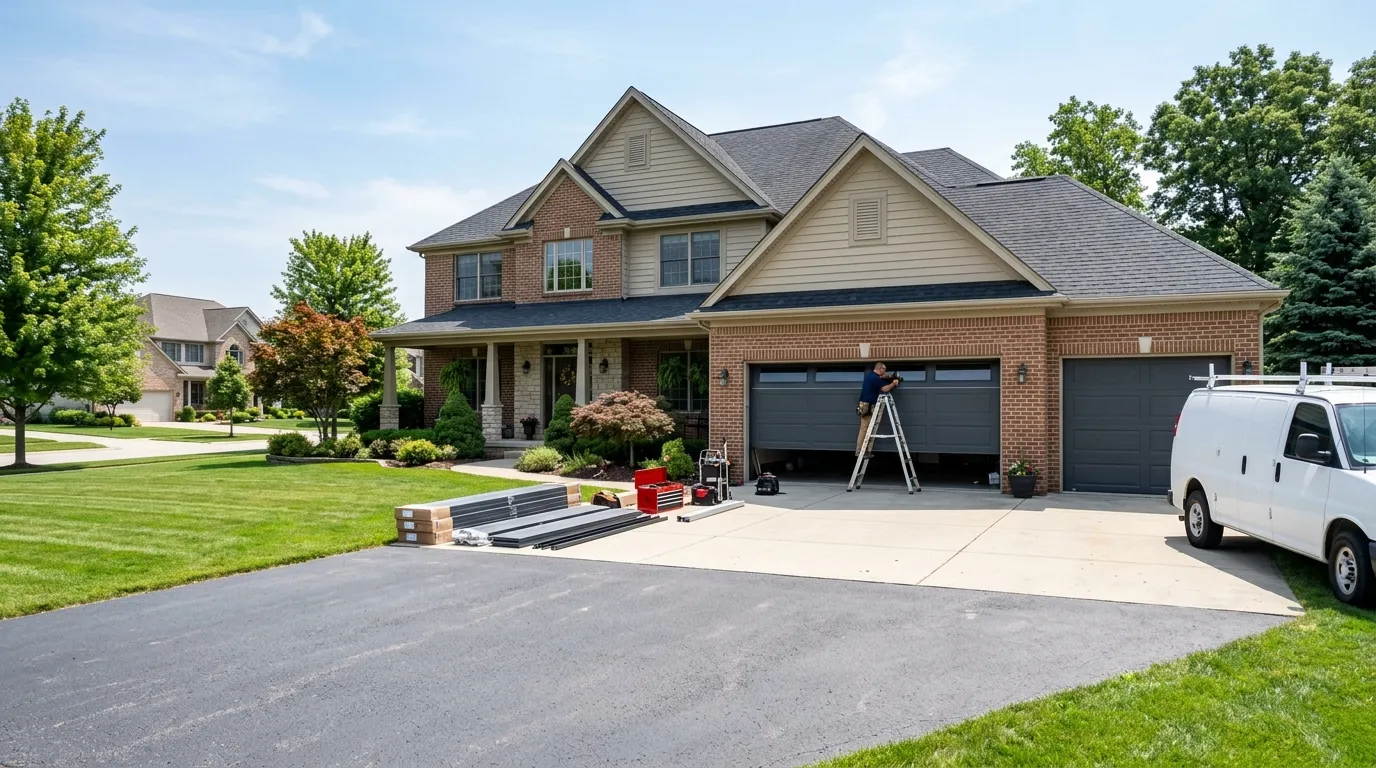
Most houses in this area went up between 1985 and 2015, with the median build year sitting around 2004. That means the garage door hardware on a typical Prosper house is a steel raised-panel door on a torsion spring system with a chain or belt-drive opener from the 2000s wave of construction - not the older side-mounted extension spring setups you'd find in a town full of pre-1980 housing. This is a fairly uniform stretch of stock across the 21 named communities in this part of the county, which means the failure patterns are pretty consistent too: opener logic boards aging out around the 15-20 year mark, torsion springs reaching the end of their cycle count, and nylon rollers on the original hardware finally cracking. If your door is original to the house, it's likely a 2000s-era build, and that changes what's worth fixing versus replacing.
The symptom that gets people calling is usually noise - a grinding or a bang on the way up - but the underlying issue is almost always one of those three things: spring, roller, or opener board. Knowing your house's rough build era helps narrow down which one before a truck ever shows up.
What to Check
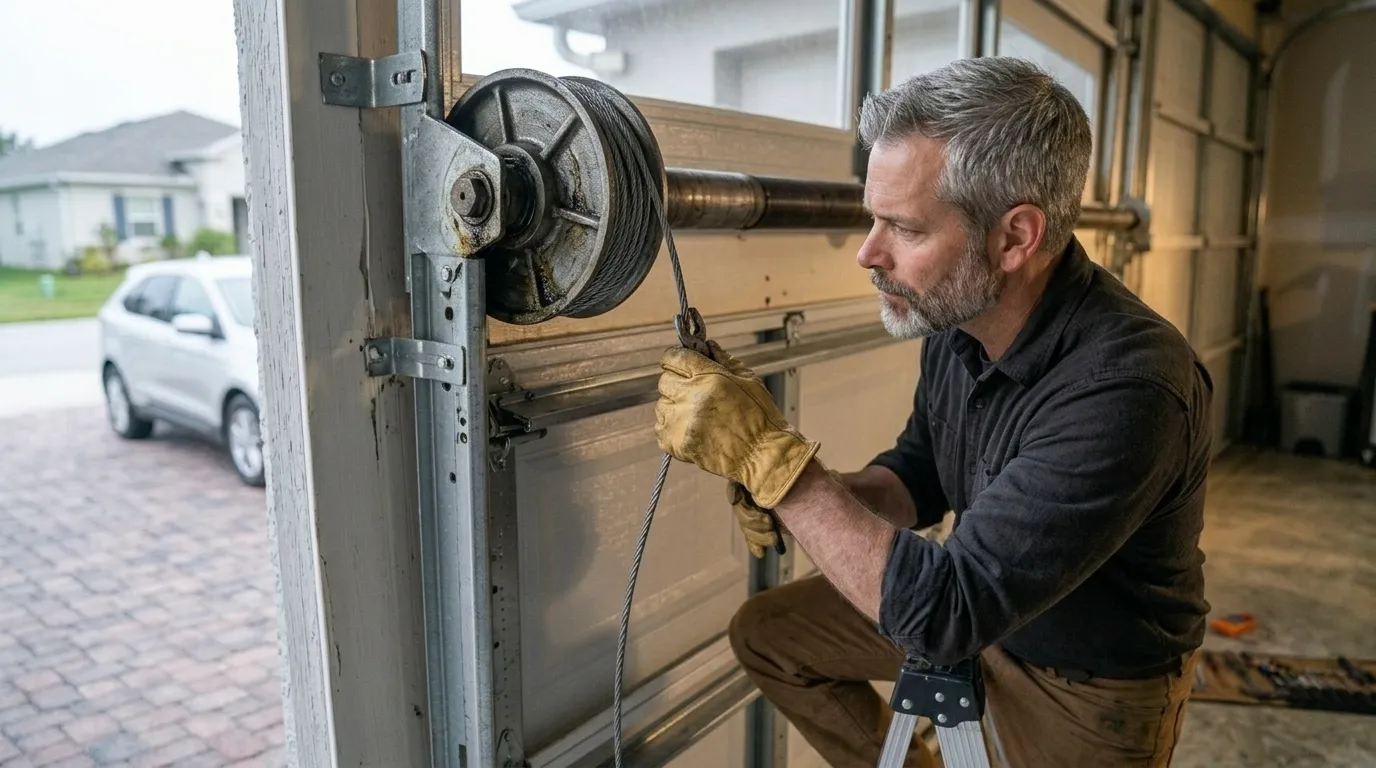
Start with the springs. On a torsion system - standard on nearly all the 2000s-era construction in this stretch of the county - look at the coil above the door. If it's visibly gapped or twisted unevenly, that's a spring near the end of its life, not something to force. Don't try to adjust it yourself; torsion springs under tension are one of the few things in this trade that genuinely hurt people.
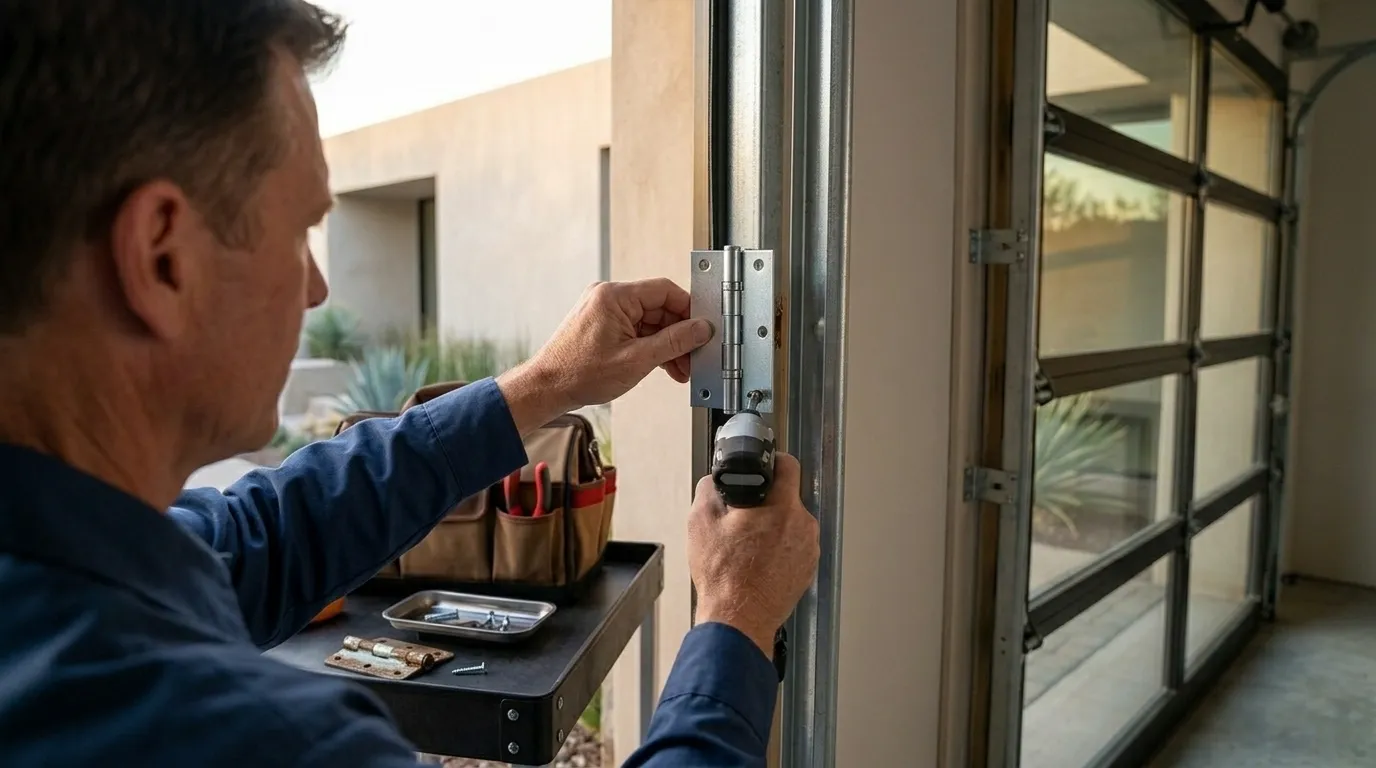
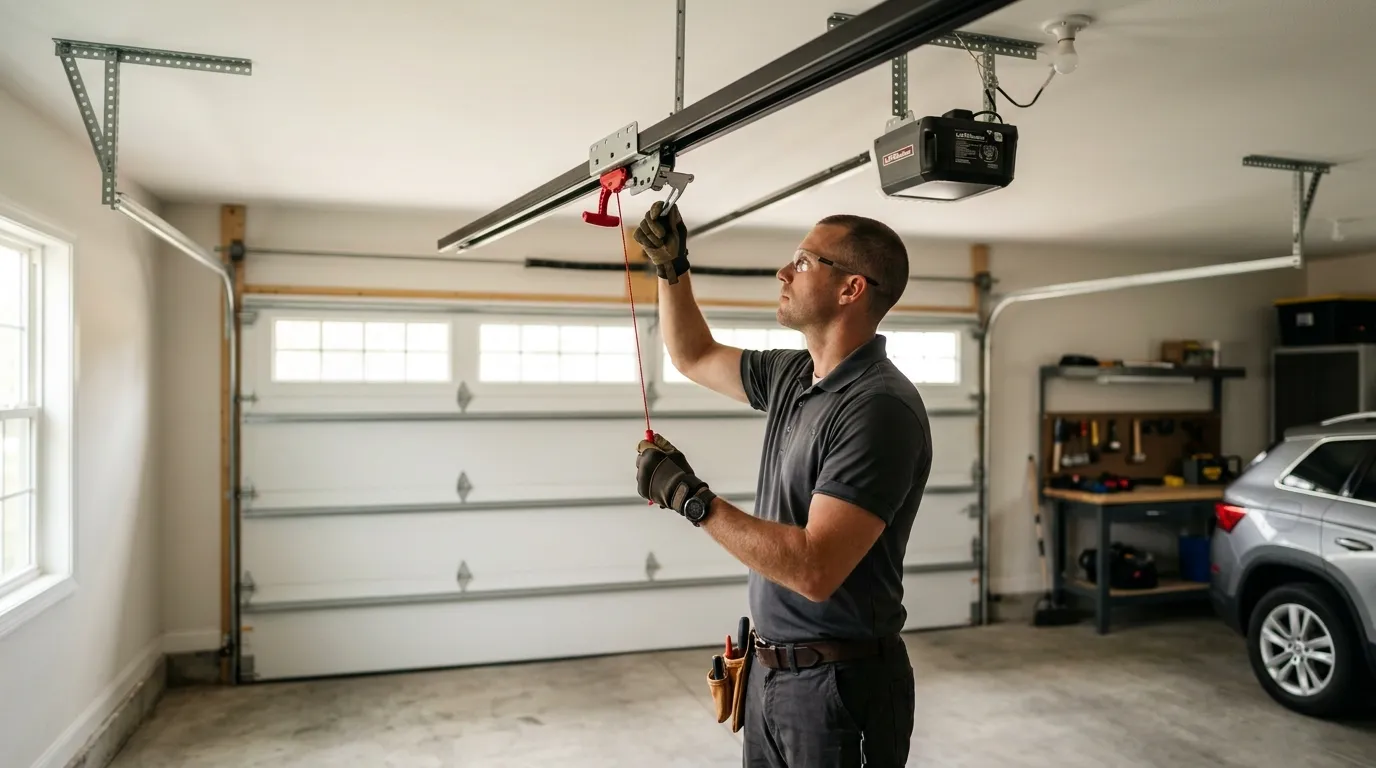
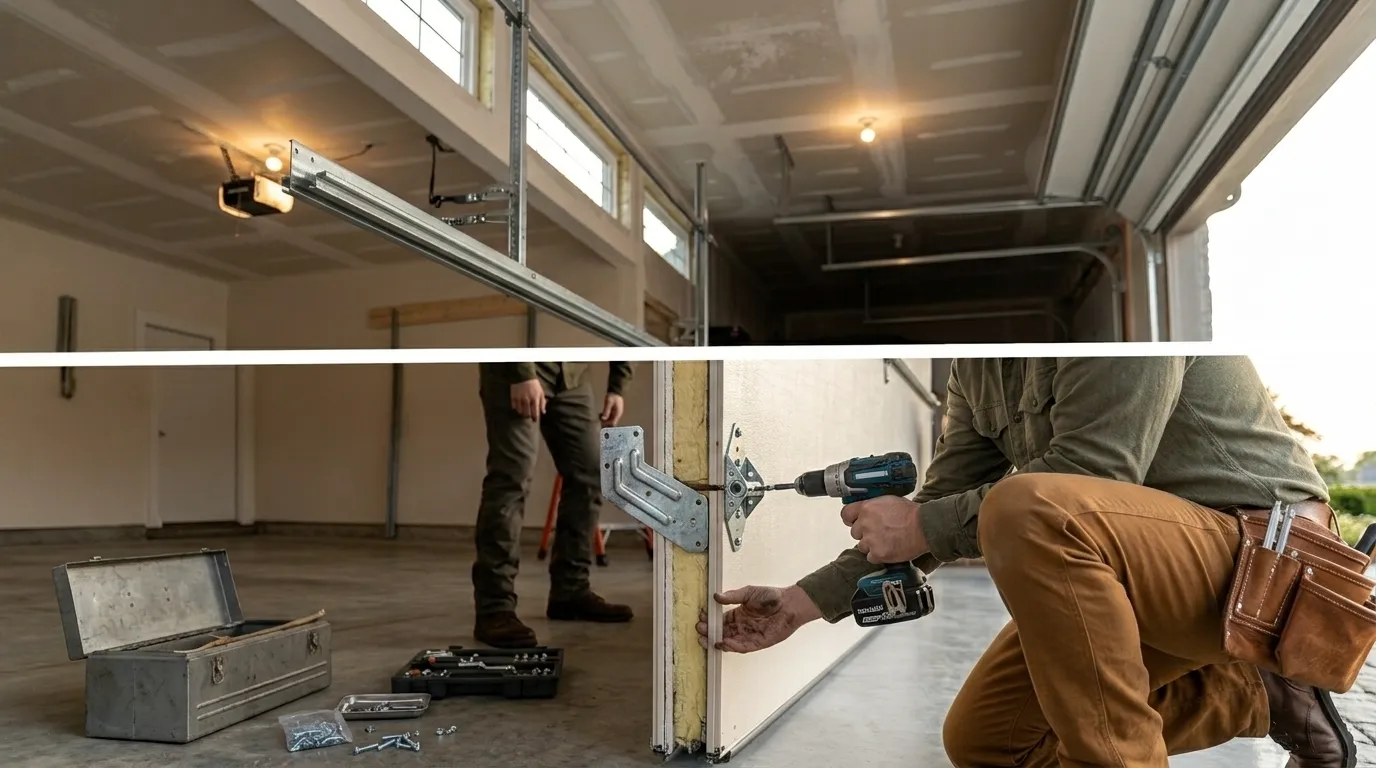
Next, check the rollers. On houses in the 1985-2015 build range, factory rollers were almost always nylon, and nylon has a shelf life regardless of use - you'll see cracking or flat spots even on a door that's barely been cycled. Then the opener: if it's the original unit from when the house was built, listen for the motor straining rather than the door moving smoothly. A strained motor on a 15-to-20-year-old opener is usually a sign the gears are going, not something a lubricant spray fixes for good.
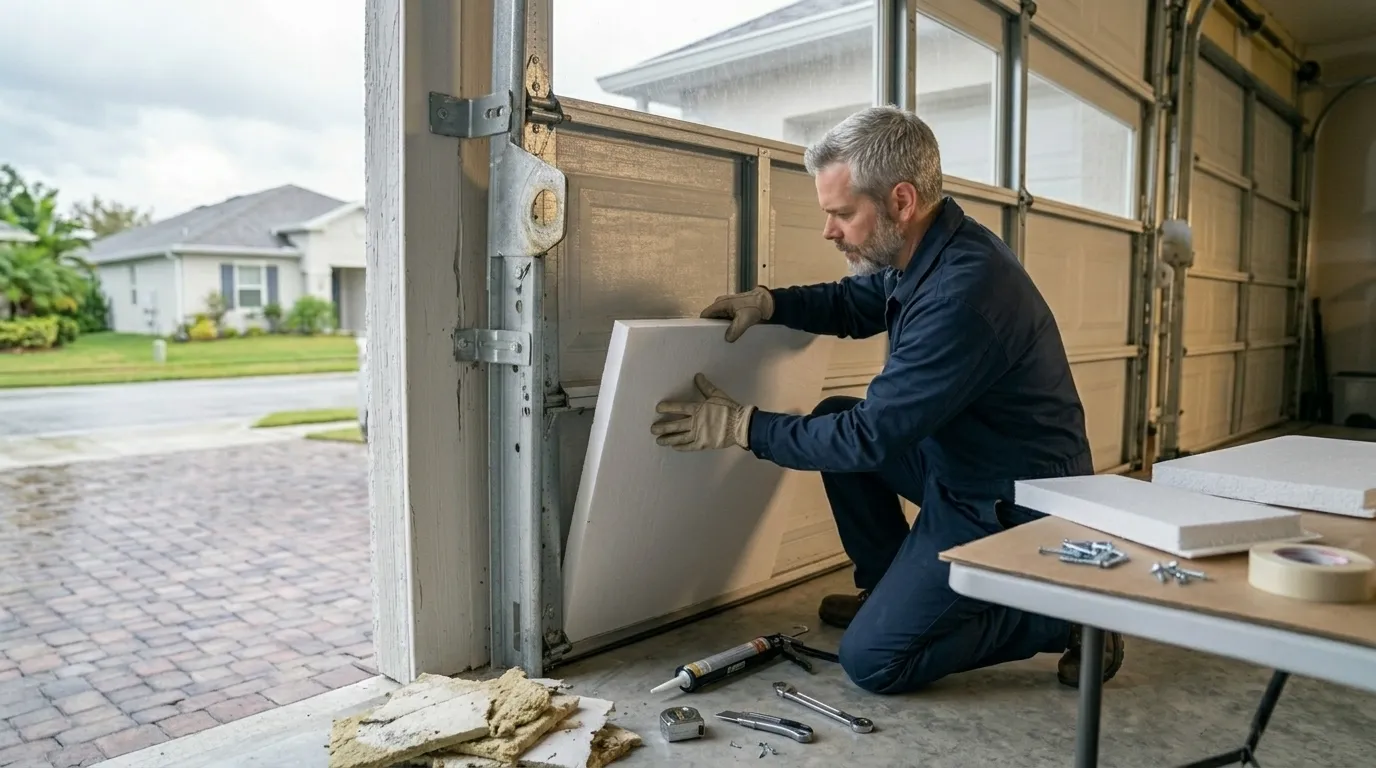
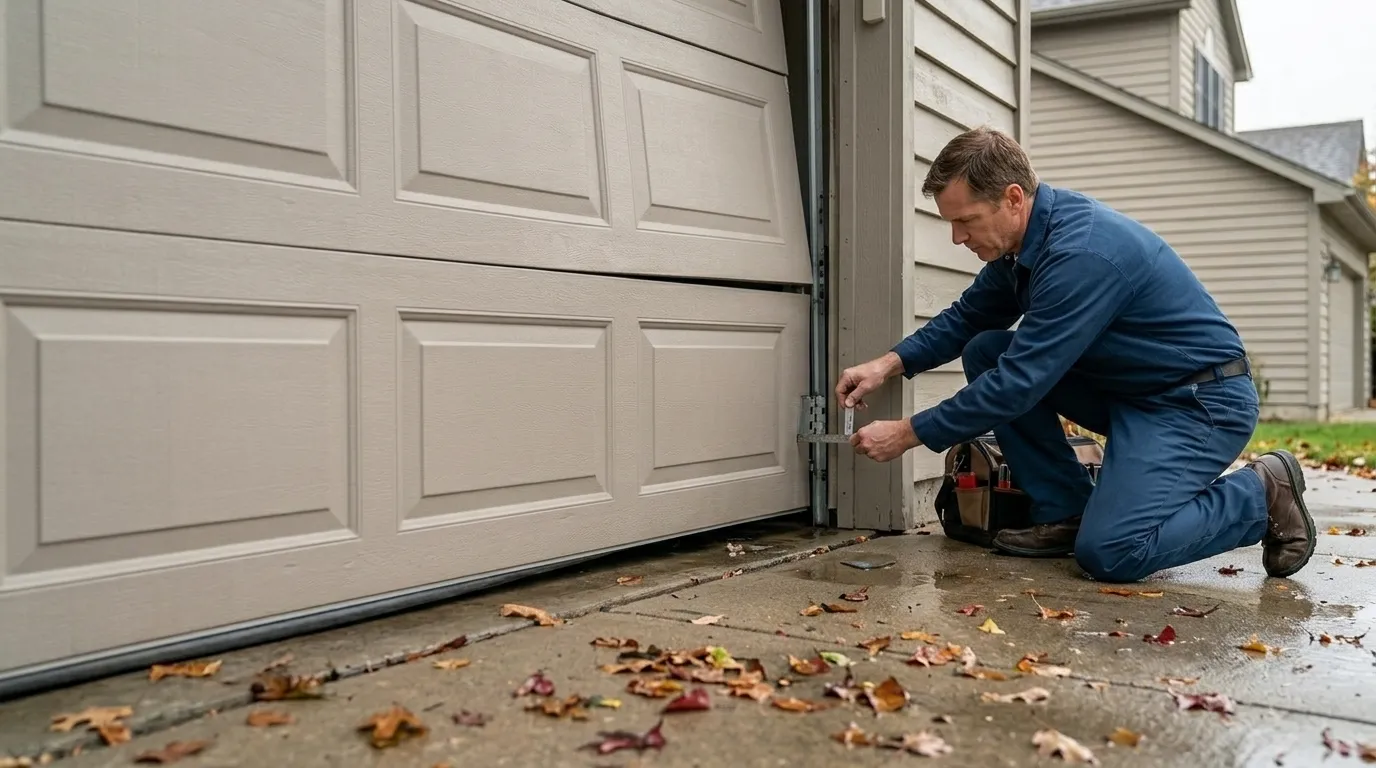
Last, check the weatherstrip at the bottom of the door. On a cold-moderate climate stretch like this one, a gapped or torn seal doesn't just let in weather - it lets in enough cold air movement to feel it in the garage.
How Local Conditions Play In
This area sits in a cold-moderate climate band, which is a middle ground - not the deep freeze-thaw cycling that destroys seals and metal fast, but enough cold swing through winter that steel doors and their hardware do contract and expand over a season. That matters most for two things: the weatherstrip seal at the bottom of the door, which hardens and gaps faster under repeated cold snaps, and torsion spring tension, which can shift slightly as steel contracts in cold weather, making a marginal spring more likely to show its age in winter than in July.
It's not dramatic weather stress, and I won't tell you it is - this isn't a region where doors fail from ice buildup or heat warping the way they do in more extreme climates. But it's enough that a spring or opener already near the end of its service life in a 2000s-built house is more likely to finally give out during a cold stretch than a mild one. If your door has been fine for years and starts acting up right as the temperature drops, that's not a coincidence - it's the cold finding the weak point that was already there.