What Is Going On
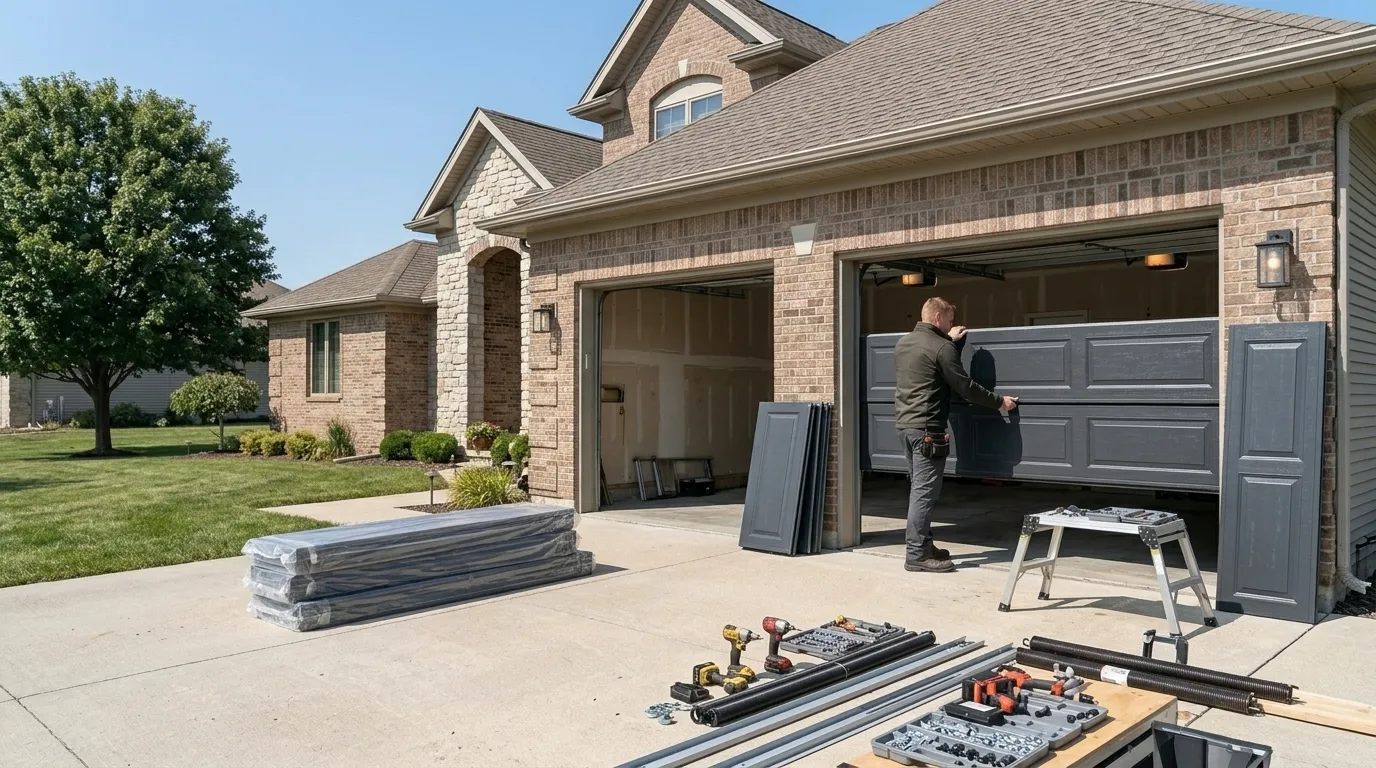
Most houses in this service area went up between 1985 and 2015, with the median build year landing around 2004. That means the doors, openers, and torsion spring setups across the 21 named areas we cover are mostly the same generation of hardware - chain-drive and belt-drive openers from the same handful of manufacturers, torsion springs rated for the same door weights, and steel tracks bolted to the same style of framing. When a door in one of these houses starts making noise, it's usually not a mystery. It's a part that was installed 10 to 30 years ago finally telling you it's done absorbing wear quietly.
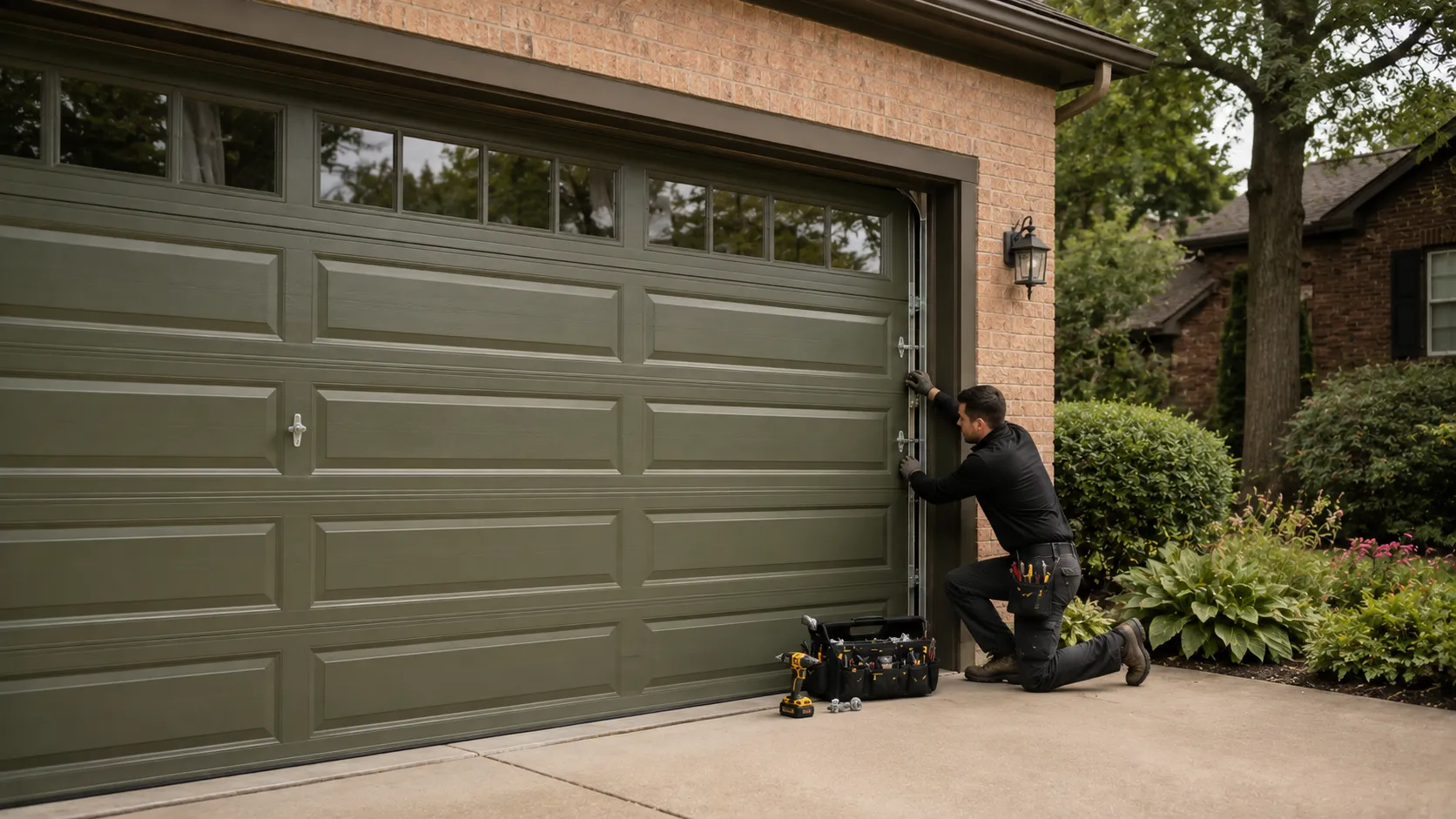
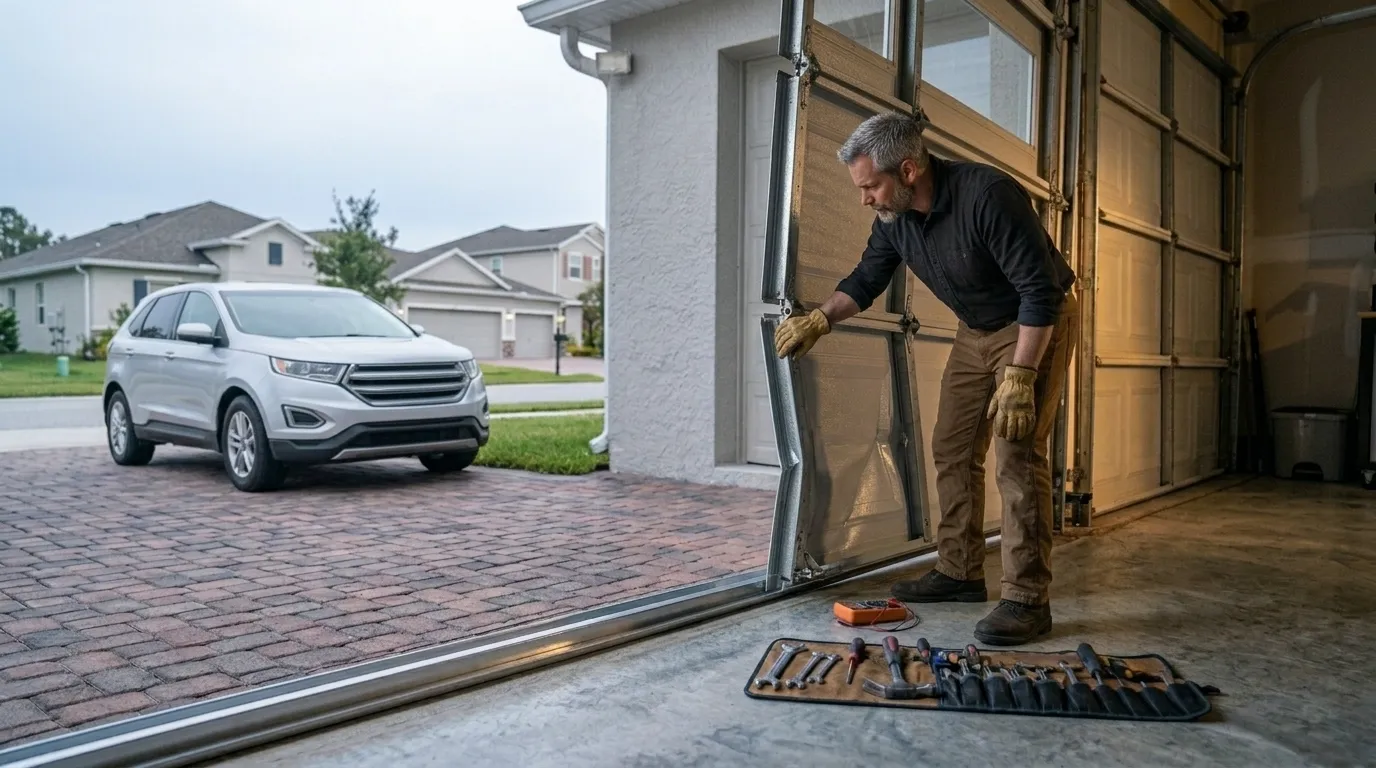
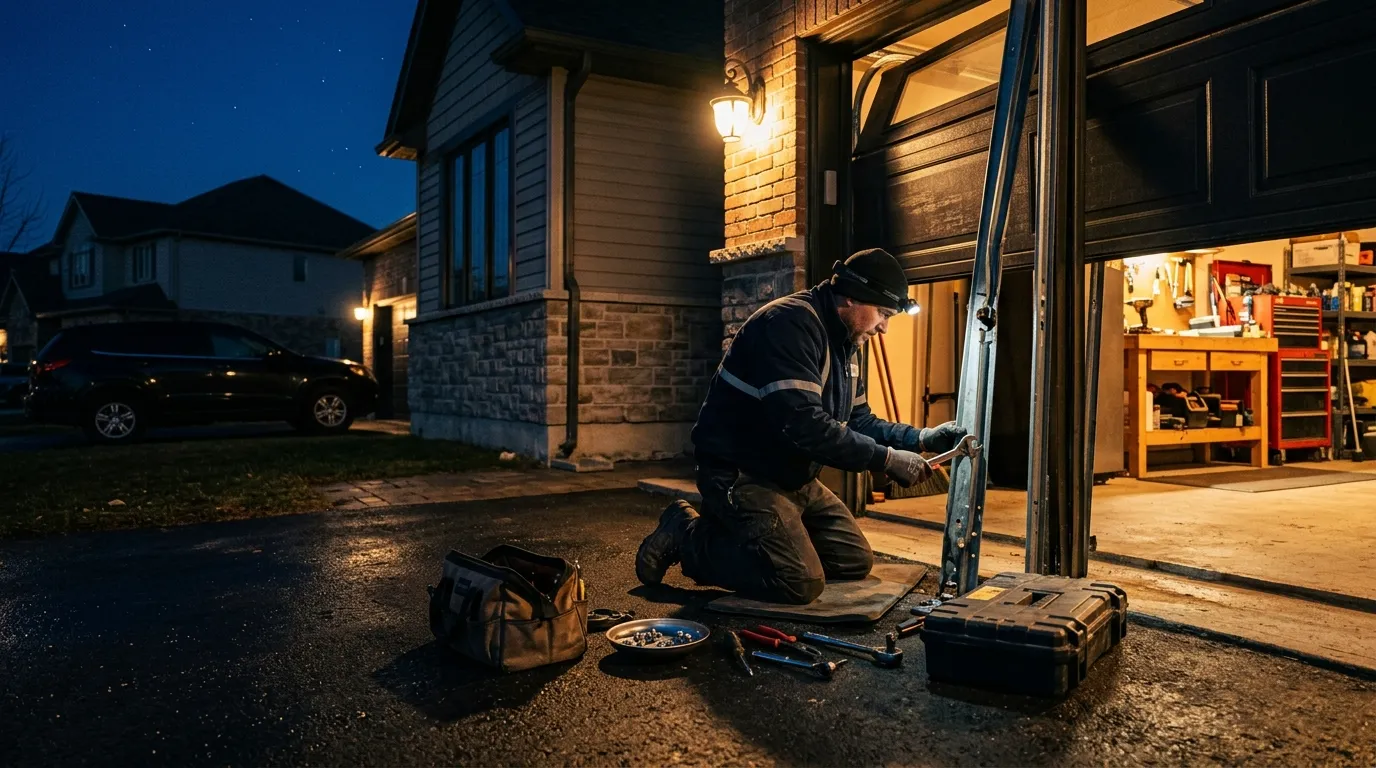
A grinding sound on the way up is almost always a roller that's worn past its bearing, especially on doors original to houses built in the late 1980s and early 1990s - that hardware is old enough now that the rollers were never replaced. A rhythmic thump usually means a bent track section or a panel that's warped slightly. A loud bang, followed by the door refusing to move, is a torsion spring letting go - and on 2000s-era doors, that spring has usually done close to its full cycle count by now.
What to Check
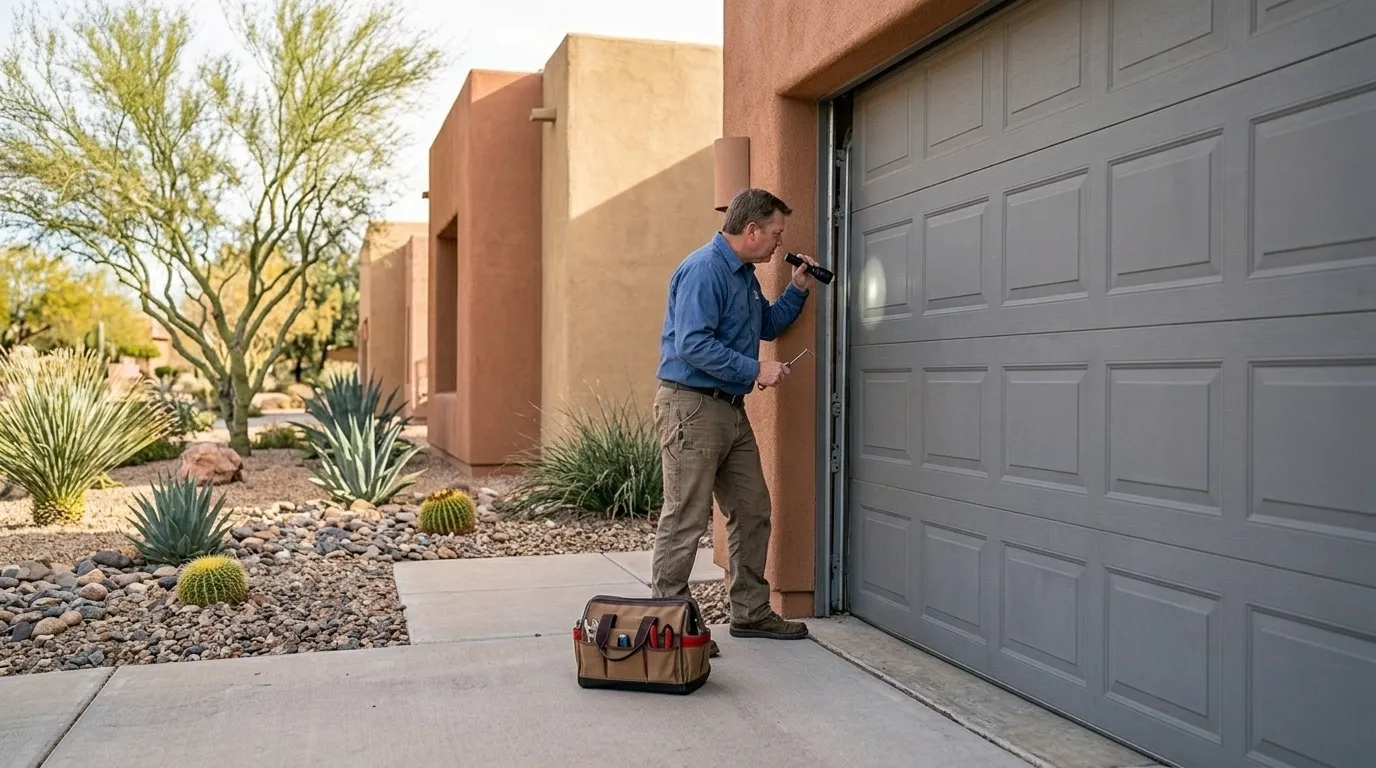
Before you call, look at three things. First, watch the door move through a full cycle from outside the garage - does it move smoothly, or does it jerk, stall, or reverse on its own partway. A stall usually points to spring tension, not the opener. Second, look at the springs themselves, mounted above the door on the horizontal bar. A visible gap in a coil means it's broken, and that door should not be run again until it's fixed - the opener will try to lift the full weight alone and burn itself out.
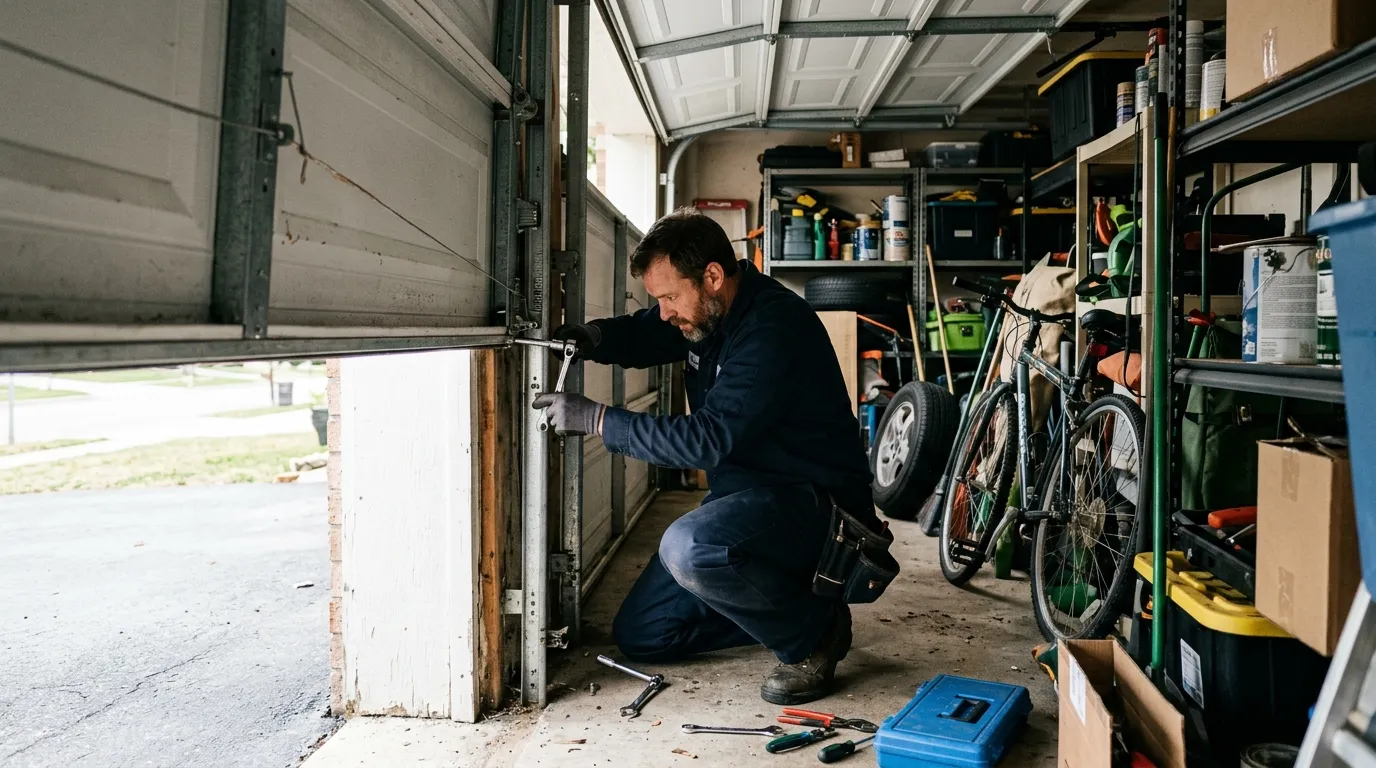
Third, check the rollers where they sit in the track. On houses from the earlier end of the 1985-2015 range, these are often the original steel rollers, and by now they're due. A roller with a chipped or flat edge will make the grinding noise even when everything else on the door is fine.
We don't recommend homeowners touch the torsion spring itself - it's under enough tension to cause a serious injury, and that's true regardless of how old or new the spring is. Everything else on this list is safe to look at from the ground.
How Local Conditions Play In
Median household income here runs $110,357 across roughly 44,072 households, and close to 35,000 of those are owner-occupied houses - which is worth mentioning because it means most of the doors making noise are on houses the owner has lived in long enough to actually notice a change. That's useful: a noise that's new to you is usually new, period, not something you're only now paying attention to.
The climate band here is cold-moderate, which is mild enough that we don't see the frozen-track failures you'd get further north, but cold enough that grease thickens and metal contracts a little more than it does in a warmer band. That contraction is part of why bolts and brackets loosen slightly over a winter and start rattling - it's a seasonal thing tied to how this area's weather actually behaves, not a sign the hardware is failing early. Combined with a housing stock that's mostly 2000s vintage, the pattern we see most is original hardware reaching the end of its expected life around the same age across a lot of houses at once.