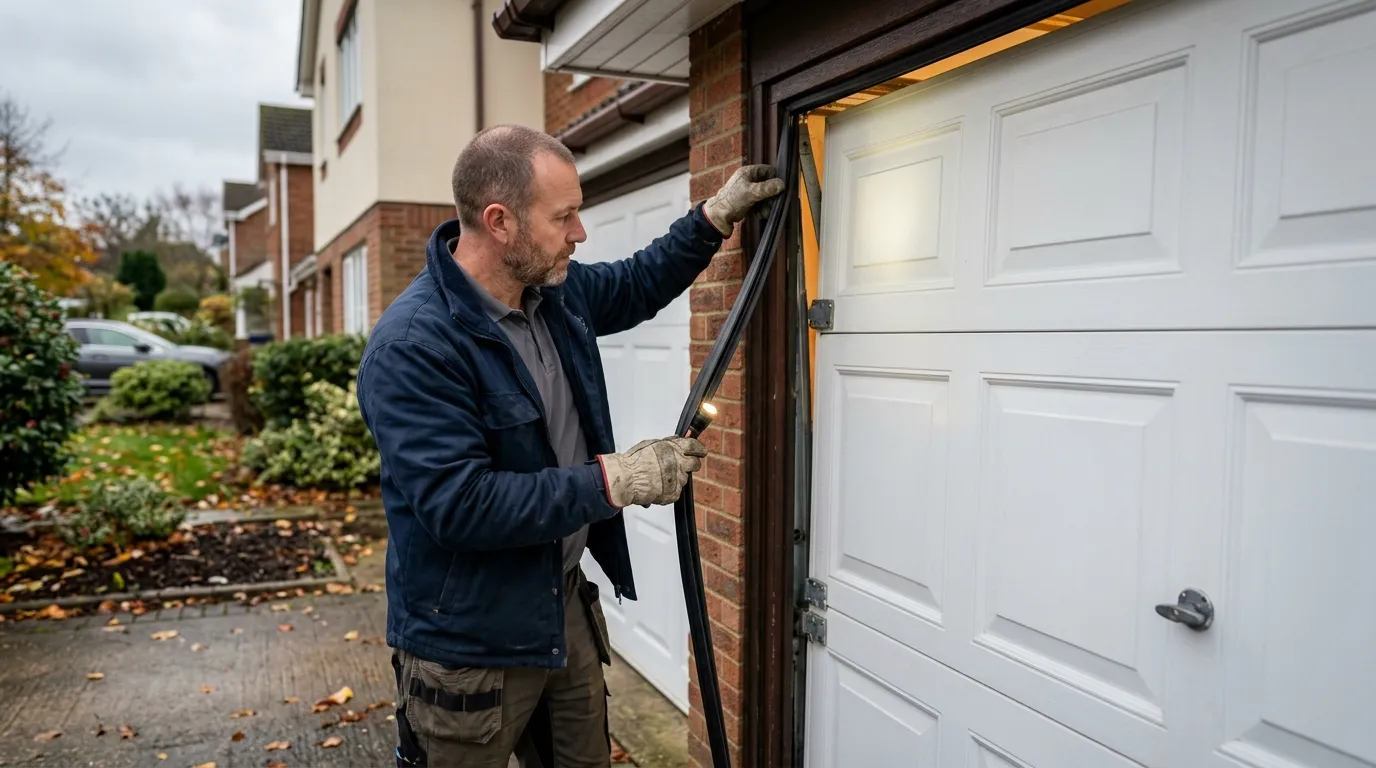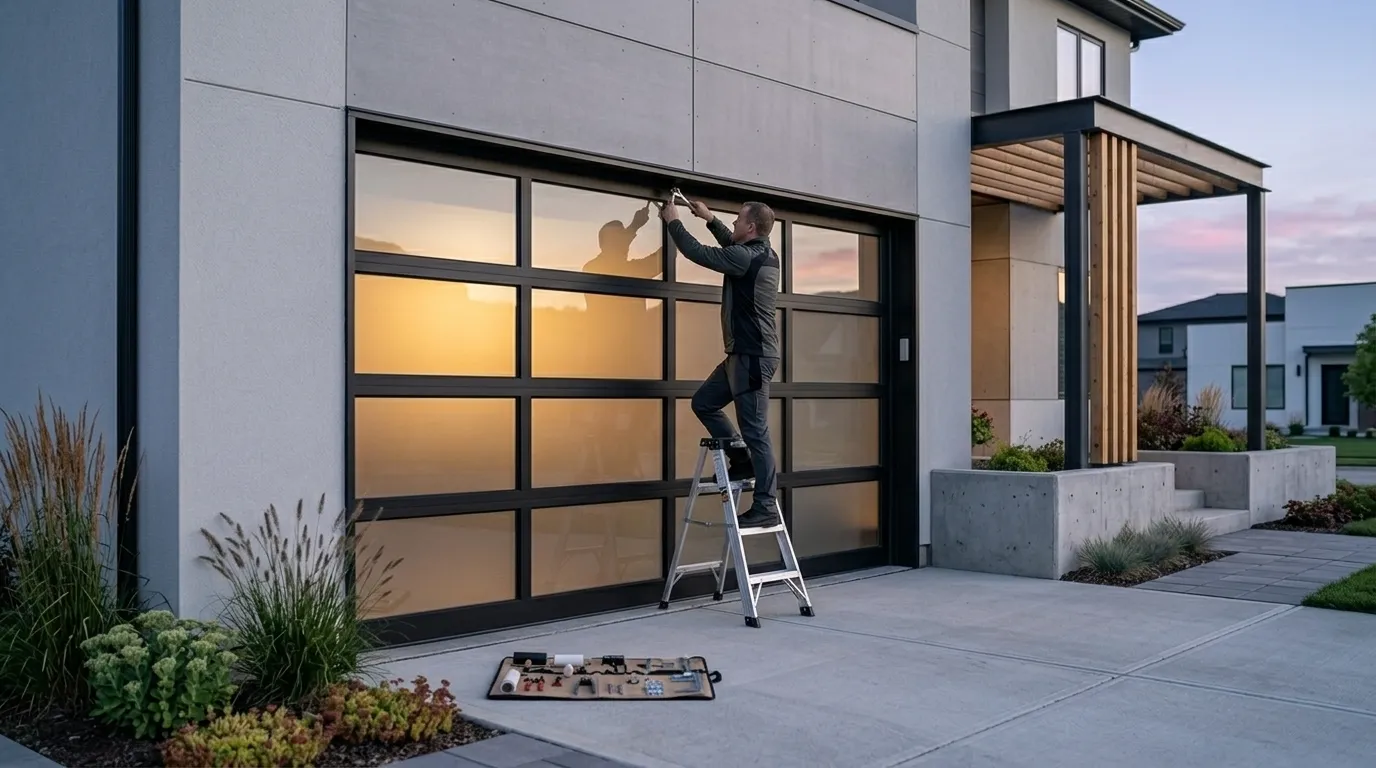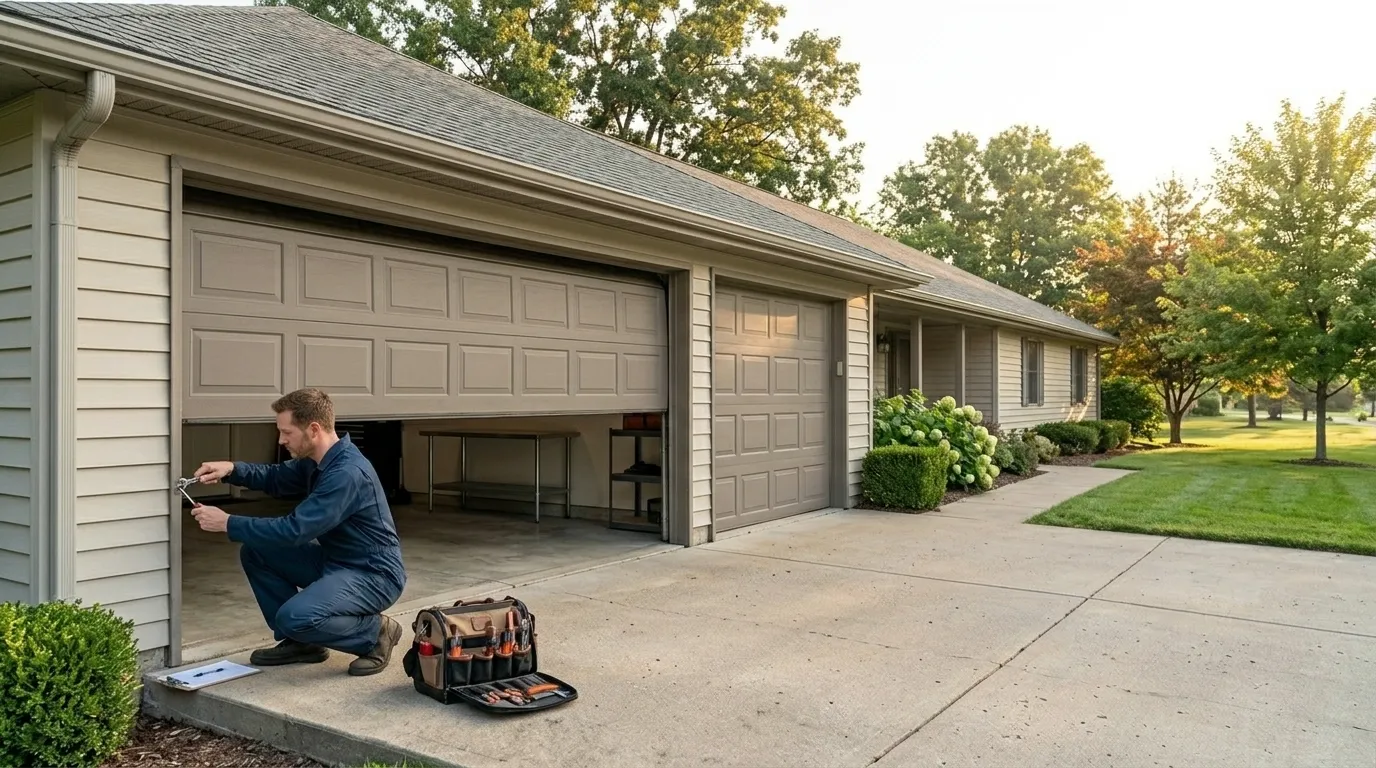
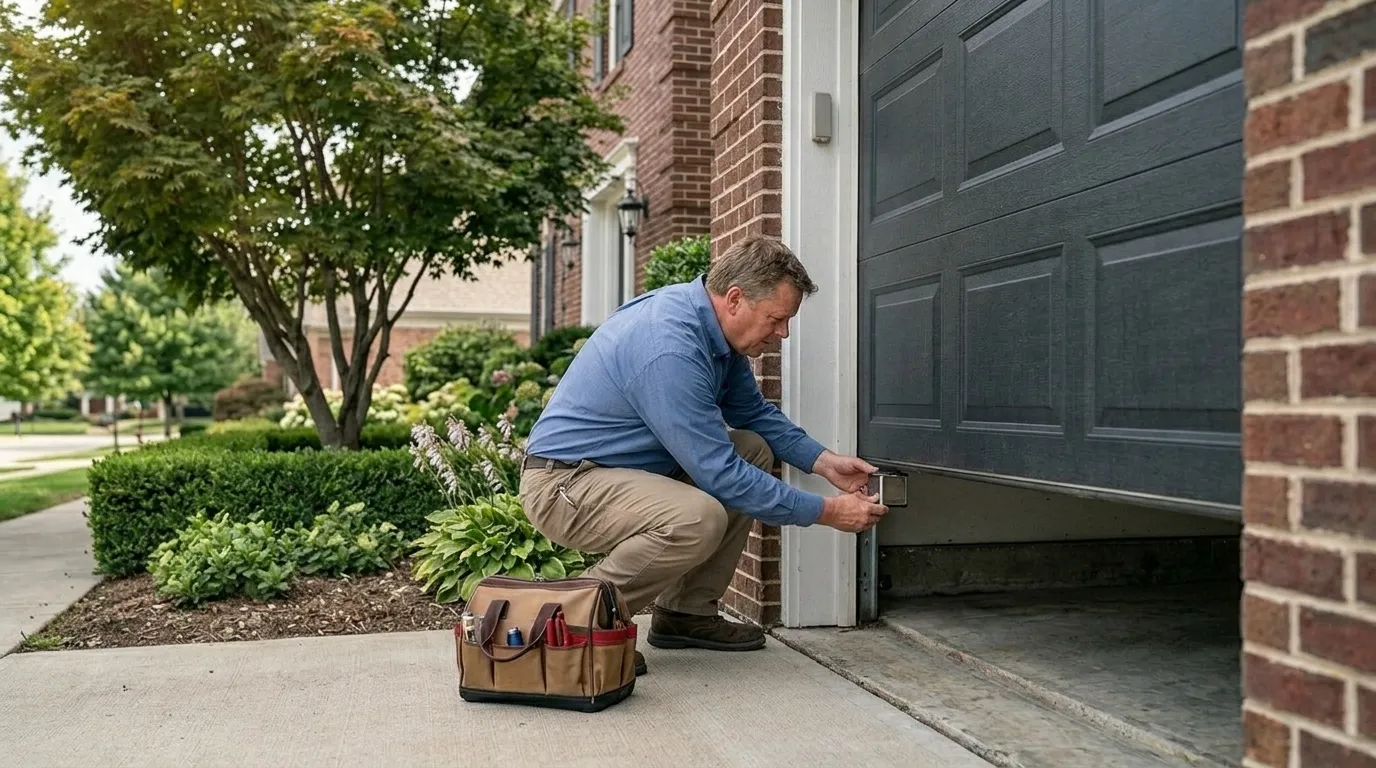
What Is Going On
Cold makes steel contract, and a torsion spring under tension is already fighting to hold a door that can weigh well over a hundred pounds. When the temperature drops fast, the metal loses some give right as the spring is working hardest, and that combination is when a spring that's been fine for years finally lets go. Prosper sits in a moderate cold band, not the deep-freeze zone, but even a handful of cold mornings a winter is enough to catch a spring near the end of its life.
Most of the housing stock here went up between 1985 and 2015, with the bulk of it built in the 2000s. That means a lot of doors are running original torsion springs that are now ten to twenty-five years old. Springs are rated by cycle count, not by calendar, but age and temperature swings both push them toward failure at the same time, which is why a cold-weather snap often lands on a door that's simply due.
When it happens you'll usually hear it - a loud bang from the garage, sometimes mistaken for something falling. The door won't lift, or it lifts a few inches and stops. That's the spring, not the opener.
What to Check
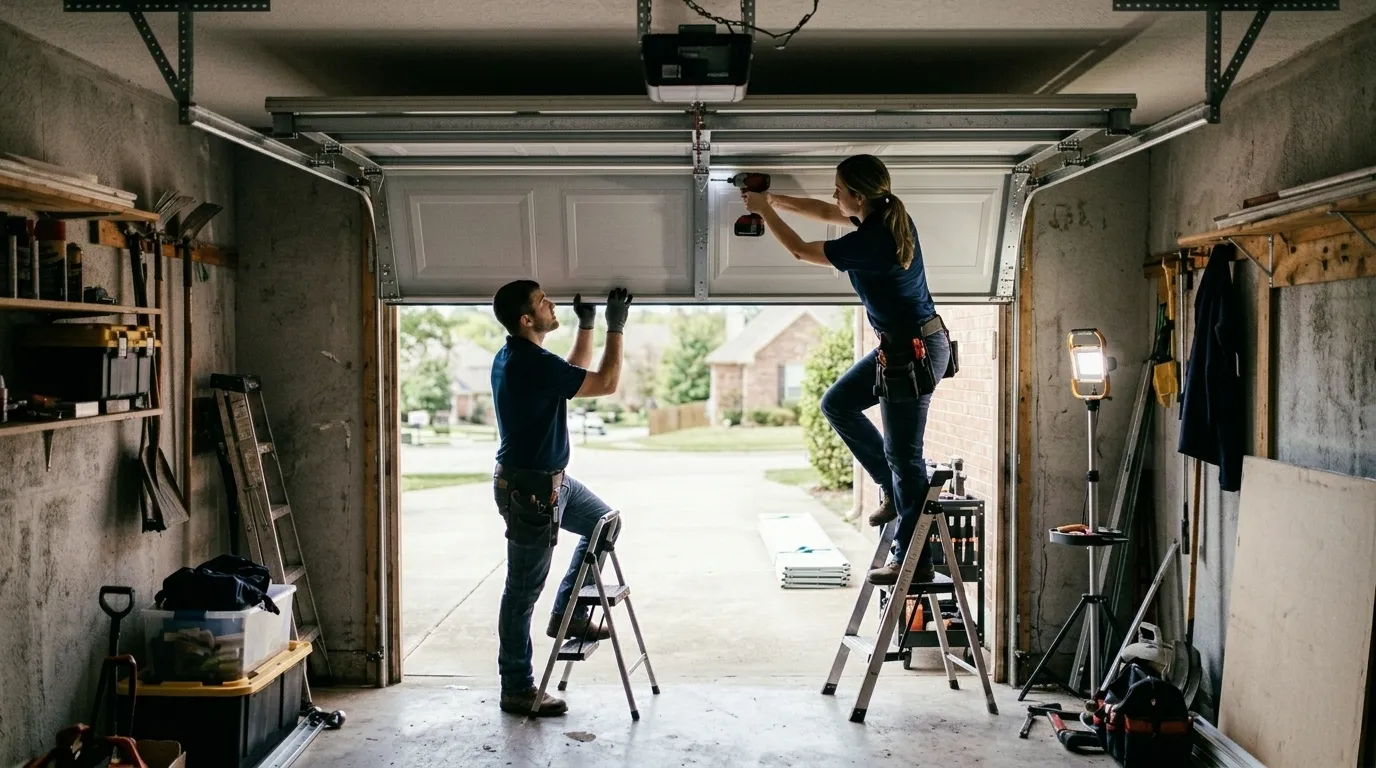
Before anyone touches the door, look at the two springs above the header, one on each side of a standard double door. If one is separated with a visible gap in the coil, that's your answer - don't try the opener, and don't try to lift the door yourself. A single wound spring under sudden slack is not something to test by hand.
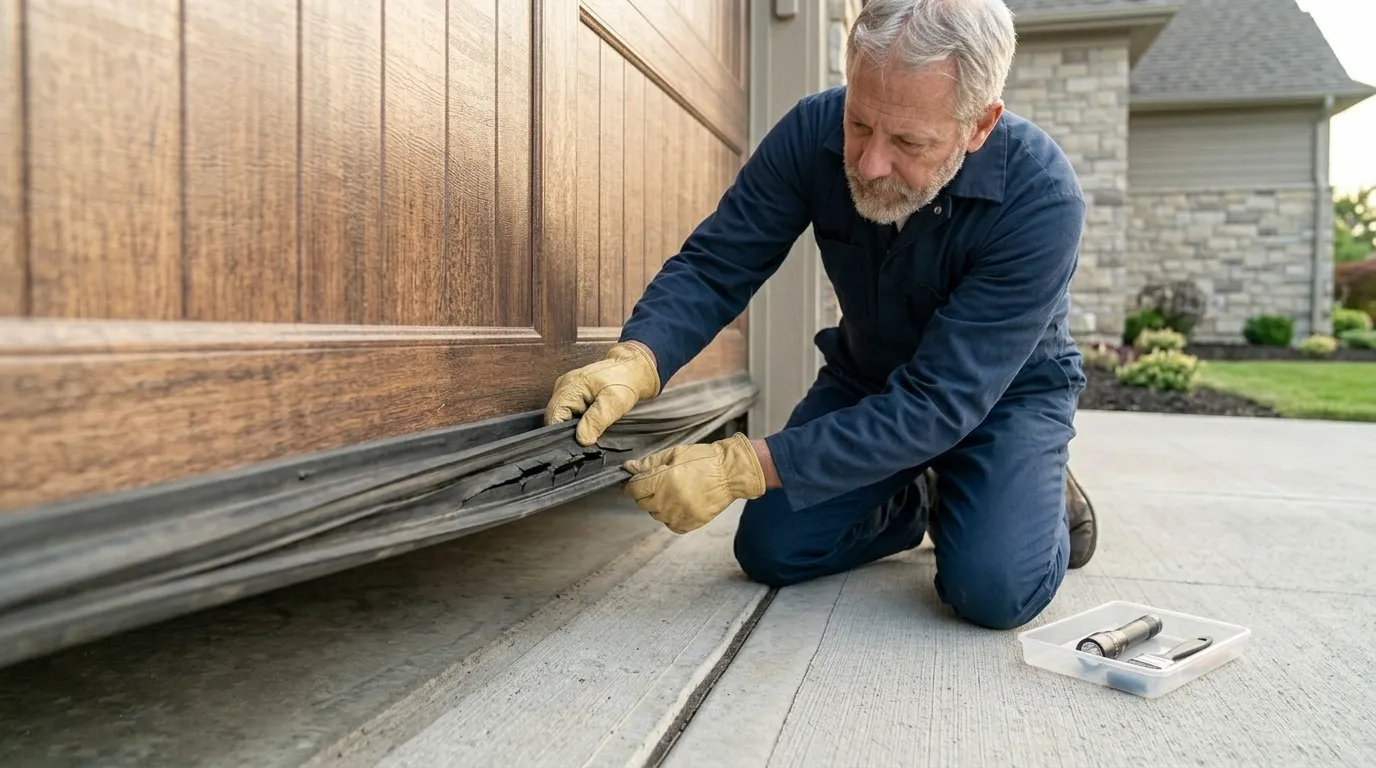
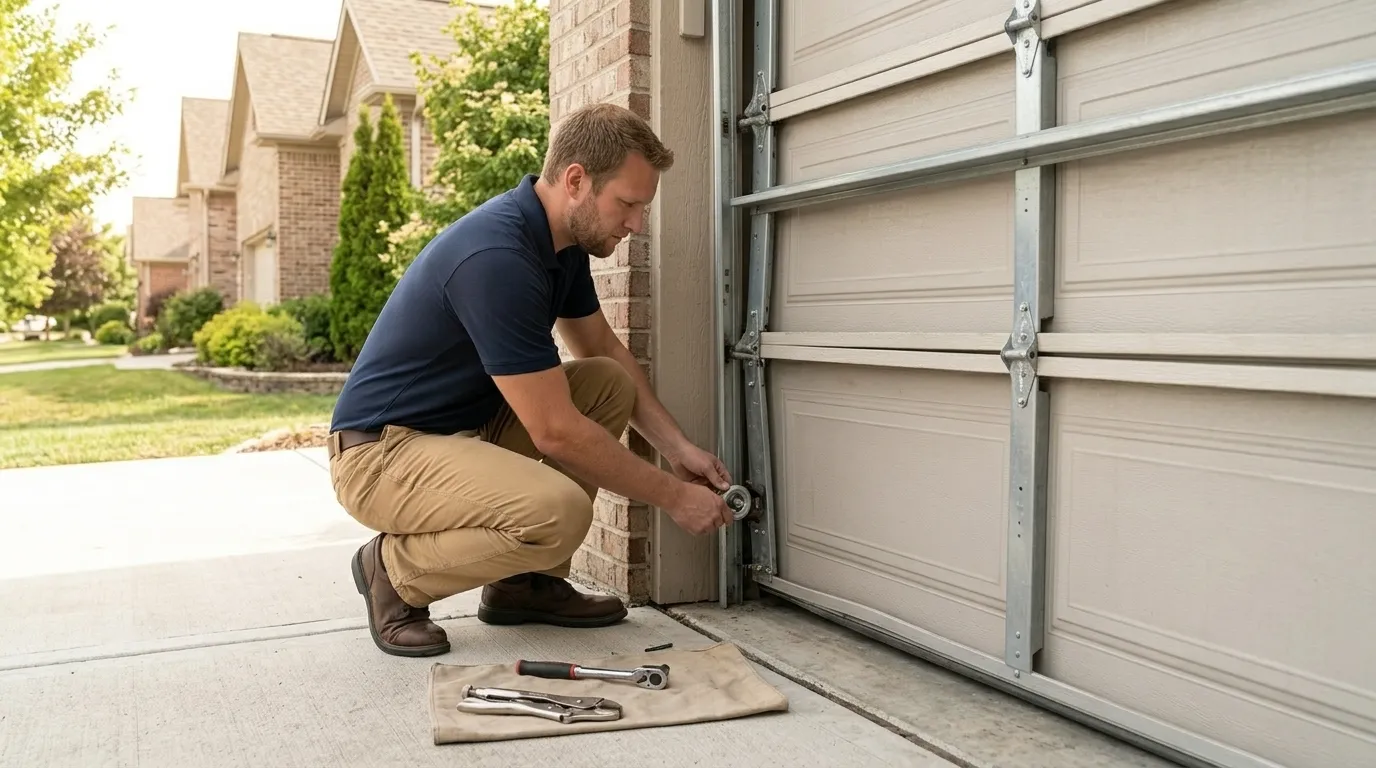
Check the cables on both sides of the door. If a cable has slipped off its drum or looks kinked, that's a second problem riding along with the spring, and it changes the job.
With median household income in the service area around $110,357 and most homes here relatively young - built well after 2000 - replacement parts for standard torsion setups aren't usually a supply problem, unlike older housing stock elsewhere where nonstandard hardware from the 1960s or earlier can hold up a repair for days. That's one advantage of a newer housing base: the parts on your door are the parts everyone stocks.
How Local Conditions Play In
Prosper's climate band is classified as moderately cold, which means winters here aren't brutal but they're not mild either. That in-between pattern is actually rougher on springs than a truly cold climate, because the temperature swings back and forth across the range where steel tension and ambient cold interact worst, rather than settling into one steady cold stretch the metal can be built for.
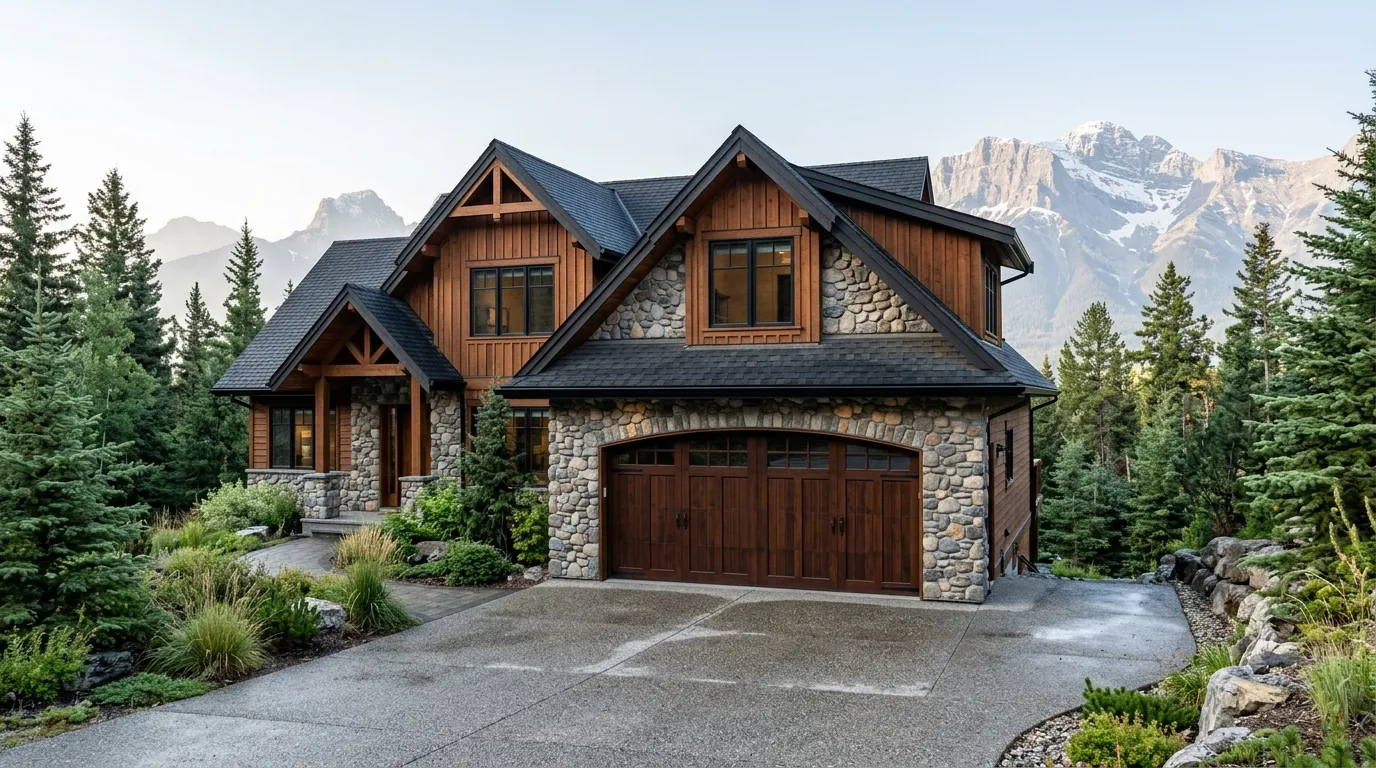
Across the roughly 44,000 households in the service area, with close to 35,000 of them owner-occupied houses, a large share are attached two- or three-car garages built during the same 1985-2015 window - meaning a lot of springs of similar vintage are aging out at close to the same time. If your neighbor's spring went last winter, yours running the same age and the same weather exposure isn't a coincidence.
This isn't a call to replace a spring early just because the calendar says it's old. It's a reason to have it looked at before the first real cold snap rather than after, since a spring under visible wear and a cold morning together are a worse combination than either one alone.