What Is Going On
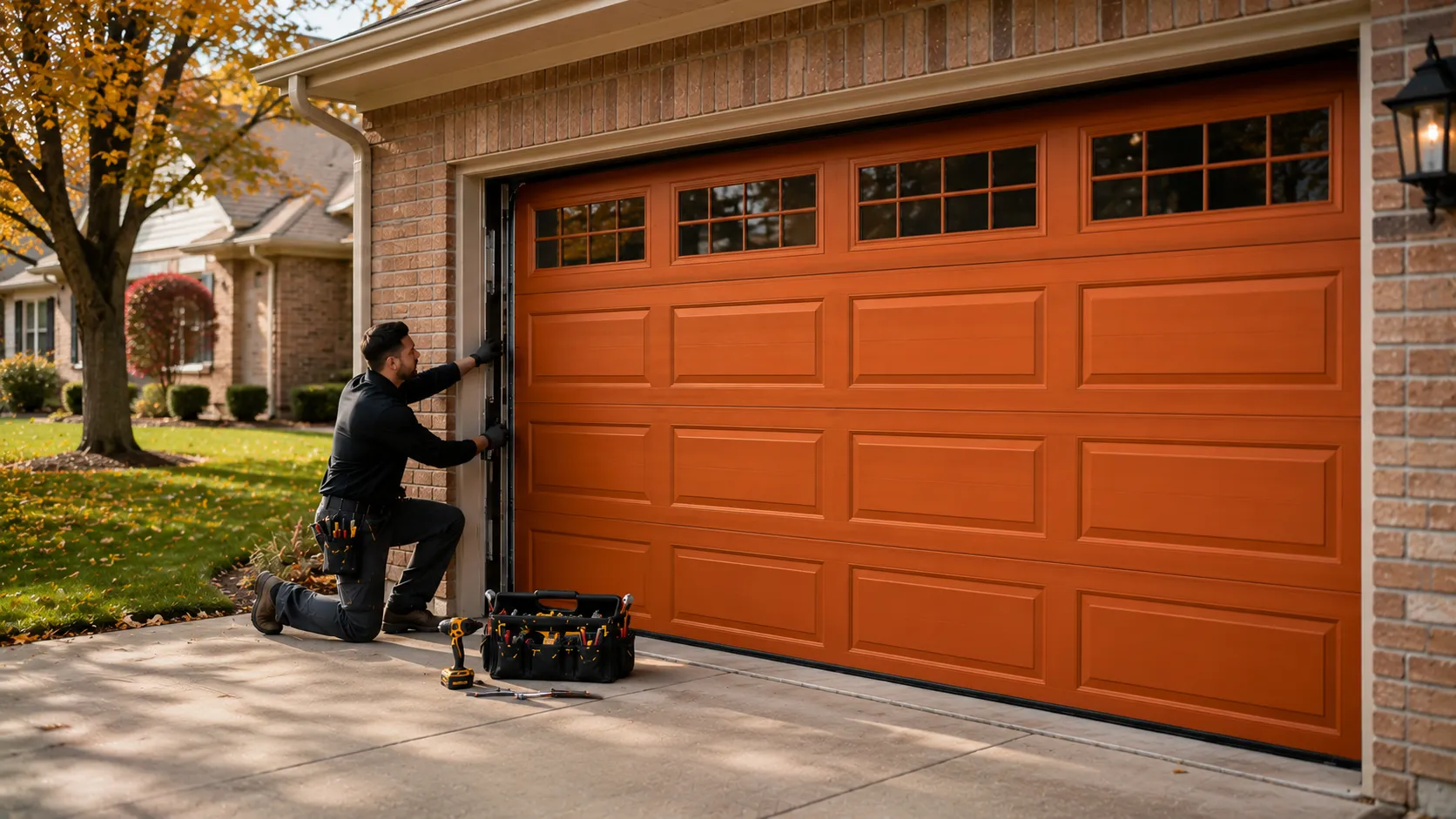
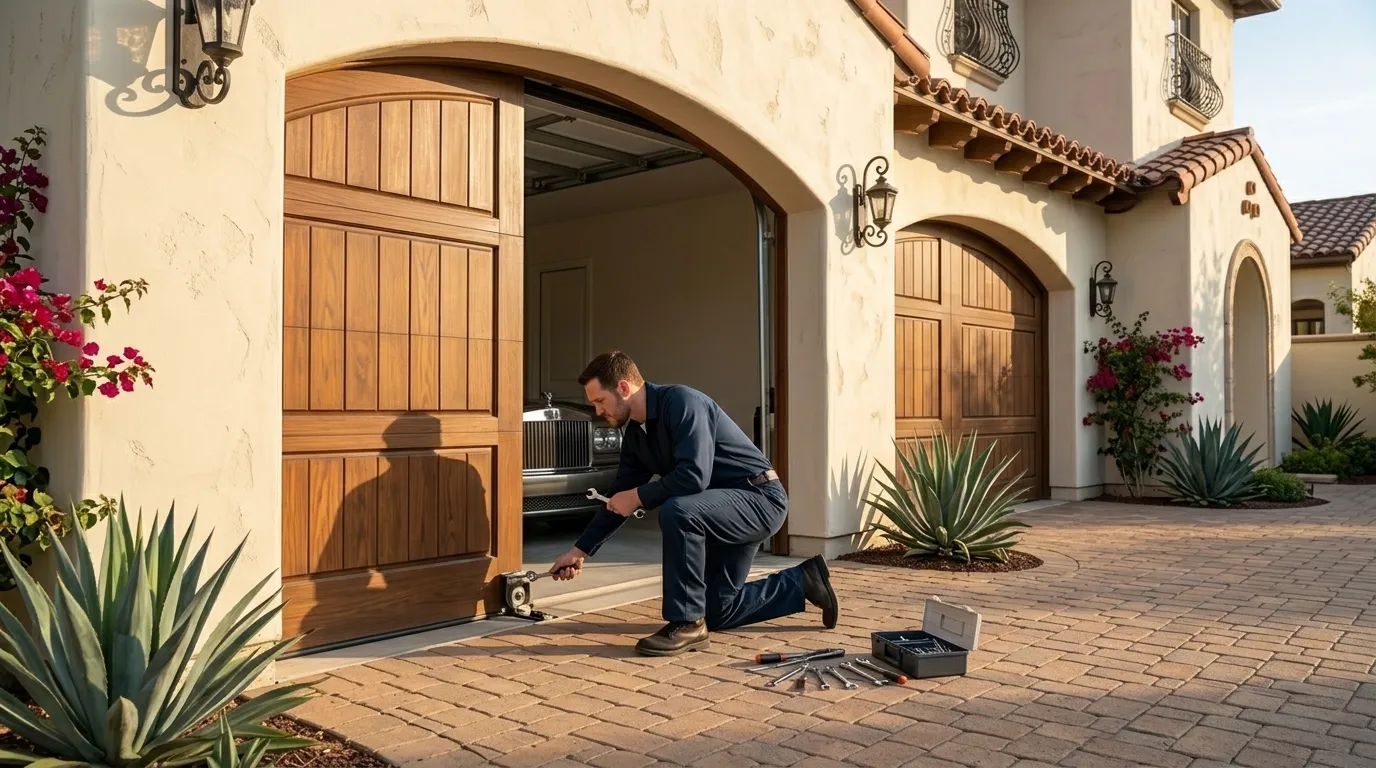
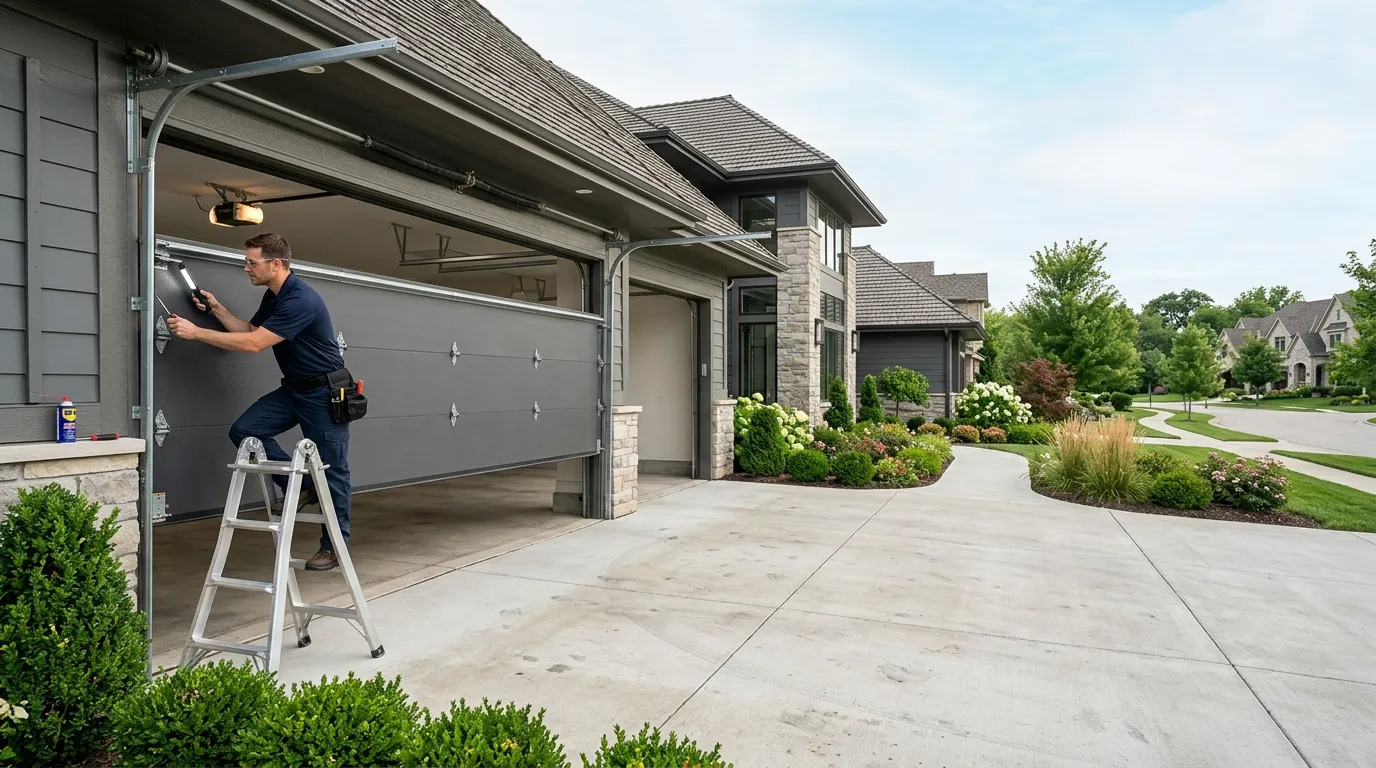
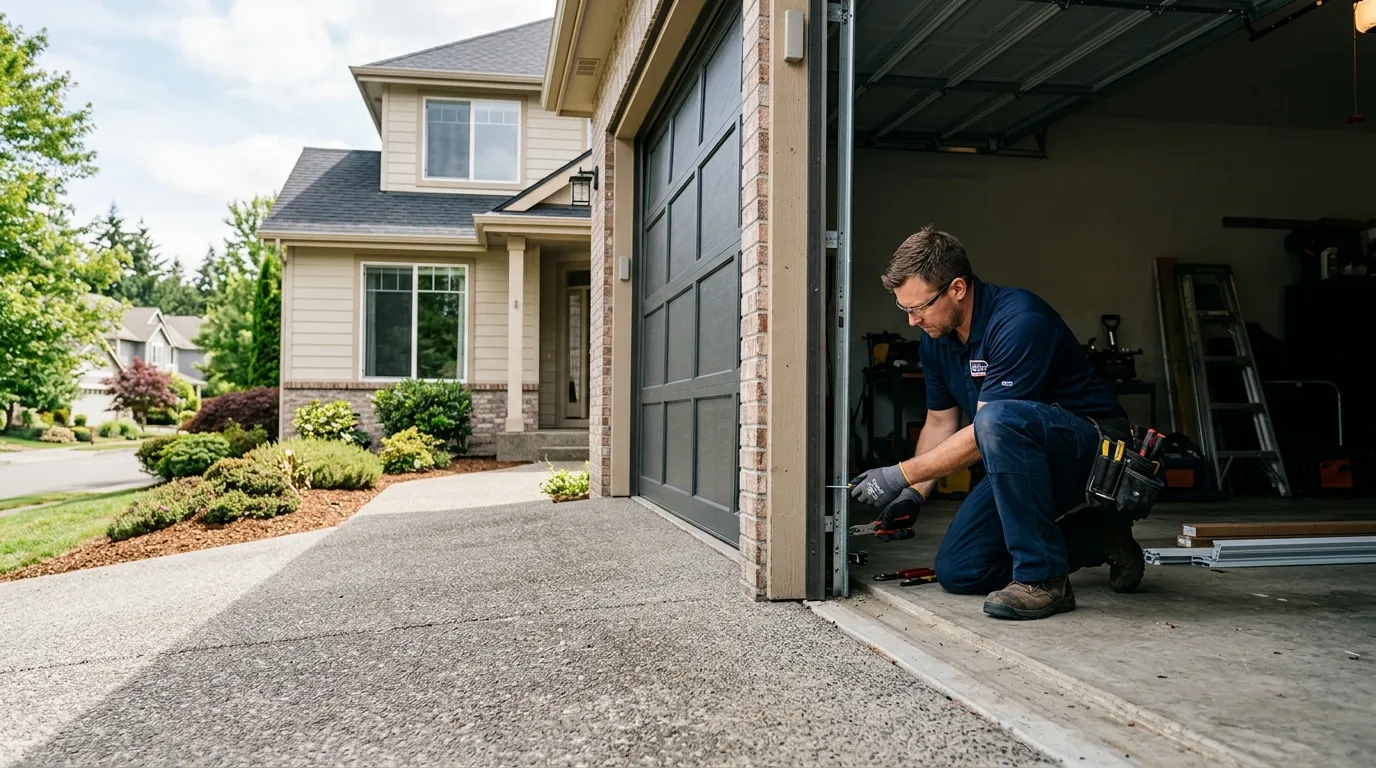
When you call for a garage door service in Prosper, you're not paying for a guess. You're paying for someone to open the door up, run the cycle, and find the part that's actually failing. Because most houses here were built between 1985 and 2015, with the median landing around 2004, a huge share of the doors we open are the same generation of hardware: steel torsion springs rated for a standard 7-foot double door, extension springs on some of the older single-car builds from the 1980s and early 90s, and factory openers that are now old enough to be on their second or third capacitor.
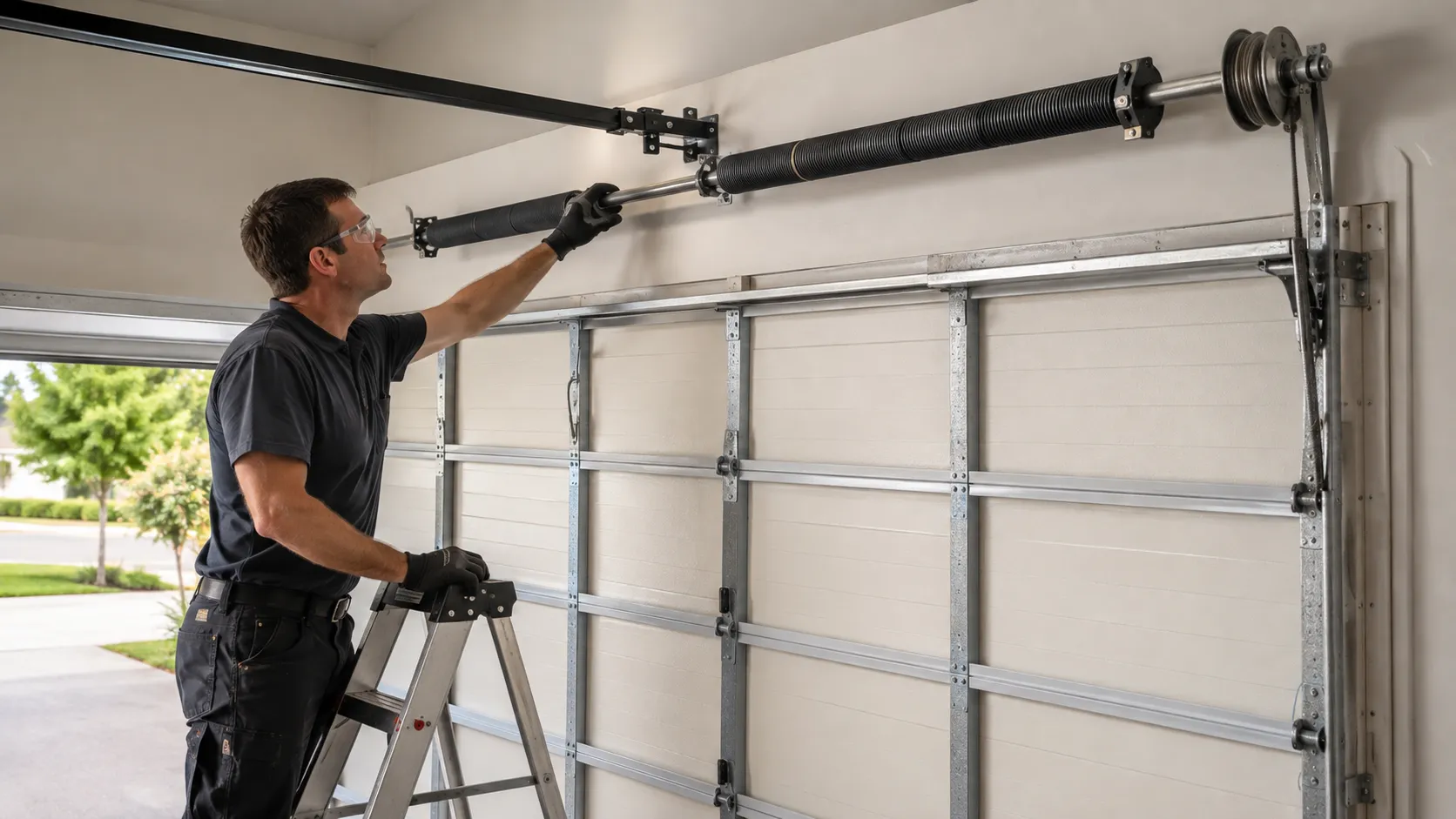
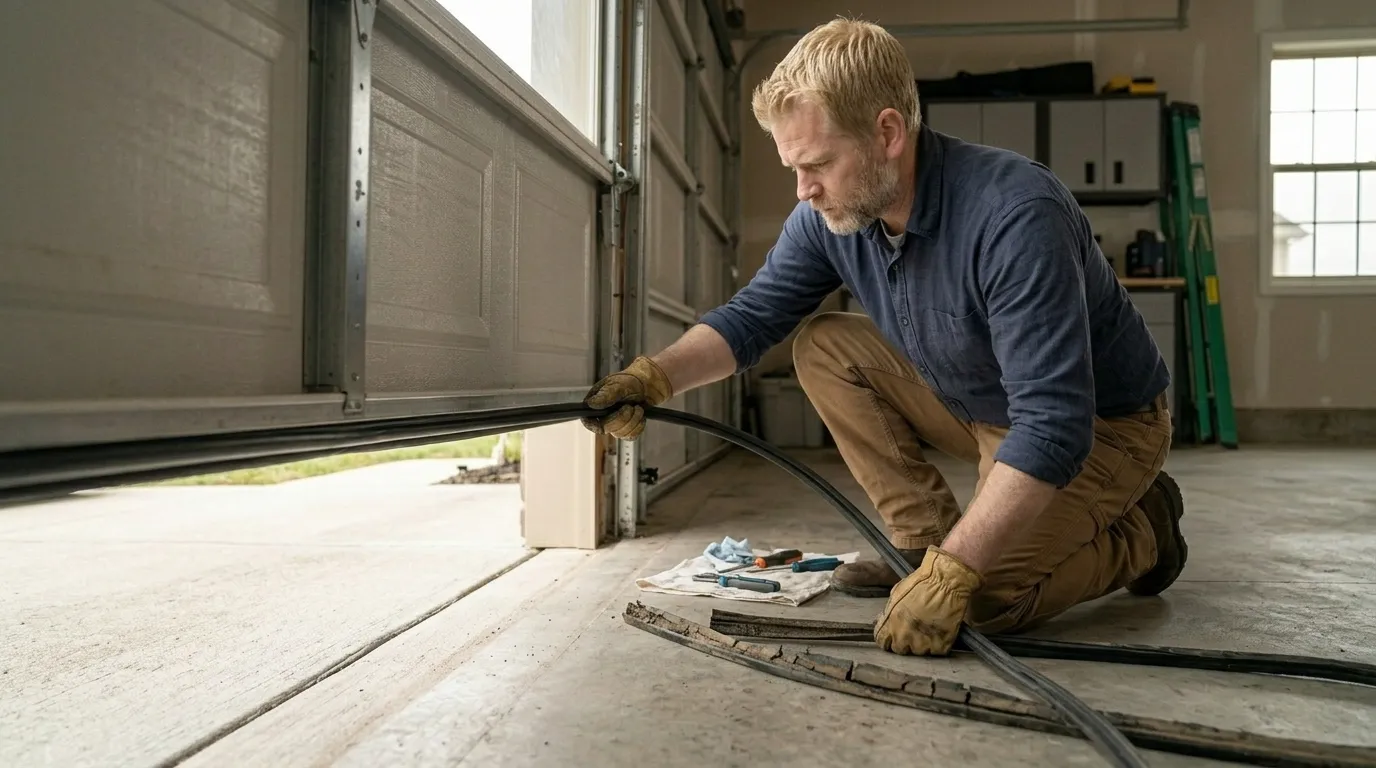
A proper call starts with the spring - is it original, is it rusted at the coil, has it stretched past spec - then moves to the track alignment, the rollers, the cable condition, and the opener's force and travel settings. On a 2000s-era door, we're also checking the bottom seal and weatherstrip, since builders in that window used a lighter-gauge insulation package than what's standard today. We don't replace parts that aren't the problem. If the spring is fine and the noise is a dry hinge, that's a five-minute fix, not a spring job.
What to Check
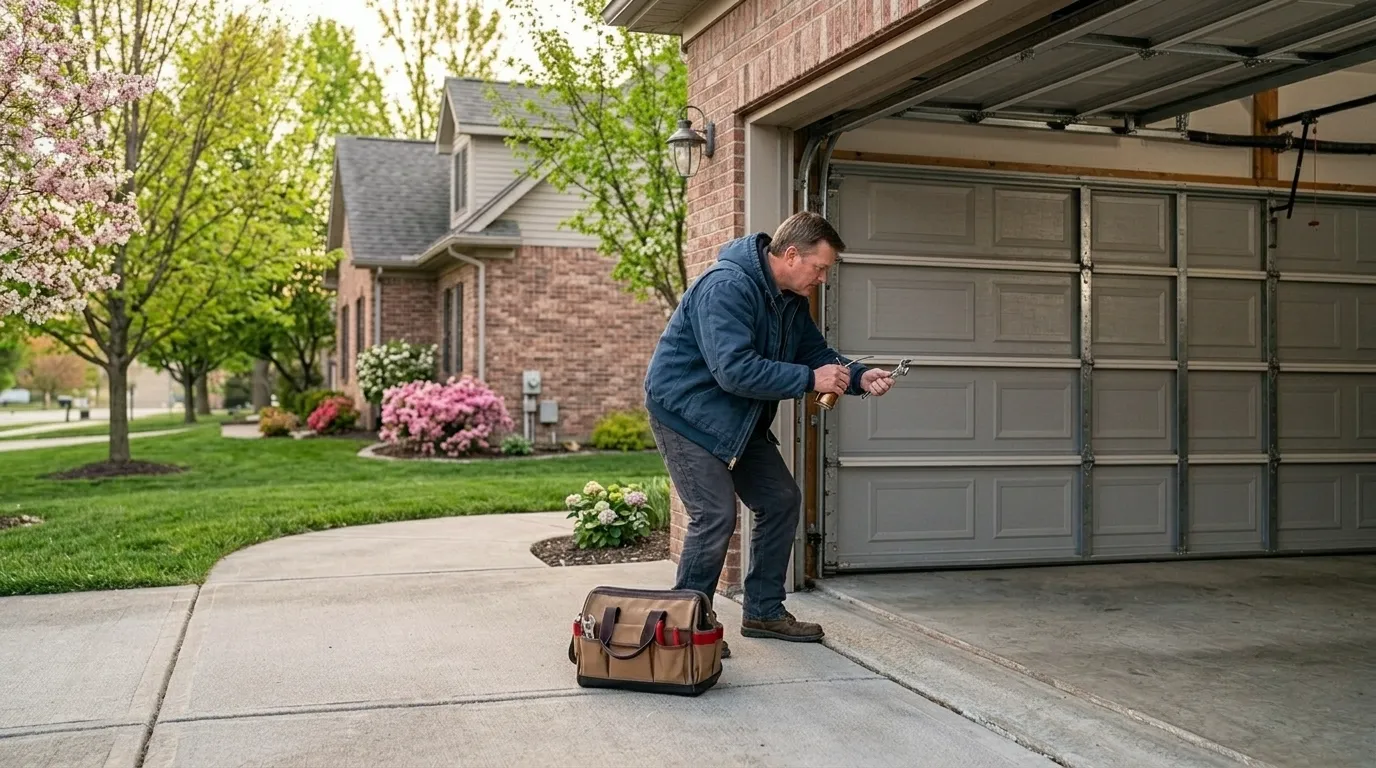
Before you call, a few minutes with your own eyes tells you a lot. Stand the door up (disconnect the opener first) and see if it stays roughly level on its own - if it drops fast on one side, that's a spring, not a motor. Look at the torsion spring itself if you can see it above the door: gaps between coils or a visible bend mean it's near the end.
Check the photo-eye sensors near the floor track - a blinking opener light usually means one of these is knocked out of alignment, not a broken door. Run your hand along the bottom seal; on houses from the 1985-2015 window, that seal is often original and cracked, which lets in more draft than people realize. Listen for grinding versus squealing - grinding is usually a roller or bearing, squealing is almost always just dry metal that needs lubricant. None of this replaces a real inspection, but it tells you whether to call today or next week.
How Local Conditions Play In
Prosper sits in a moderate cold climate band, not a severe one, which changes what actually wears out first. We don't see the ice-jammed tracks that colder regions deal with, but steel hardware still contracts in a cold snap and expands back in the afternoon sun, and that daily swing is what loosens fasteners and dries out lubricant faster than people expect over a few winters.
Because such a large share of the housing stock here clustered into one build era - 1985 through 2015, median 2004 - a lot of original springs and openers across the area are aging out around the same calendar window. That's not a coincidence you'd see in a town with a more scattered building history; it's a direct result of how Prosper grew. Practically, it means when we get a call about a spring failing, we're usually not surprised - the neighbor's door from the same subdivision phase is often not far behind it.