What Is Going On
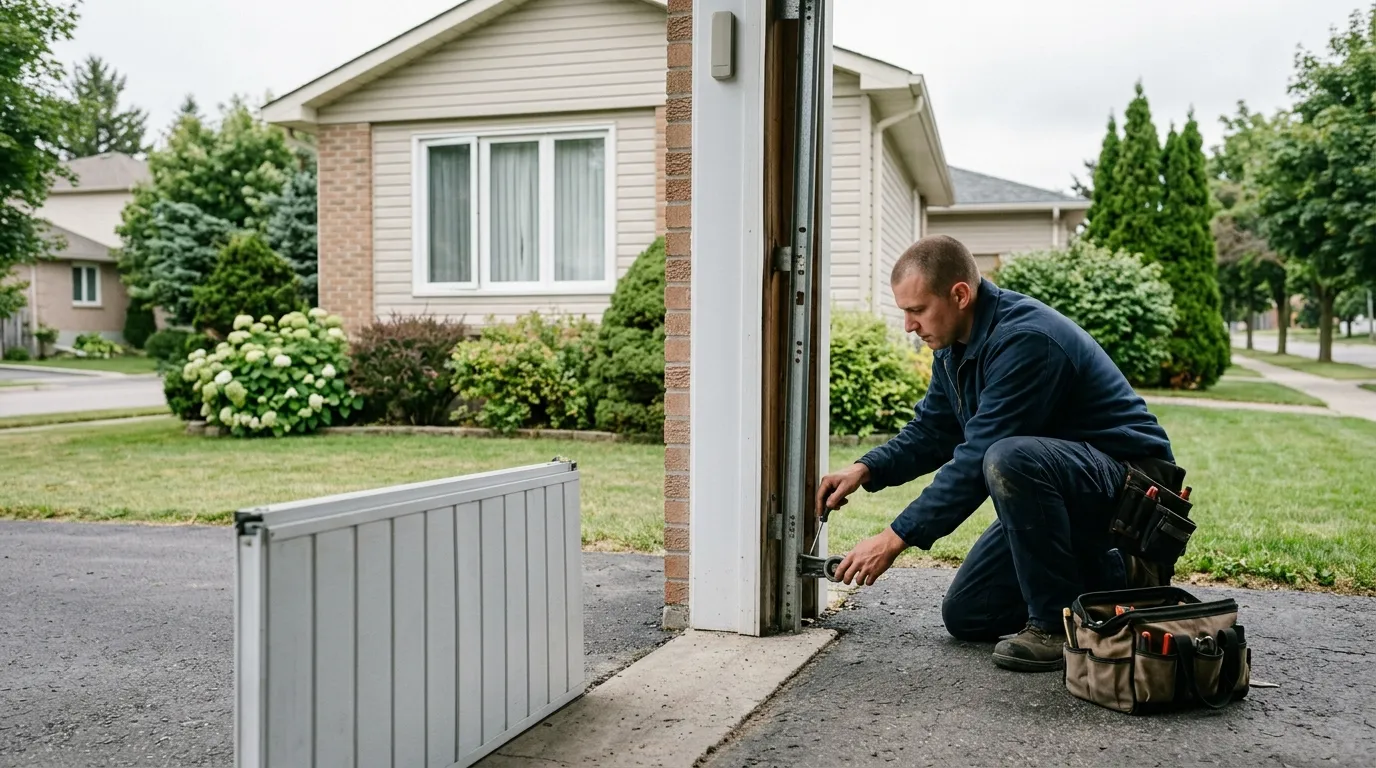
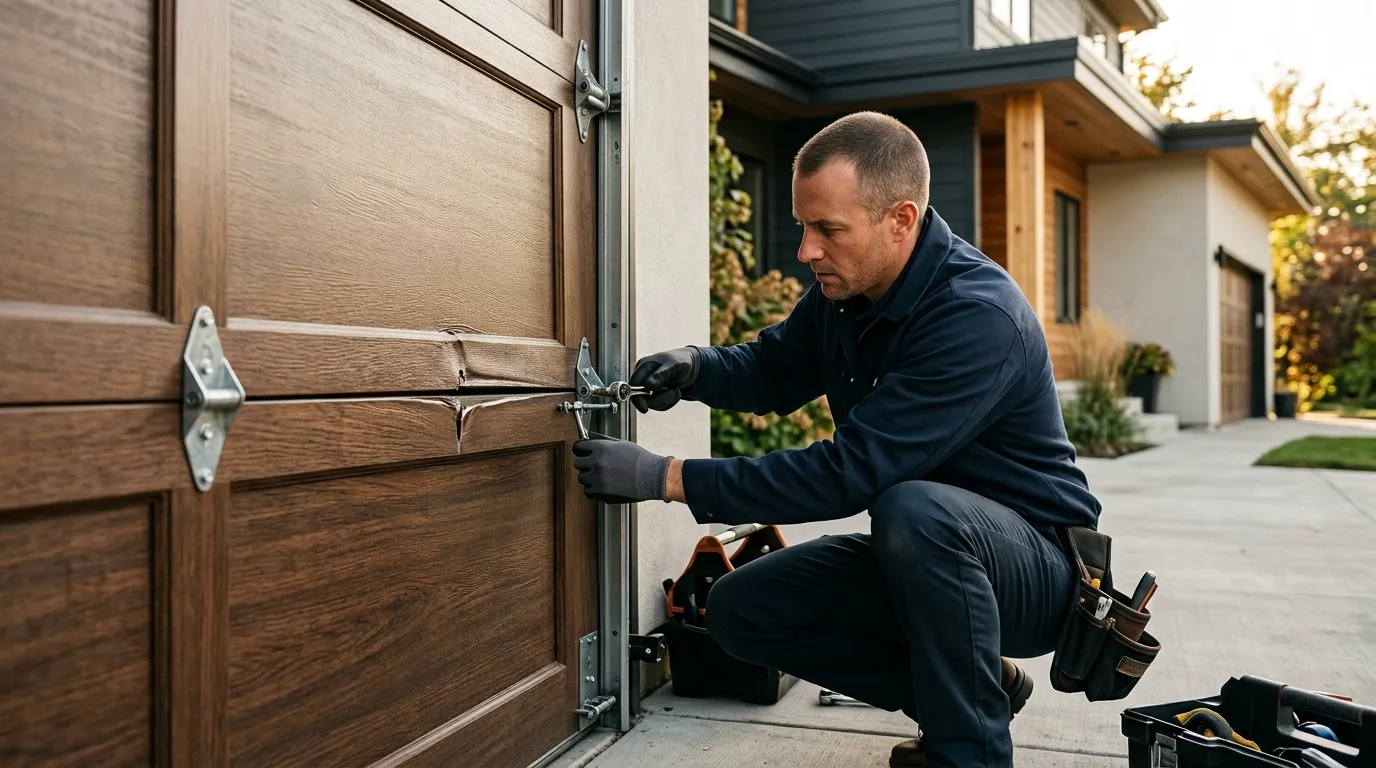
Most houses in this part of Prosper went up between 1985 and 2015, with the median build year landing around 2004. That means the tracks and rollers on a lot of these doors are original equipment pushing fifteen to twenty years of daily cycles. A door goes off track when the rollers wear enough to wobble inside the track channel, or when a bracket holding the track to the framing works loose. On a 2000s-era door, the common failure point is the bottom bracket on the section closest to the floor - it takes the most abuse from uneven contact with the slab over the years and the mounting screws slowly back out of the same holes they've always been in. Once that bracket shifts even a little, the roller stops running true and the door binds sideways instead of gliding straight up. A second cause we see just as often on houses from this era is a bent track, usually from someone or something (a car mirror, a stored ladder, a bike) clipping it. Bent steel doesn't self-correct. It gets worse every cycle until the roller pops loose entirely.
What to Check
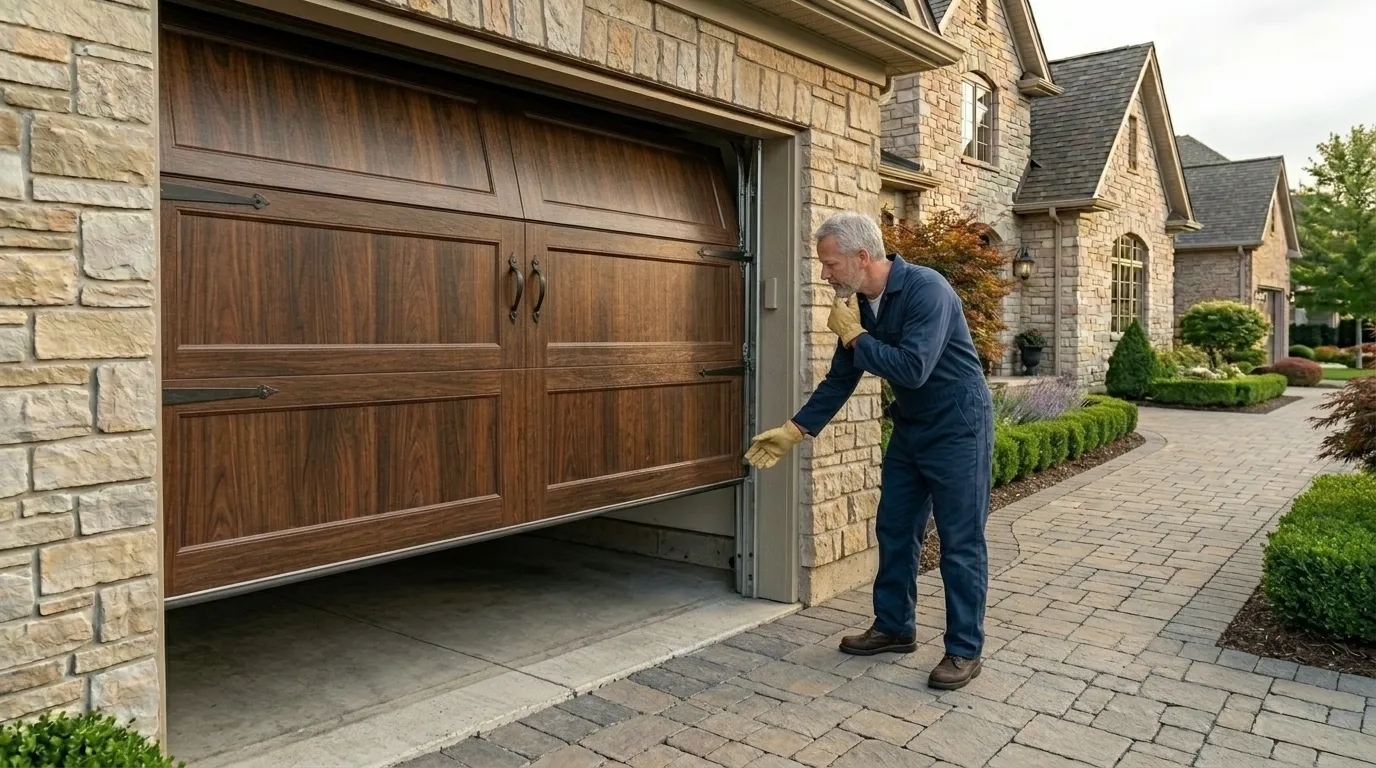
Start at the bottom bracket on each side. If your house was built in the median-2004 window common across this area, that bracket has had roughly two decades to work its screws loose in the same wood or jamb holes - look for a bracket that shifts a fraction when you push on it. Next, run your eye down the vertical track from the floor to where it curves toward the ceiling. A bent section will show as a visible kink or a spot where the gap between roller and rail changes width. Check that the track is still plumb against the wall studs; a lot of 2000s-era garages used the same style of lag bolt into the framing, and those bolts can back out over time the same way the bottom bracket screws do. Last, look at the rollers themselves. Cracked or flattened rollers won't hold a straight line in the track no matter how well-aligned everything else is. None of this requires taking the door apart - it's a visual and a light push test you can do standing in your own garage.
How Local Conditions Play In
This area sits in a cold-moderate climate band, which means the garage sees real temperature swings across the year without the extreme cold that cracks steel outright. That swing still matters for a door that's fifteen-plus years old: steel track and brackets expand and contract with the seasons, and every cycle loosens fasteners a little more than the last, especially in a track system that was set once at installation and never re-torqued. It's not dramatic damage, it's slow accumulation, and it's exactly why doors in this housing stock start drifting off track around the same age rather than randomly. I'll be straight about the limit here: if the track itself is bent rather than just loose, re-aligning it is a temporary fix at best - bent steel wants to bend again at the same spot, and on an older door it's often cheaper in the long run to replace that section of track than to keep straightening it.