What Is Going On
Most houses in Prosper went up between 1985 and 2015, with the median build year around 2004. That means the doors on the vast majority of garages here aren't the ancient wood panels you'd find in an older Texas town - they're steel or composite sectional doors on extension or torsion spring systems, somewhere between 10 and 40 years old depending on which of the roughly 21 named areas you're in. A door built in 2004 is now old enough that its original torsion spring is due, or overdue, and the opener that came with it has probably outlived its circuit board once already.
The question homeowners ask us isn't usually "is my door broken" - it's obviously broken, that's why they called - it's whether to spend money fixing a 15 or 20 year old door or just replace the whole unit. That's a fair question and the answer depends on what's actually failing, not on the door's age alone. A sagging bottom panel on a 2005-built door might be a $40 fix. A warped track on the same door might mean the whole frame needs squaring, which starts eating into replacement-door money fast.
We won't tell you every old door needs replacing. Plenty of the doors on 2000s-era Prosper houses have a lot of life left if the springs, rollers, and hardware get serviced instead of ignored.
What to Check
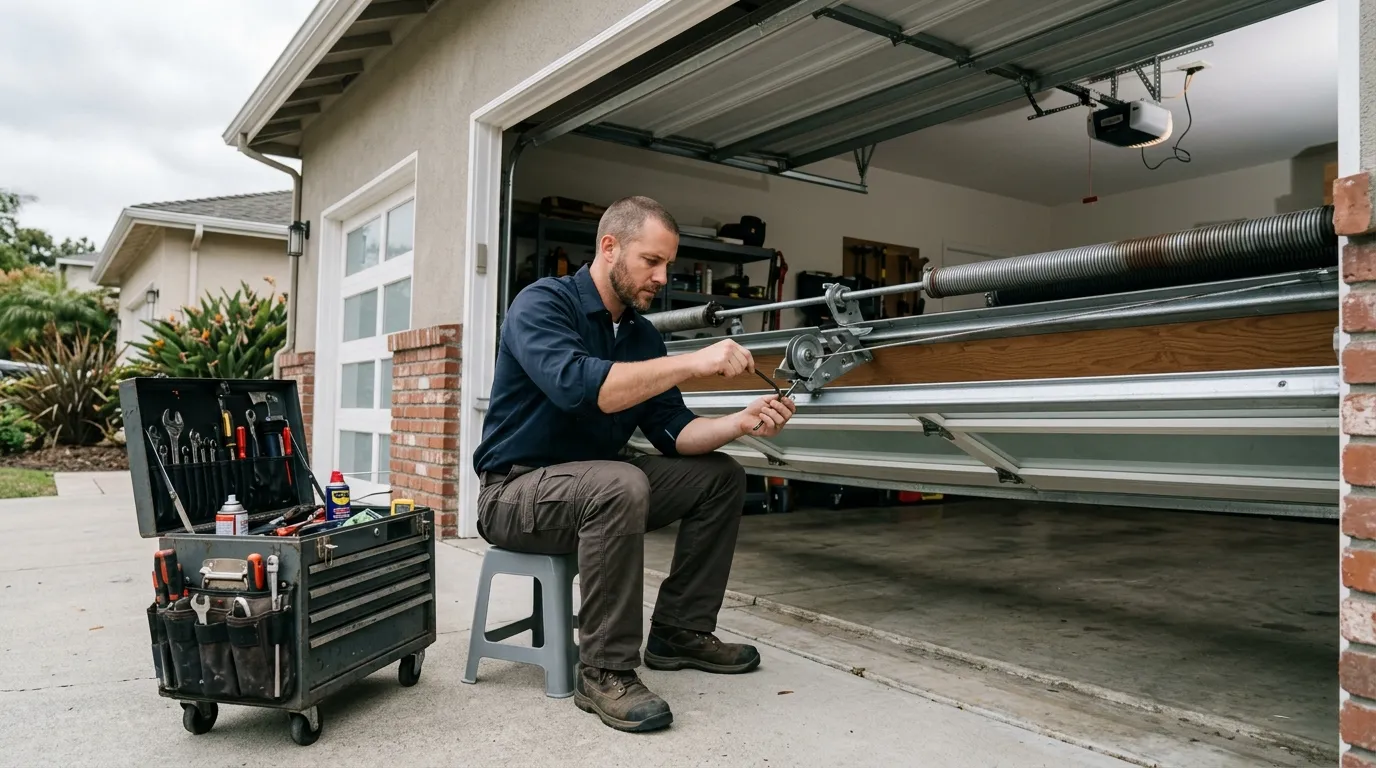
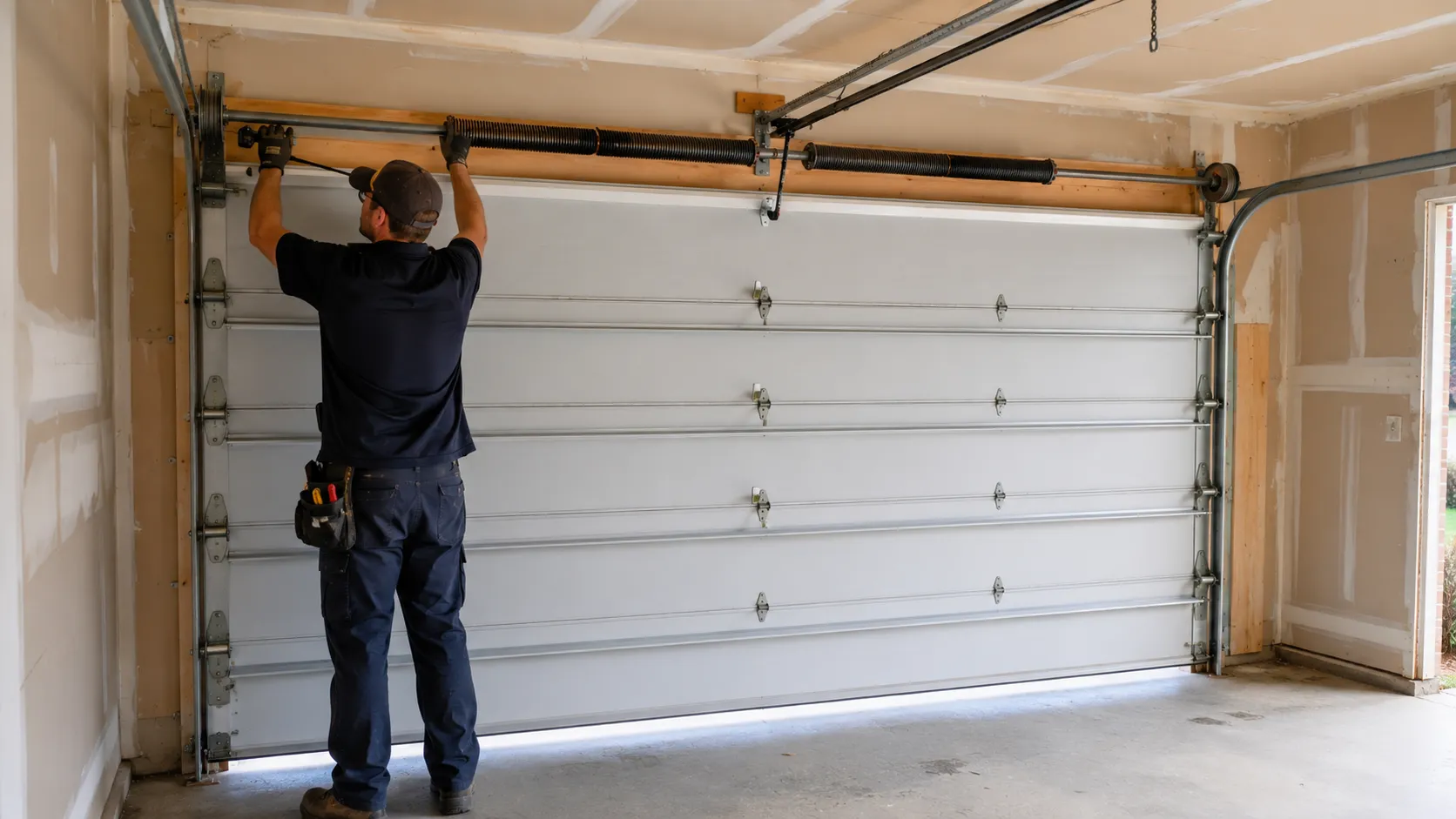
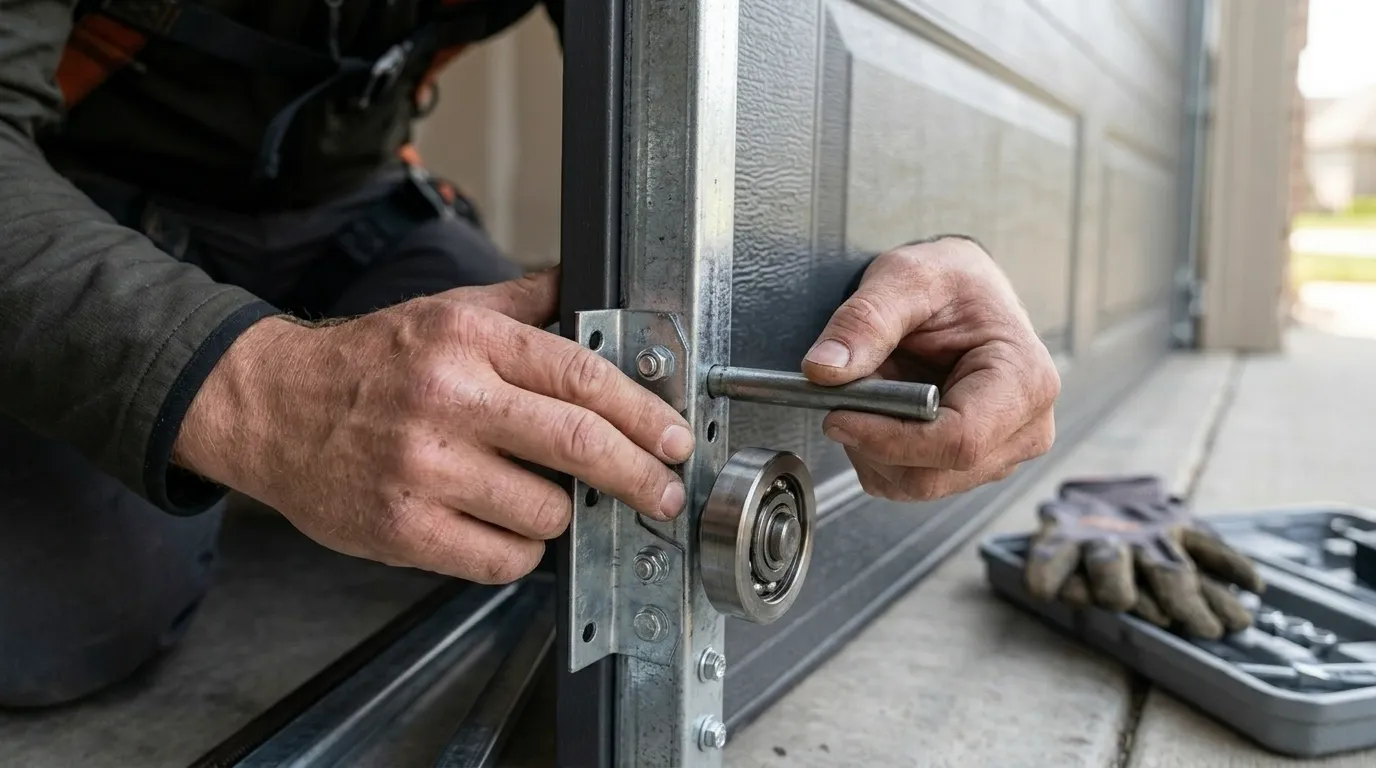
Start with the spring. If your house was built in the 2004 median window, you're at or past the typical spring lifespan, and a spring that's sagging or has a visible gap between coils is close to done - that's worth a call before it snaps, not after.
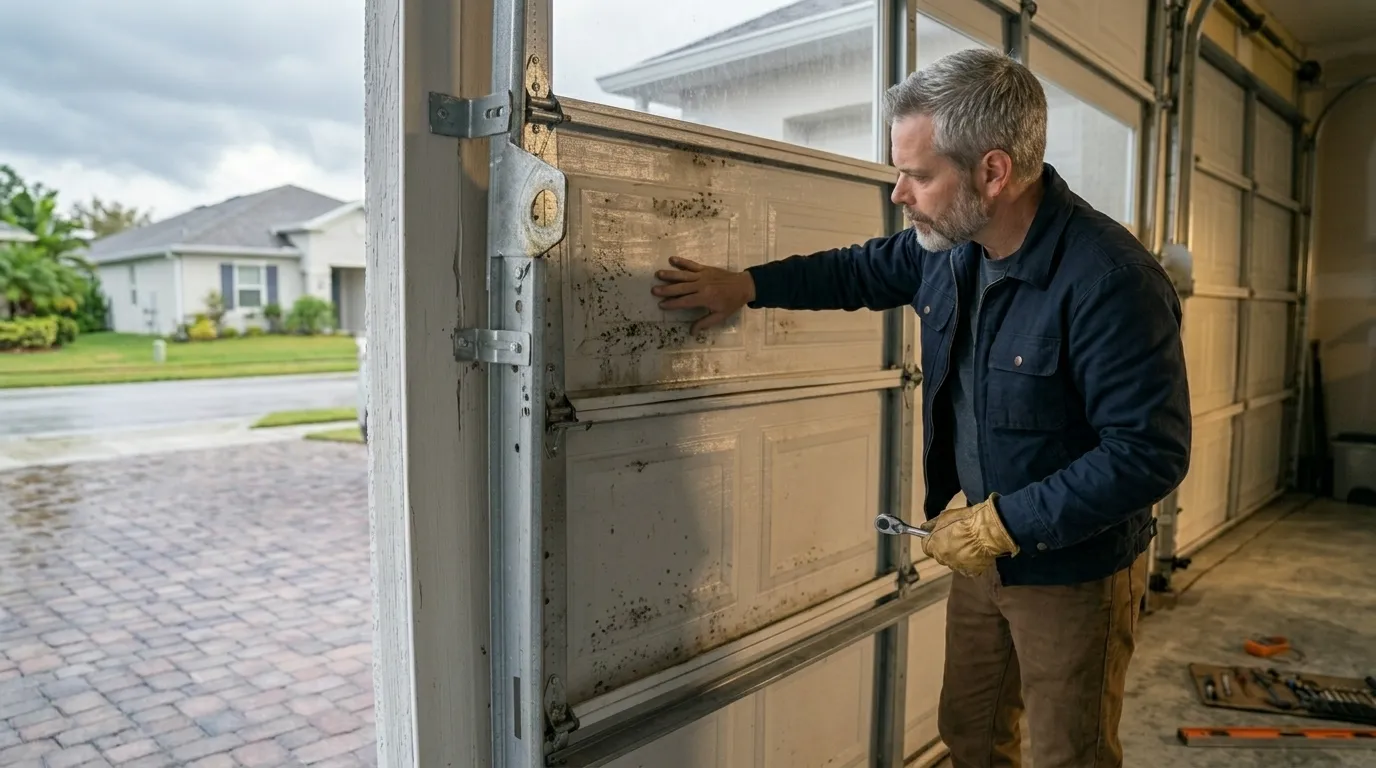
Next, look at the panels themselves. Steel sectional doors from the 1985-2015 stock here don't usually rot or rust through the way older wood doors do, but they do dent and they do rust at the bottom panel where snowmelt or sprinkler runoff sits against the steel. A dented panel on an otherwise sound door is a $150-400 panel swap, not a full replacement.
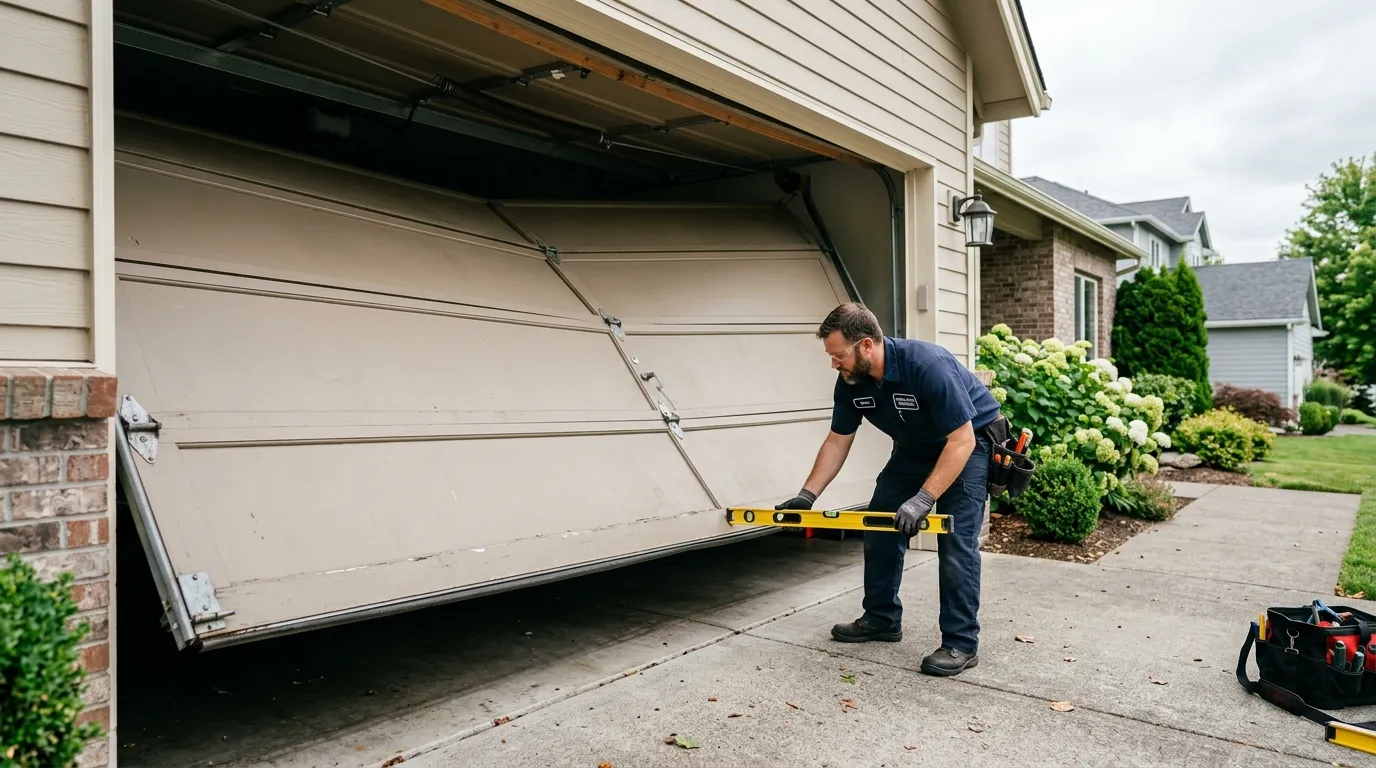
Check the track for daylight - hold a flashlight along it and look for gaps where the rollers ride. A track that's pulled away from the frame on one side usually means the door's been forced or the opener force setting is too aggressive, and it's fixable without new hardware.
Last, test the balance. Disconnect the opener, lift the door halfway by hand, and let go. It should hold. If it drops or shoots up, the spring tension is wrong, and that's not a DIY spring adjustment - torsion springs under load have put people in the hospital.
How Local Conditions Play In
Prosper sits in a cold-moderate climate band, which matters more for garage doors than people expect. It's not extreme cold that kills hardware here - it's the swing. A door that sits through a freeze one week and 70-degree days the next is putting steel through expansion and contraction that loosens fasteners and stiffens weatherstripping faster than a door in a climate that just stays one temperature.
With median household income in the service area at $110,357 and 34,952 owner-occupied houses out of 44,072 households, most of the doors we're talking about were installed as part of a home purchase or a builder spec, not chosen piece by piece by the homeowner. That means a lot of original hardware that was adequate but not upgraded - standard-duty springs and openers rated for the door's weight, nothing extra. Fifteen to twenty years on, that hardware is exactly at the point where it's failing on schedule, not because anything unusual happened.
One honest limitation: if a spring or a full torsion system needs replacing on a less common door size or an older opener model, the part isn't always on the truck, and it can take a special order. We'll tell you that up front rather than have you wait around wondering.